Friend Quiz Ranking Mistakes That Confuse Your Group Chat
Your childhood best friend just finished below a casual gaming buddy on your leaderboard, sparking instant chaotic debate in your group chat. Unbalanced questions and ambiguous prompts create misleading scores that fail to reflect real relationships. Avoiding critical friend quiz ranking mistakes ensures your leaderboard measures genuine closeness rather than lucky guesses.
You want your group challenge to settle bragging rights accurately, not generate confusing ties. This guide reveals how prompt selection alters scoring and previews how to calibrate your questions for clear results. You will also learn why web results often mix up friendship leaderboards with 1990s TV sitcom trivia.
One counterintuitive trap derails most challenges before the first link is sent.
Consider this standard workflow when building a challenge:
- The situation: A creator builds a custom trivia link to determine who knows their habits best.
- The action: They choose ambiguous daily prompts that invite random guessing instead of personal facts.
- The outcome: Casual acquaintances guess correctly while close friends overthink, creating an inverted leaderboard.
Setting up a calibrated friend quiz requires selecting distinct personal habits so rankings reward real history over chance.
Review the foundational setup choices before assembling your challenge prompts.
Prerequisites and Common Pitfalls Before Creating Your Quiz
Friend quiz ranking accuracy depends on selecting question formats that test shared history rather than blind chance. Most group chat scoring anomalies happen when creators mistake high scores for authentic closeness, ignoring how format choices distort results.
A peer ranking board is a real-time leaderboard that sorts participants by cumulative accuracy across a shared challenge link. When you launch a digital friendship test, this leaderboard tracks bragging rights across WhatsApp, iMessage, and Snapchat circles. However, high scores on standard quiz setups often reward lucky guessers rather than your closest friends.
Think of your quiz like a multi-pin door lock rather than an open revolving door. If every pin only turns left or right, anyone bumping into the lock can crack it by accident. A valid assessment demands specific combinations that only someone with inside access can reproduce.
When half of your questions rely on two-sided choices, a distant acquaintance who simply flips a coin will statistically match half your life habits. This statistical inflation pollutes your leaderboard and ruins friendly rivalry by pushing genuine best friends below random participants.
Why do these baseline mechanics skew your group chat dynamics so heavily?
- Low discrimination power: Binary true-or-false prompts permit casual acquaintances to match your answers purely through mathematical probability.
- Generic life trivia: Broad prompts regarding generic routines fail to capture nuanced personal quirks, leveling the playing field for outsiders.
- Uncalibrated leaderboards: Skewed scoring distributions flatten point spreads, preventing authentic inner circles from securing top rankings.
Setting proper prerequisites ensures your final standings reflect actual relationship depth instead of random odds. Pinpointing the exact prompts that introduce this statistical noise fixes the problem before sharing your link.
Step 1: Identify Flawed Question Types That Break Your Scores
Flawed question types distort your group chat results by measuring short-term memory quirks rather than genuine relational closeness. Fixing these broken prompt structures stops accidental leaderboard collapses before you launch your challenge on friendquiz.org.
Why does your friend group turn trivial coffee order updates into major scoreboard disputes? When trivia setups fail, players confuse fast memorization with authentic care.
The Scoreboard Fallacy is the mistaken assumption that a high score on arbitrary personal trivia directly proves relational loyalty. When a trivia maker relies on volatile routines, the entire ranking system breaks down.
- Hyper-recent micro-habit questions: These prompts test fleeting daily changes, such as yesterday's exact breakfast choice or a morning coffee tweak made three days ago. They trigger recency bias distortion by penalizing childhood allies who know your character but missed your sudden switch to oat milk. Action step: Replace short-lived weekly routines with enduring food rules or permanent quirks.
- Equally plausible binary traps: These items force friends to guess between two almost identical, coin-flip selections without contextual hints. They introduce pure random chance into what should be an authentic best friend quiz, demoting your closest confidants on blind luck alone. Action step: Provide clear, distinct multiple-choice options that reflect known, persistent preferences.
- The hyper-specific trivia blindspot: This flaw relies on obscure administrative facts like exact room numbers or high school locker combinations. It rewards casual acquaintances who happen to have photographic recall over peers who show true emotional support. Action step: Shift the focus from rote numbers to personal pet peeves, dislikes, and recurring weekend behaviors.
- Unshared inside-joke exclusions: These prompts focus on private jokes witnessed by only a single person during a specific trip. They automatically alienate the rest of the group chat while artificially giving one contact an unfair scoreboard advantage. Action step: Select shared group chat lore or public daily habits that anyone in your circle can realistically deduce.
- Performative aspirational claims: These questions present idealized identities, such as waking up at dawn every day, rather than real habits. They misalign the leaderboard because honest friends who know your true flaws get marked incorrect for telling the truth. Action step: Record genuine quirks and real habits instead of idealized fantasy routines.
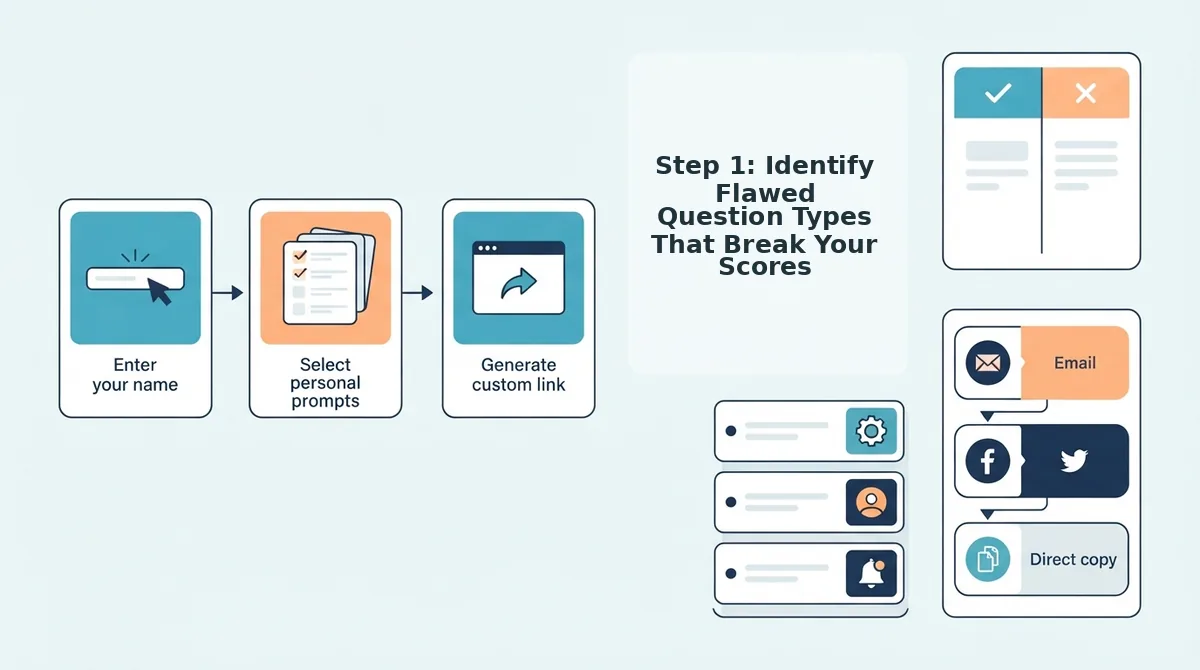
A quiz creator entered their name on the homepage and cycled through prompt selections, adding an obscure beverage change adopted just yesterday. Long-term friends missed the question, while a casual coworker guessed it correctly and climbed the Friendboard. The creator removed the temporary drink change, reloaded the prompt to ask about an enduring pet peeve, and generated a new link that properly reflected genuine closeness.
Fixing these five question flaws sets the baseline for structuring a dependable prompt distribution.
Step 2: Balance Questions Using the 40/40/20 Calibration Matrix
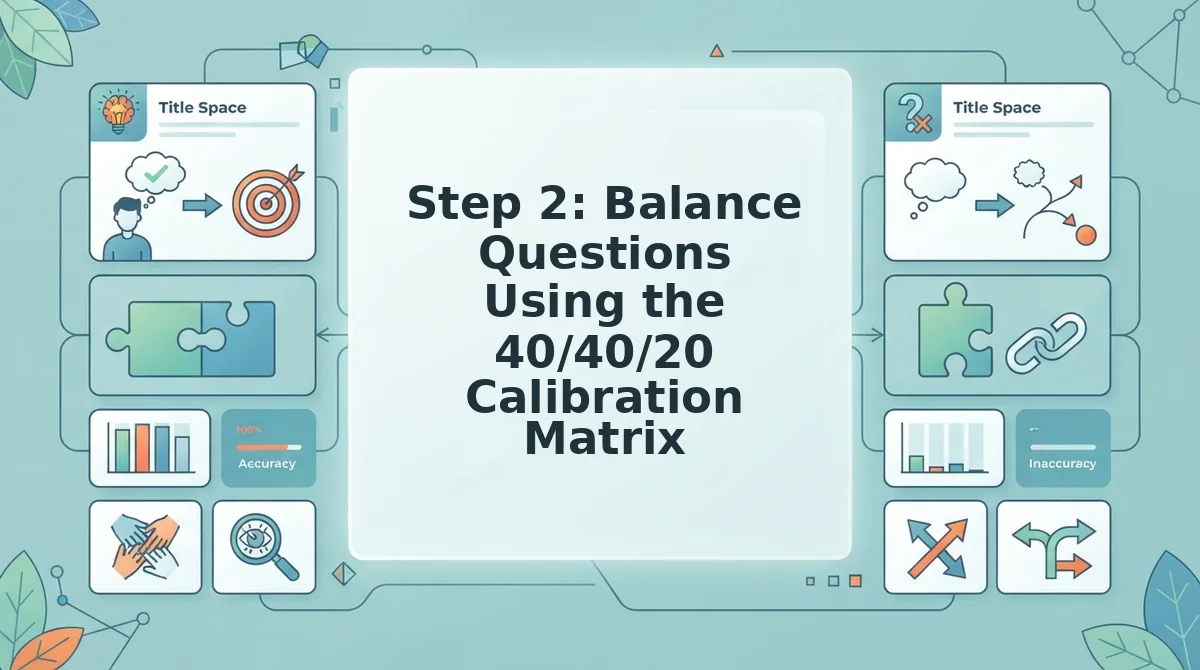
To eliminate dead-heats and unearned podium finishes, calibrate your 10-question challenge into 4 broad baseline questions, 4 daily habit questions, and 2 deep cut vault questions. The 40/40/20 Calibration Matrix is a question-distribution framework designed to separate casual acquaintances from inner-circle confidants on real-time Friendboards.
When everyone in a 30-person WhatsApp chat scores 9 out of 10, your leaderboard loses all value. Applying structural balance ensures natural point spreads occur without needing manual intervention.
Before you begin, open your mobile browser to Friend Quiz. You need zero app downloads, account sign-ups, or profile configurations to build your test.
- Select 4 Broad Baseline prompts from the initial setup screen (Time: 45 seconds). Tap common interest cards covering your favorite mainstream music, go-to comfort foods, or obvious travel goals. Success means these four answers provide every participant an easy entry point to build baseline confidence.
- Choose 4 Daily Habit prompts during the mid-quiz sequencing (Time: 60 seconds). Scroll through the behavioral cards and record specific personal patterns, such as your exact morning coffee order, bedtime phone habits, or weekday pet peeves. Success looks like half of your casual contacts dropping 1 or 2 points here because these require active observation.
- Pick 2 Deep Cut Vault prompts for the final slots (Time: 30 seconds). Cycle through the trivia options to lock in your most niche personal quirks or private obsessions known only to your closest confidants. Success means only your true inner circle gets these correct, cleanly breaking ties at the top tier.
- Tap the "Generate Quiz" button to package your challenge into an instant link (Time: 5 seconds). The web interface outputs your shareable URL alongside an empty, real-time leaderboard ready for group distribution.
A balanced prompt split stops identical top-tier scores across large WhatsApp groups by building your tie-breaker rules directly into the question sequence itself. You protect the integrity of your leaderboard before the first friend taps an answer.
Once you settle the question mix, the final point tallies still depend heavily on the evaluation mechanics running in the background.
Step 3: Choose Scoring Systems That Prevent Skewed Results
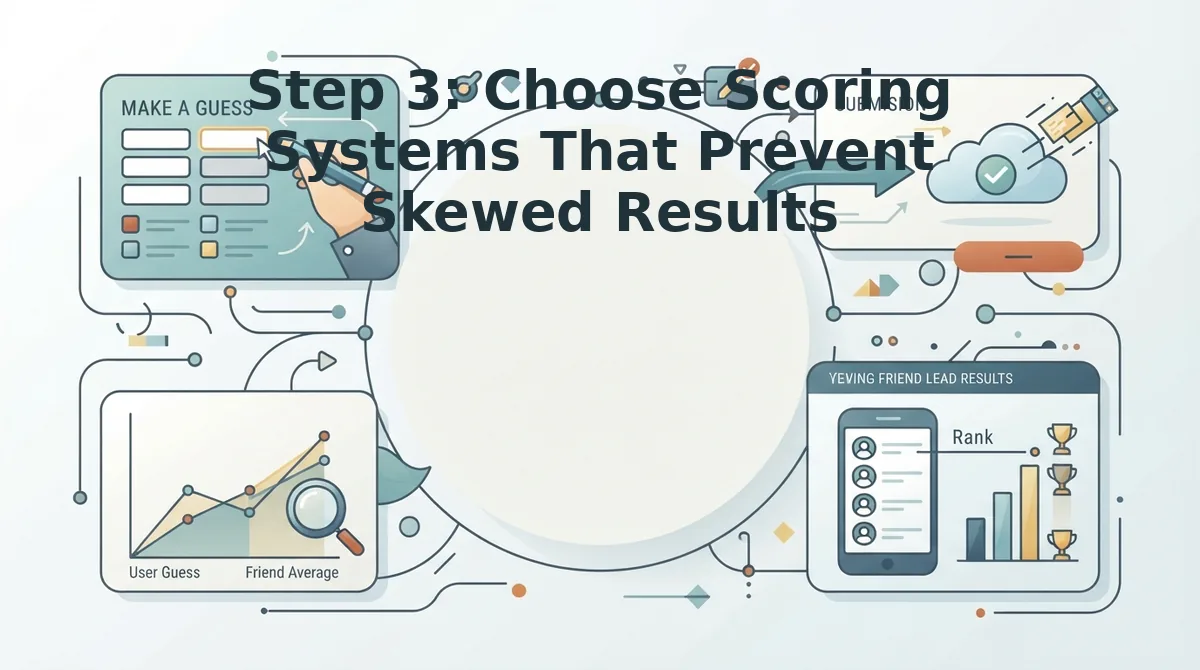
Preventing skewed quiz results requires picking an engine architecture that eliminates mid-quiz drop-offs and tracks scores accurately across isolated social app browsers. The mechanics of the quiz tool determine whether your group chat leaderboard reflects actual personal knowledge or simply measures who tolerated the interface longest.
A scoring engine is the underlying web software that delivers trivia questions, logs participant answers, and computes rankings on a dynamic scoreboard. Legacy quiz engines frequently drop participant sessions because heavy interstitial mobile ads crash low-memory in-app browsers, rather than from actual backend server outages.
When sharing challenges inside mobile environments, browser cookie isolation differences between iMessage, Snapchat, and WhatsApp webviews routinely wipe player progress on tools that rely on local storage. Legacy platforms like Buddy Meter offer extensive nostalgic name recognition and deep custom questionnaires, but their multi-page reloads and ad scripts cause friction in modern social apps. Zero-login, single-link platforms strip away third-party ad scripts, running lightweight web sessions that record scores directly to a central board before an in-app browser closes.
| Platform Type | Session Retention Mechanism | Account Requirements | Best For |
|---|---|---|---|
| Legacy Ad-Supported Engines (e.g., Buddy Meter) | Multi-page form reloads with display ads | Name input only, browser cookies | Desktop groups and users wanting long-form custom question archives |
| Zero-Login Single-Link Engines (e.g., Friend Quiz) | Instant real-time sync via persistent challenge link | Zero logins, direct name entry | Fast mobile group chat rivalries on WhatsApp, iMessage, and Snapchat |
| Account-Gated Survey Apps | Authenticated user profiles and database logins | Mandatory email or social sign-in | Classrooms or formal teams needing strict anti-cheat verification |
Why do half of your friends vanish from the standings before answering question five?
Every page reload inside a chat webview introduces a drop-off point where ad banners hijack screen taps or browser memory dumps the session. For a detailed breakdown of these mechanics, review our buddy meter ranking fix analysis.
Choose an account-gated tool if you are running a structured classroom assessment that demands strict email verification. Choose legacy builders if your friends prioritize nostalgia and answer exclusively on desktop browsers. If your objective is high group chat participation without drop-outs, a lightweight format like a friendship dare quiz ensures every participant finishes and posts their score.
Our recommendation is zero-login, single-link engines: they bypass native webview cookie restrictions, drop zero sessions to intrusive ads, and deliver legitimate bragging rights instantly.
Once you select an engine that reliably logs participant submissions, checking the integrity of the entries becomes your next priority.
How to Verify Your Friend Quiz Leaderboard Is Accurate
To verify that your Friend Quiz leaderboard is accurate, audit your Friendboard entries for duplicate burner names and force-refresh any mobile in-app browsers caching stale submissions. A clean leaderboard ensures genuine bragging rights without manipulated scores throwing off your group chat banter.
Picture this: an acquaintance suddenly claims the number one spot with a perfect score under the name "Guest99," moments after failing their first attempt. Catching duplicate entries submitted under burner nicknames to manipulate friendboard placement requires a structured review before declaring a real winner.
A Friendboard audit is a systematic check of your quiz's live score list to remove duplicate attempts, authenticate player identities, and resolve webview caching errors. You will need your administrative quiz link, your active group chat roster, and approximately two minutes to complete this verification process.
- Open the creator dashboard using your original quiz management link to review the live Friendboard. You should see the full chronological list of participant nicknames, completion timestamps, and their total recorded points. For detailed dashboard navigation, read our walkthrough on how to see who scored highest.
- Scan the leaderboard names against your actual group chat roster to flag burner identities. Look for repeated initials, suspicious secondary pseudonyms, or back-to-back entries submitted seconds apart. When you find two entries from the same person, cross out the subsequent tries and retain only their initial score.
- Audit in-app browser session caching by instructing friends on iOS and Android webviews, such as WhatsApp, Instagram, or Snapchat, to refresh the page in an external browser. Mobile apps often hold static versions of web pages in local memory, hiding recent score updates. Once opened in Safari or Chrome, the display will reflect live, un-cached standings.
- Announce the verified rankings directly inside your group chat with a final screenshot of the audited Friendboard. This public confirmation locks in the bragging rights and officially closes the challenge to late retries.
Scoreboard verification rules for fair group chat banter require that only a player's first completion counts toward official rankings. Establishing this standard early prevents members from studying answer keys on secondary devices to game the outcome.
Clear verification protocols resolve common scoring disputes before friendly competition turns into genuine confusion.
Frequently Asked Questions About Friend Quiz Rankings
Can you reset individual scores on a live friendboard?
No, you cannot edit individual submissions on platforms that use static token links without account logins. Resetting a compromised score requires generating a fresh quiz challenge link and sharing it again. Avoiding common mistakes in friendboard score tracking keeps your leaderboard clean from the start.
Why do two players with the same score rank differently?
Leaderboards break ties by submission timestamp or internal token order rather than trivia accuracy. The player who completes the quiz first naturally claims the higher slot when point totals match. If two friends finish with identical points, verify the completion times to confirm true standing.
How do I stop friends from retaking the quiz to cheat?
Browser-based quizzes store local completion cookies to deter casual repeats, but private windows bypass this barrier. You can maintain competitive integrity by applying three rapid checks:
- Accept only the earliest timestamp per participant.
- Disqualify duplicate names appearing on the Friendboard.
- Verify real names against known chat handles.
What causes missing scores on the live leaderboard?
Scores fail to load when a participant closes the browser tab before the final results screen completes its upload. Unstable mobile internet connections during submission can also disrupt data transfer. Have players confirm they see their final score screen before closing their web session.
Clear rules protect your leaderboard from accidental glitches and suspicious high scores.
Keep Group Chat Rivalry Fair and Fun
A friendship challenge is built to ignite hilarious group chat banter, not issue certified psychological audits on your inner circle. When leaderboards trigger bitter arguments instead of playful trash talk, biased calibration and ambiguous prompts are almost always to blame.
Fixing your standing takes two decisive moves:
- Eliminate inside-joke traps that lock out half your circle.
- Audit your answer keys so verifiable personal trivia drives the standings rather than pure guesswork.
Are you ready to see who actually pays attention to your daily habits? Run a calibrated friend quiz by entering your name and selecting your prompts to generate a shareable challenge link in under two minutes with zero app downloads or account logins required.
A truly accurate friendship leaderboard does not measure loyalty; it rewards the friends who actually pay attention.