Why Holaquiz Dare Score Tracking Fails for Real Banter
You drop a viral 10-question dare link into your WhatsApp group chat, watch five friends insist they finished it, and open your scoreboard to find total silence. When holaquiz dare score tracking fails to log real-time results, friendly group rivalries stall before the banter even starts.
Few things kill momentum faster than missing scores after your inner circle takes the time to answer personal trivia. We will unpack why disposable dare trackers drop submissions, how ephemeral browser storage breaks leaderboards, and what reliable ranking requires across mobile browsers.
Consider a standard group chat workflow:
- The situation: A creator shares a personalized challenge to settle who knows their quirks best.
- The action: Friends open the link via an in-app social browser, complete the choices, and submit their final tally.
- The outcome: The creator refreshes their link, but zero names appear because the session vanished the second the tab closed.
Why do these scores disappear without an error prompt?
To avoid lost rankings, try building an interactive friendship dare quiz with real-time scoreboards that update without forcing your friends to log into an account.
Examining the mechanics behind session storage reveals the technical flaws that erase your submissions.
How HolaQuiz Dare Score Tracking Works and Why Scores Vanish
HolaQuiz dare score tracking records your challenge answers directly inside your mobile device browser storage rather than syncing them to a permanent central database. Because submissions depend on local browser cookies and client-side data caching, any cleared cache, private browsing session, or third-party ad-blocking script immediately destroys the recorded points before they ever reach the leaderboard.
Client-side storage is a web mechanism that saves website data directly on a user's personal device instead of sending it to a remote server. Think of this setup like writing your score on an Etch A Sketch instead of carving it into stone; the moment someone bumps the screen or slides the slider, the entire record vanishes forever.
Most players assume their points save to an online profile, but the underlying mechanics break down across three distinct phases of mobile use:
- Local Cookie Dependency: The platform writes your finished score directly into temporary browser cookies stored on your phone.
- Mobile Sandboxing: Opening a link inside Instagram, WhatsApp, or an in-app Safari browser creates a temporary sandbox that purges its temporary cache the second you tap back to your messages.
- Payload Blockades: Mobile Safari and Chrome Incognito mode strictly block external submission payloads, silently dropping the completion data before the creator's dashboard can confirm it.
When friends take your challenge through private windows or in-app browsers, these technical barriers trigger severe friendboard score tracking mistakes that wipe out legitimate bragging rights. A player might finish the entire prompt sequence, view their personal completion card, and celebrate a perfect run, yet show up as an unranked participant on the host's screen because the browser discarded the completion payload upon tab exit.
To avoid losing competition results in active group chats, creators can run trivia challenges on Friend Quiz, which processes inputs immediately on a centralized live Friendboard without relying on fragile device caches. But lost data packets are only half the battle when testing who knows you best.
Even when submissions survive local browser wipes, the code exposed behind the questions creates an entirely different threat to fair scoring.
Why Answer Leaks and Console Exploits Break Leaderboard Integrity
Answer leaks destroy friendship quiz leaderboards because platforms delivering unvalidated quiz data directly to a user's web browser expose the correct solutions inside the page's underlying code before questions are even answered. When dare challenges calculate results entirely within the browser interface rather than processing them behind a secure back end, any participant can view, copy, and submit perfect scores instantly.
Client-side answer verification is a web design architecture where the user's browser receives both the quiz questions and the correct answers simultaneously, evaluating the player's accuracy on the local device rather than checking choices against an isolated server. Think of client-side scoring like a teacher handing out an exam with an unsealed answer key taped directly to the back of every page. While honest students might resist flipping the paper over, the design relies entirely on the honor system rather than genuine assessment security.
Client-side answer verification undermines leaderboard integrity by delivering the complete solution key to the browser before a challenge begins. In architecture models documented across legacy dare applications like those from Fi Bilişim Hizmetleri, raw answer arrays download straight to the front-end script. Anyone who opens their developer console can read these variables in plain text. Because unvalidated front-end scoring trusts whatever outcome the browser reports, participants can bypass legitimate score calculation rules, falsifying a flawless record without guessing a single trait correctly. Server-side response validation, by contrast, withholds correct values and checks submissions on an independent host, preserving competition.
Ever wonder how that one friend who barely remembers your birthday managed to score a perfect 10/10 on your dare challenge in under thirty seconds?
Here is what happens behind the screen during a front-end exploit:
- The situation: A participant opens a custom dare challenge link in a desktop or mobile browser to complete a set of personal trivia prompts.
- The action: Instead of guessing, the user right-clicks to inspect the page, navigates to the developer console, and inspects the client-side JavaScript objects containing the active question array and marked solutions.
- The outcome: The participant inputs every pre-revealed correct selection, transmitting a manufactured 10/10 result to the leaderboard and rendering legitimate group chat banter completely meaningless.
When scores can be falsified through basic browser inspection tools, the resulting ranks offer zero bragging rights to the friends who actually know you best.
This technical fragility highlights the fundamental divide between throwaway dare apps and robust tracking systems.
Disposable Dare Trackers vs Persistent Live Friendboards
Disposable dare trackers store challenge results on temporary, client-dependent cache, whereas persistent live Friendboards maintain real-time scoring across group chats without requiring app downloads or logins. The core functional difference lies between ephemeral links that wipe out competitive history and dynamic leaderboards engineered for ongoing social bragging rights.
The Disposable vs Persistent Scoreboard Framework is an architectural model that evaluates trivia platforms based on how reliably results survive across chat threads, browser refreshes, and device switches. Disposable trackers treat every round as a throwaway interaction. When a group chat shares a dare link, scores frequently disappear when local browser storage clears or aggressive ad scripts disrupt the submission loop. Persistent engines decouple live scoring from messy mobile sessions so scores stay locked in.
Both models serve distinct purposes, which is why understanding their technical boundaries matters before launching a group challenge.
| Comparison Dimension | Disposable Dare Trackers (e.g., Holaquiz) | Persistent Live Friendboards (Friend Quiz) |
|---|---|---|
| Storage Tier | Temporary local session cache and unstable web storage | Server-synchronized, persistent web records |
| Cheat Prevention | Vulnerable to client-side inspection and exposed answer arrays | Server-evaluated answer verification preventing client tampering |
| Ad Interference | Heavy banner reloads and multi-page popups disrupt submissions | Zero intrusive popups, prioritizing seamless mobile execution |
| Account Friction | Zero logins, but requires manual link retention to track tallies | Zero logins or downloads with instant link generation |
| Multi-Chat Permanence | Scores vanish after link expires or browser closes | Ongoing Friendboard tallies fuel sustained chat banter |
Disposable trackers excel at low-stakes, one-off seasonal challenges. If you need a rapid, five-question seasonal template to blast across Instagram stories where nobody cares about tracking ranks next week, disposable tools provide immediate novelty without friction.
For active WhatsApp, iMessage, and Snapchat circles, disposable tracking falls apart. When friendly rivalries span weeks, lost submissions completely kill momentum. Players need confidence that their perfect ten out of ten will not evaporate before everyone in the group has had their turn.
Evaluating your group chat dynamics boils down to a straightforward decision framework:
- Choose a disposable dare tracker if you want a single-use novelty template for social media stories where long-term rankings are irrelevant to your followers.
- Choose a persistent Friendboard if you want real-time rankings that keep running tallies intact across your entire circle without forced account setups.
Our recommendation for group chat instigators is clear: prioritize persistent tracking. You can build a custom best friend quiz that records incoming scores immediately on a dedicated Friendboard without losing your circle's competitive standing. To avoid submission dropouts caused by intrusive page clutter, check our review of friend trivia makers with the least ads before posting your next link.
Before switching platforms entirely, there are tactical measures you can take right now to recover disappearing dare tallies from your existing challenge links.
How to Check and Recover Missing HolaQuiz Dare Scores Step by Step
You can recover missing HolaQuiz dare scores by retrieving your original creator session URL from your mobile browser history before client-side cache expires. Because disposable quiz sites store administrative tokens locally rather than under registered user accounts, clearing your data or switching tabs can instantly sever your connection to incoming peer answers.
Before you assume your friends ignored your link, check whether your mobile browser quietly discarded their submissions into a cache black hole. A creator session URL is the unique web address generated during quiz setup that contains your private administrative view token. To run this diagnostic process, you need the original smartphone or desktop browser used to create the quiz and your active browser history log.
- Open your mobile browser history and retrieve your creator session URL (Time: 1 minute). Type "holaquiz" into the history search bar, locate the exact administrative link generated during setup, and tap to reopen it. You should see your initial creator dashboard reload with any locally cached submission counts intact.
- Inspect browser cache retention settings and recover the raw submission payload (Time: 2 minutes). Tap Settings, navigate to Site Data, and locate the cached script storage for the quiz domain to check if incoming answer packets were blocked from rendering. If successful, you will locate the raw submission payload in history before local storage clears entirely, revealing friend names and submitted scores that failed to populate the visual list.
- Add domain-level ad-block exception rules (Time: 1 minute). Open your content blocker extension or mobile security settings, select Whitelisted Domains, and type the quiz host address into the field to prevent third-party tracking shields from terminating answer transmission scripts. The leaderboard should immediately refresh without blocking background data syncs.
- Verify cross-browser synchronization across linked group chat apps (Time: 2 minutes). Copy the public share link from your dashboard, paste it into your device's alternative browser (such as Safari if you created it in Chrome), and run a quick test response. If the test score appears on your main screen, your connection is restored; if it fails, your original session token is permanently desynchronized, meaning you must check live friendship quiz results on a persistent platform instead.
When these technical band-aids fail, missing scores quickly escalate from a mild software annoyance into genuine group frustration.
4 Ways Unreliable Score Tracking Ruins Group Chat Dynamics
Unreliable score tracking destroys group chat dynamics by erasing legitimate victories, triggering phantom ties, and invalidating peer competition so thoroughly that members stop participating. When quiz scoreboards glitch or lose data, the natural banter that fuels social feeds and friend circles instantly deflates into confusion.
Nothing kills group chat energy faster than arguing over who actually won a dare test when the scoreboard randomly deletes the champion. A broken tracker turns lighthearted peer rivalry into tedious troubleshooting. Understanding why micro-leaderboards increase group retention reveals that social circles thrive on public, verifiable bragging rights, not unstable metrics.
- The Banter Kill-Switch: How leaderboard resets extinguish viral group engagement within 48 hours. A leaderboard reset is the sudden clearing or loss of participant scores due to unstable session caching. When a scoreboard wipes early submissions, players lose their verified standing, extinguishing group engagement within 48 hours because there is no longer a public record to debate. Pin a screenshot of the original scores to your chat announcement thread immediately after sharing a quiz link to secure undisputed standings.
- False tie syndrome deflating competitive stakes through uncalibrated scoring. False tie syndrome occurs when flat, non-weighted point assignments and replay exploits cause multiple players to artificially share the number one spot with identical 10/10 scores. This destroys bragging rights because identical top scores remove the hierarchy needed to fuel playful arguments and call out second-place finishes. Break identical scores by enforcing an off-platform speed tiebreaker where the earliest submission timestamp in the chat log claims the solo crown.
- Submission ghosting that quietly excludes genuine participants. Submission ghosting happens when a friend completes every prompt on mobile, but the platform fails to log their results onto the host's central board. This breeds real social friction because friends who invested time feel ignored, while the creator assumes they simply skipped the dare challenge. Audit missing submissions manually by asking participants to send their completion screens directly to the group thread before crowning a winner.
- Spoofed perfect runs rewarding script manipulation over actual friendship knowledge. Client-side answer leaks allow casual players to inspect network responses or replay attempts to fake an unearned perfect score. Legitimate best friends become instantly disengaged when a low-effort acquaintance tops the board using browser exploits rather than genuine personal trivia knowledge. Protect your circle's competitive integrity by establishing a zero-tolerance rule that disqualifies any score achieved through devtools tampering or multiple browser sessions.
Every group chat eventually faces disputes over broken quiz rankings and missing entries.
Frequently Asked Questions About Dare Quiz Scoreboards
Got lingering questions about missing scores, developer exploits, or resetting your friend ranks? These direct answers clear up common dare scoreboard issues.
Why are my HolaQuiz dare results not showing up?
HolaQuiz dare results fail to appear when aggressive in-app browsers, ad blockers, or connection drops interrupt background script delivery. If friends close Snapchat or Instagram before the completion webhook fires, their submission vanishes permanently. The tool lacks automated server synchronization, meaning untracked completions cannot be restored once the session closes.
Can friends cheat on friendship dare quizzes using browser inspect?
Yes, friends can view correct responses by opening browser developer tools if the platform loads answer keys directly into the client-side code. Outdated dare apps expose solution values in accessible JavaScript arrays. When software validates answers inside the user's local browser rather than server-side, players can manipulate their final rank without guessing.
Do friends need to create an account to appear on a live Friendboard?
No, players never need an account, password, or application download to submit their answers and join a real-time leaderboard. When taking a modern bff test, participants enter their display name and finish the challenge. Scores log instantly to the creator's live standings without registration barriers.
How do you reset or remove a troll entry from a dare leaderboard?
Disposable dare trackers do not provide entry moderation, making it impossible to delete specific troll entries without deleting the entire quiz link. Because basic trackers lack creator authentication tokens, they offer no controls to purge duplicate names or offensive scores. You must generate a completely fresh quiz URL to wipe fake submissions.
Here is what happens when you switch from disposable setups:
- Score data persists across mobile sessions.
- Ranks update automatically without page reloads.
- Rivalries stay competitive and tamper-free.
Fixing broken score trackers opens the door to authentic competition across your entire group chat.
Upgrade Your Group Rivalry to Real-Time Live Friendboards
Life is too short to let browser cache crashes decide who knows you best. When brittle cookies vanish, the social stakes of your group chat vanish with them. True bragging rights require an architecture that tracks every answer reliably without making anyone jump through app store hoops or mandatory profile sign-ups.
Ditching fragile dare links resolves the endless debates over dropped points and leaked answers. Turning banter into genuine competition comes down to two straightforward steps:
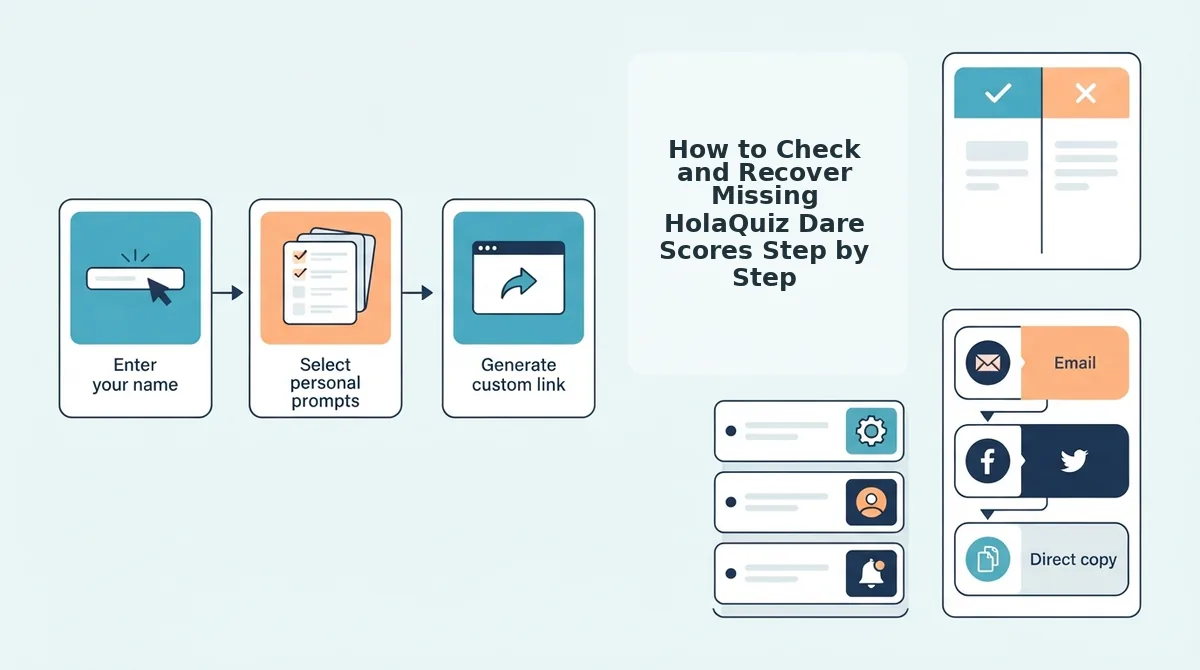
- Type your name on Friend Quiz and select your personal trivia habits to generate an instant challenge link in seconds.
- Drop the web link directly into your WhatsApp, Snapchat, or iMessage group chat and watch verified scores populate a shared Friendboard live.
Real-time group rivalry thrives on undeniable proof, not lost data. The ultimate test of friendship is not surviving a broken web session, but proving who knows your quirks on a live board that never forgets.