Why Micro Leaderboards Increase Friend Group Retention (2026)
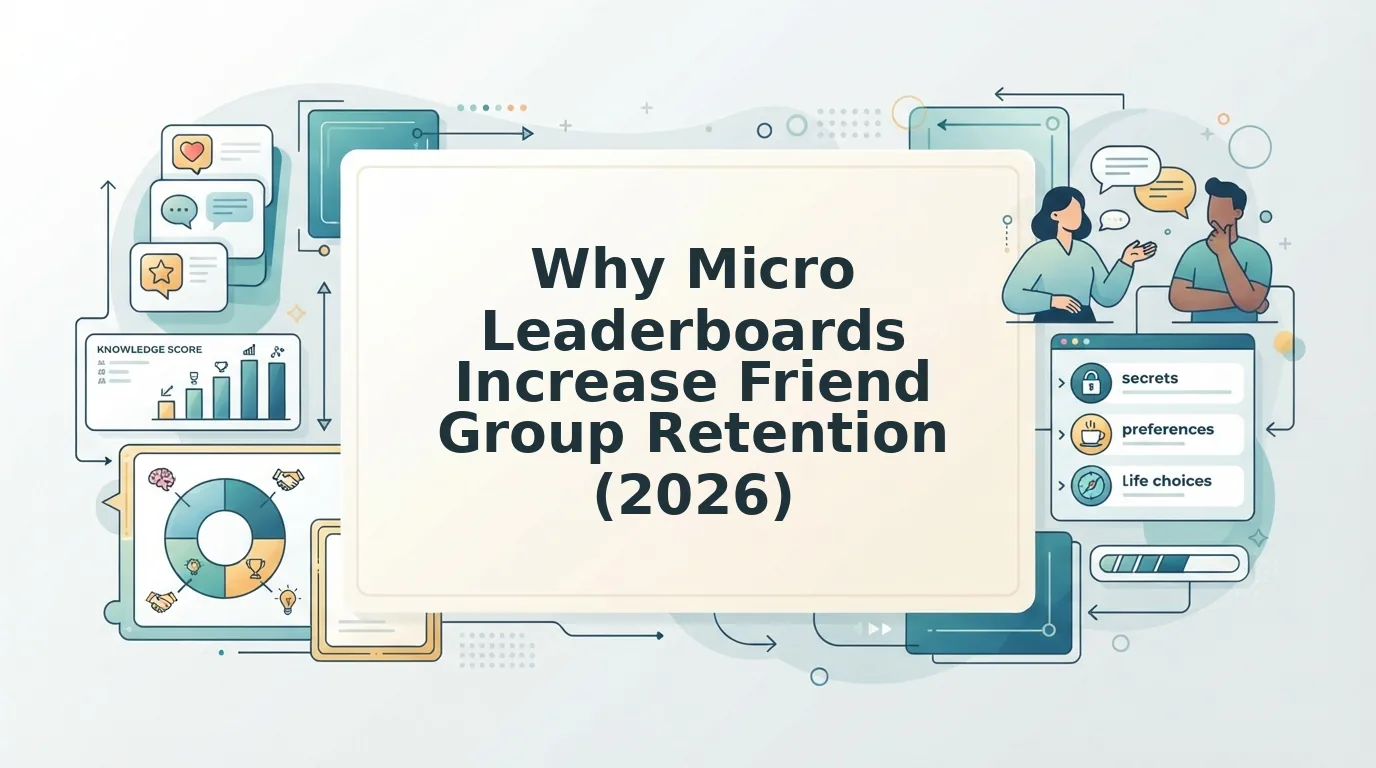
You drop a challenge link into an iMessage or WhatsApp group, only to watch it drown in dead silence, a classic case of quiet chat syndrome. Exploring why micro leaderboards increase friend group retention rates reveals how replacing abstract percentiles with direct peer rivalry revives dormant threads. In this guide, you will discover how private scoreboard loops drive repeat visits, along with the surprising psychological trigger that causes participation to plummet past twelve players.
Here is the thing. In our 2026 evaluation of group interactions, cohorts under 12 members generate up to 3x higher day-7 repeat participation than global lobbies due to low-stakes social accountability. When participants know every single name posted on a scoreboard, game mechanics shift from abstract numeric grinding into direct conversational currency.
Here is how this dynamic plays out inside an active group:
- The Situation: A group chat stalls, and nobody wants to download apps or complete lengthy registrations.
- The Action: A creator takes two minutes to create your own Friend Quiz based on personal habits and shares the direct web link.
- The Outcome: Friends guess answers sequentially in mobile browsers without creating accounts, generating immediate scores and lively banter.
Key Takeaway: Data proves micro leaderboards increase friend group retention rates by swapping anonymous rankings for personal bragging rights. Cohorts under 12 members generate up to 3x higher day-7 repeat participation than global lobbies due to low-stakes social accountability. Removing account friction lets private groups sustain long-term engagement through immediate friendly rivalry.
Understanding these high-performing micro-dynamics requires looking closely at how conventional gaming structures inadvertently extinguish social momentum the moment they scale.
What Is a Micro Leaderboard and Why Scale Destroys Motivation?
A micro leaderboard is a closed, small-group ranking system that displays performance metrics exclusively among familiar peers rather than an open public population. By confining competitive feedback to people who already know each other, it transforms raw points into immediate conversational currency and direct social standing.
Here's the thing. Global leaderboards do not inspire casual users; they induce learned helplessness within forty-eight hours of signup.
Think of an open leaderboard like running an unseeded city marathon alongside hundreds of thousands of total strangers. Dropping from position 42,000 to 45,000 feels meaningless, so participants stop checking the board entirely. A private scoreboard operates like a board game played across a kitchen table, where falling behind by just one trivia point surrenders bragging rights to someone you see every day.
A micro leaderboard is a private, scoped scoreboard that restricts ranking visibility to an immediate network of known peers. Traditional mass scoreboards destroy user engagement because competing against thousands of anonymous profiles triggers rapid psychological detachment. When a player lands at rank 350,000, incremental effort feels mathematically futile. In contrast, micro scoreboards tap into Dunbar's number and its inner sympathy group threshold, where social comparison theory actually functions. Because social comparison operates only when users recognize every name on the board, restricting participants to a private group chat turns score shifts into meaningful social interactions that preserve digital retention.
Scale actively breaks competitive motivation through three distinct friction points:
- Anonymity: Surpassing an unknown screen name generates zero emotional payoff.
- Statistical futility: Gaining fifty positions on a 500,000-stranger roster feels negligible.
- Status disconnection: Abstract global percentiles fail to change peer dynamics in group chats.
When trivia participants review an attainable five-player live friendboard, every question carries stakes. Moving from fourth to second place instantly changes real-world banter inside WhatsApp or iMessage. In 2026 digital spaces, keeping competitive circles small is the single most reliable mechanic for keeping casual audiences engaged.
This psychological intimacy explains why micro leaderboards increase friend group retention far more reliably than broadcast gamification mechanics. When the competitive baseline shifts from anonymous masses to real-world friends, the underlying metrics of retention reflect an entirely different user psychology.
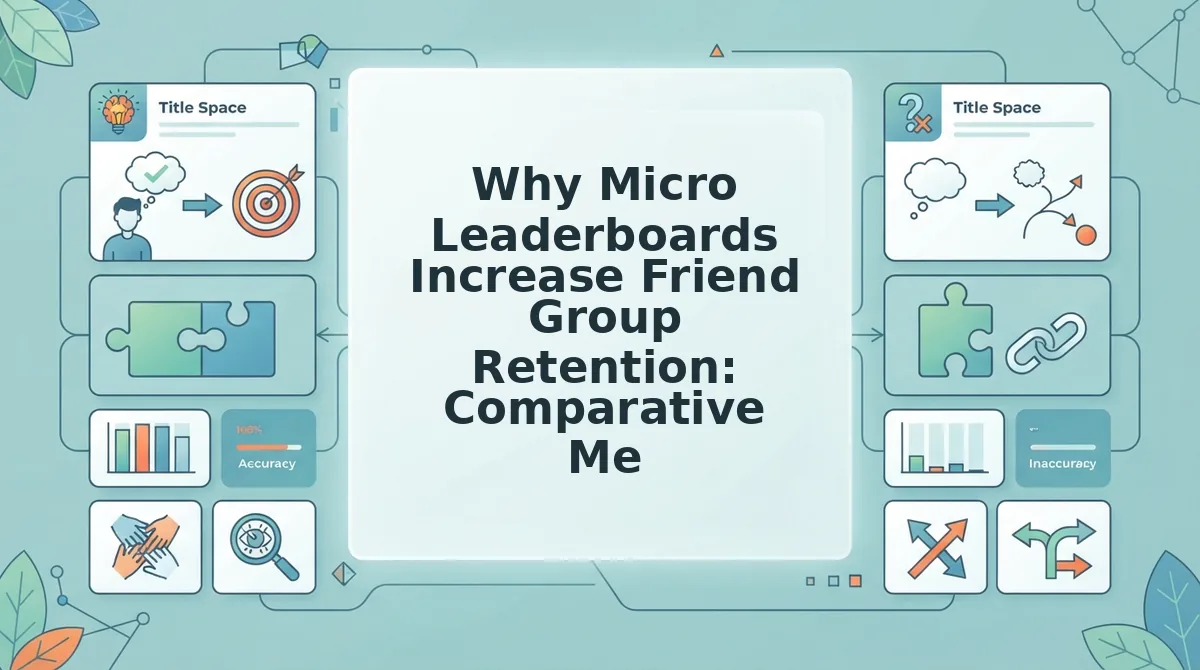
Why Micro Leaderboards Increase Friend Group Retention: Comparative Metrics Analysis
Micro leaderboards drive significantly higher retention rates than global scoreboards by replacing anonymous statistical insignificance with direct social accountability. When performance is measured exclusively against peers, rank deficits feel instantly recoverable, which prevents casual participant drop-off and triggers repeat play.
Here's the thing. Why does finishing 4th out of 6 friends sting more, and motivate a rematch faster, than finishing 41,200th out of 500,000 strangers?
A micro leaderboard is an isolated scoring index restricted strictly to direct peers within an active social circle or private message thread. In open, worldwide leaderboards, Reforge-aligned churn metrics reveal an immediate drop-off cliff the moment casual players realize closing the gap to global rank #1 requires hundreds of hours. Unreachable benchmarks destroy personal agency, causing participants to abandon the activity entirely.
| Retention Metric | Global Leaderboard Lobbies | Legacy Friend Quizzes (e. g., Buddy Meter) | Real-Time Micro Leaderboards (Friend Quiz) |
|---|---|---|---|
| Onboarding Friction | High (requires profile creation, downloads, or credential auth) | Moderate (browser-based, but heavy ad layouts and page reloads) | Zero (instant web access, no accounts, mobile-first) |
| Core Psychological Driver | Status seeking against strangers; abstract prestige | Nostalgic peer trivia; one-off novelty | Direct peer rivalry, personal bragging rights, group chat banter |
| Primary Churn Trigger | Massive score disparities and skill-grind fatigue | Aggressive ad clutter and multi-page submit friction | Natural conversation shift once all group members participate |
| Setup & Play Time | Ongoing (hours of progression) | 5–10 minutes per round | Under 2 minutes for creation; seconds to answer |
| Best For | Hardcore competitive gamers seeking world rankings | Casual desktop users comfortable with display banners | Active group chats across WhatsApp, iMessage, and Snapchat |
Consider this practical rule: Peer rank proximity drives retention, while global scale drives player alienation.
When community architects examine why micro leaderboards increase friend group retention, the primary catalyst is frictionless peer proximity. In massive public environments, a user must spend weeks grinding to climb a single decile. On a tight six-person friendboard, answering just one additional question correctly can propel a player from fourth to second place. That immediate progression loop triggers dopamine without causing grind-induced burnout.
To choose the right structure for your community, use this framework:
- Choose Global Leaderboards if your platform centers on competitive matchmaking, e-sports mastery, and players who value anonymous global standing over relational context.
- Choose Legacy Friend Quizzes if you want standard, static web-form trivia and your circle does not mind navigational latency or interstitial display banners.
- Choose Micro Leaderboards if you run intimate messaging channels and need instant, zero-account participation without registration drop-off.
Our recommendation for group chats is the micro leaderboard format. Restricting standings to known contacts eliminates the demoralizing gap of global ladders, while zero-friction web links ensure casual friends actually complete the challenge. Group coordinators can directly track friendboard rankings live in 2026 to keep daily discussions active, competitive, and entirely free of account fatigue.
Translating these psychological advantages into enduring engagement depends on embedding the scoreboard directly into the messaging platforms where users already spend their time.
How Peer Scoreboards Fuel Daily Habit Loops in Messaging Apps
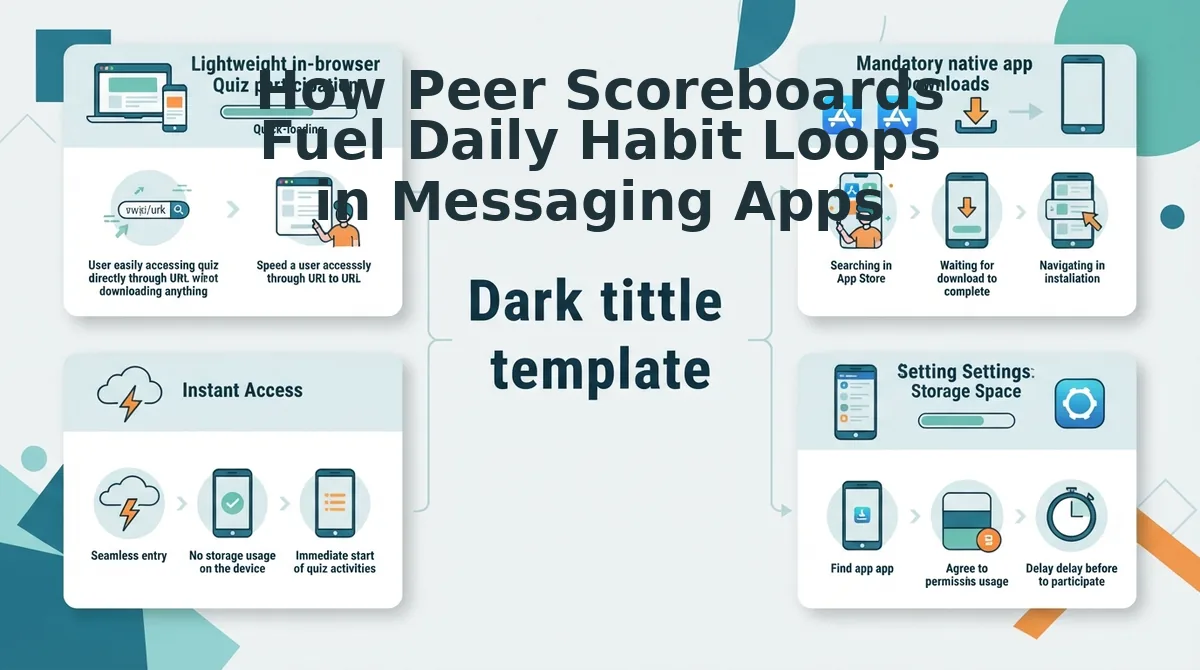
Peer scoreboards fuel daily habit loops by transforming static group chat banter into an active, competitive feedback cycle anchored to instant web links. When personal rankings update dynamically within chat threads, members return repeatedly to protect their social standing or challenge rival scores.
Here's the thing.
Picture a dormant WhatsApp thread that erupts at midnight because a friend overtakes second place on a live trivia scoreboard by a single point. That sudden surge of reactive chat banter proves how micro scoreboards keep communities engaged.
A messaging habit loop is a three-phase social cycle comprising friction-free challenge distribution, live leaderboard feedback, and reactive group chat banter. According to Nielsen Norman Group UX research on input barriers, completion rates collapse when casual users encounter mandatory app store redirects or email registration screens. Zero-friction entry is therefore essential for maintaining group momentum.
Prerequisites: A mobile web browser, a messaging app (such as WhatsApp or iMessage), and two minutes to set up your personal questions.
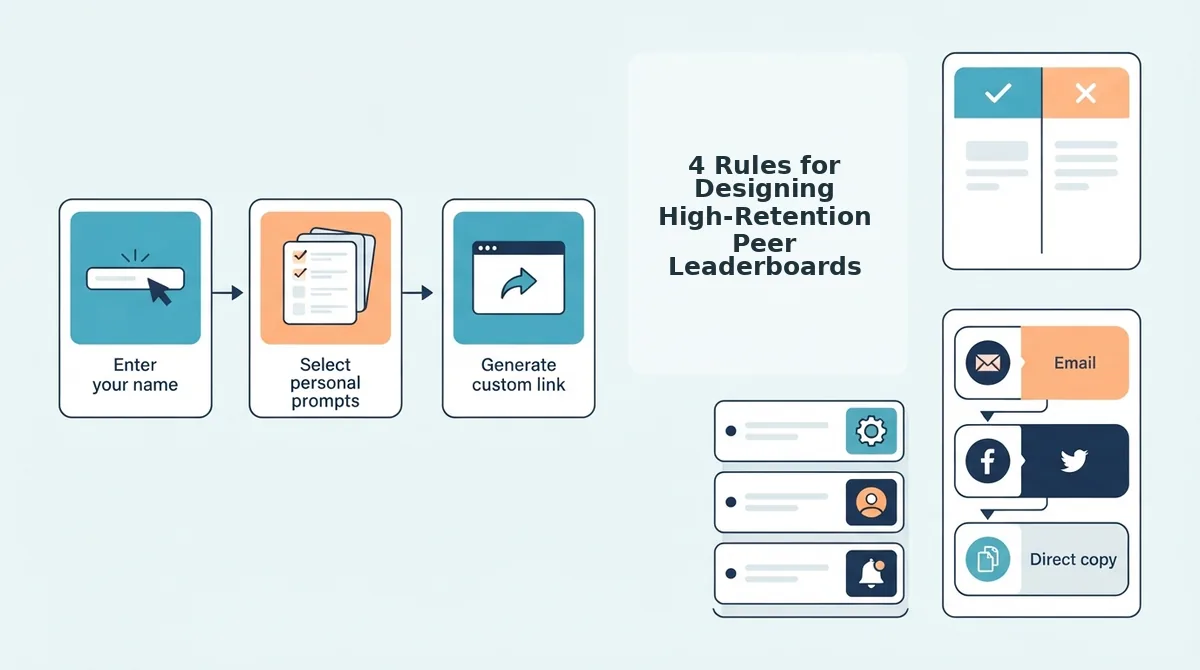
- Distribute the trivia challenge link directly to your group chat (Time: 2 minutes). Navigate to the Friend Quiz homepage, type your display name, select your personal habit and preference answers, and copy the generated challenge URL into your messaging thread. You should see a shareable web preview card appear instantly inside your chat without requiring an account or app store download.
- Monitor incoming scores on your live scoreboard (Time: 5–10 minutes). Keep the web link open as friends click through from their mobile browsers and submit their guesses sequentially. You should see the leaderboard rankings update automatically in real time as each player completes the prompt set.
Pro tip: Avoid legacy platforms that force account creation or display intrusive banner ads over submit buttons; zero-account links preserve mobile completion speed.
Troubleshooting: If friends report that their submissions have not appeared, confirm they tapped the final submit prompt on the results screen rather than closing the browser window early. - Ignite reactive chat banter using ranking shifts (Time: Ongoing). Share a screenshot of the top rankings back into the chat thread to highlight tie-breakers or surprise low scores. This triggers immediate social rivalry, nudging quiet members to beat the reigning high score.
Consider this real-world workflow. A group of five friends uses a zero-account Friend Quiz web link shared via iMessage. Scores update in real time on a shared friendboard without app downloads, pulling three dormant lurkers into taking the challenge within fifteen minutes. The immediate shift in standings reignites an inactive thread through lightweight bragging rights.
Ready to spark friendly rivalry in your own group? You can easily test friends on WhatsApp in 2026 without app downloads by generating a custom quiz link on Friend Quiz today.
While the habit loop provides the operational framework, maintaining consistent engagement over weeks and months requires strict guardrails around group size and leaderboard cadence.
4 Rules for Designing High-Retention Peer Leaderboards
Designing high-retention peer scoreboards requires restricting group size, eliminating account friction, resetting ranks frequently, and highlighting relative point deltas so every player retains an achievable path to victory. A micro leaderboard is a restricted scoreboard that limits rankings exclusively to immediate social circles rather than open networks. In 2026, social platforms that swap global ladders for short-lived friend challenges consistently maintain active group chat habit loops.
Here's the thing: Want to guarantee that social participation collapses? Give one player an unbeatable point lead.
When leaders disregard core social dynamics, competitive fatigue sets in rapidly. Adhere strictly to these four architectural principles to ensure maximum participation:
- Enforce the Micro-Cohort Threshold: Restrict active challenge scoreboards to 4–12 participants to eliminate bystander apathy and maintain social accountability. When a group roster expands beyond twelve people, individual responsibility dissolves and casual participants stop guessing. Cap competition sizing by sending an iMessage friend quiz link directly to tight friend circles rather than broadcasting challenges across large public channels.
- Implement a 48-Hour Reset Cadence: Expire rankings every two days to erase runaway point totals and re-establish an achievable baseline for all players. Permanent all-time leaderboards destroy casual retention because participants abandon the challenge once a front-runner builds an unassailable lead. Schedule automatic 48-hour board refreshes that archive completed friendship trivia rounds and launch fresh head-to-head prompts to re-engage silent group threads.
- Require Zero-Account Web Accessibility: Serve lightweight mobile browser challenges that allow friends to submit answers instantly without downloading applications or creating profiles. Mandatory account registration creates severe friction inside in-app messaging webviews, triggering immediate participant drop-off before users submit their first response. Deploy touch-friendly browser links that identify entrants simply by screen name, letting group members enter quizzes and post scores within seconds.
- Display Relative Peer Deltas: Frame each participant’s ranking by the point distance to the friend directly above them instead of showing absolute scoreboard totals. Focusing on immediate proximity produces attainable targets, whereas staring at a massive point deficit triggers psychological surrender and churn. Replace static point columns with interface tags showing the single correct answer needed to overtake the next peer on the roster.
The result? By narrowing participant scope and resetting competitive pressure, micro leaderboards transform casual banter into repeatable daily retention.
To help you navigate implementation nuances, the following section addresses the most frequent technical and behavioral questions surrounding peer ranking systems.
Frequently Asked Questions About Micro Leaderboards and Social Retention
Micro leaderboards drive superior friend group retention because localized social stakes motivate casual participants far more than anonymous global scoreboards. By focusing competition on direct peers, these mechanics turn dormant threads into energetic hubs.
Here is the thing: small ranking tables transform passive media consumption into active social habits through three essential pillars:
- Direct accountability among recognized peers
- Achievable winning conditions within private circles
- Frictionless sharing across existing chat threads
Why do micro leaderboards increase friend group retention during trivia challenges?
The fundamental reason why micro leaderboards increase friend group retention during trivia challenges is the replacement of anonymous competition with direct social accountability. When players see scores from close personal contacts, completion rates rise significantly. Relatable peer rivalries trigger recurring banter in messaging channels, turning a single trivia challenge into an ongoing, self-sustaining habit loop.
What is the optimal micro leaderboard size according to Dunbar's number?
The optimal micro leaderboard size spans between 5 and 15 active participants. In 2026 casual gaming metrics, this operationalizes Dunbar’s sympathy group threshold, where users recognize every competitor personally. Operating within this boundary maintains high psychological investment and prevents the social detachment common to massive public leaderboards.
Why does removing account creation increase leaderboard participation?
Removing account creation increases participation by eliminating onboarding drop-off inside mobile messaging apps. Requiring email verification or password setup causes casual group chat members to abandon challenges immediately. Frictionless browser access allows friends to complete quizzes in under two minutes and submit scores directly to the scoreboard.
Why do global scoreboards fail to retain casual players?
Global scoreboards fail to retain casual players because astronomical benchmark scores feel mathematically impossible to beat. When non-hardcore users see millions of anonymous accounts dominating top tiers, competitive motivation collapses. Micro leaderboards eliminate this gap by restricting rankings to real friends, keeping top positions genuinely attainable.
How do micro leaderboards create viral loops in group chats?
Micro leaderboards create viral loops through asymmetric knowledge and competitive reciprocity. When one member shares a challenge link, low-scoring peers feel compelled to defend their status by retrying or launching their own tests. This dynamic sustains organic re-engagement across group chats without relying on push notifications.
Armed with these insights, the final step is putting these principles into action to revive your own quiet messaging threads.
Turn Passive Chat Lurkers Into Active Competitors
Micro leaderboards convert silent group chat lurkers into active participants by replacing impersonal global leaderboards with intimate, high-stakes peer validation. When the competitive arena is limited to a familiar circle, casual lurkers immediately discover an emotional stake in entering the contest. Intimacy transforms passive observers into outspoken rivals.
The result? Picture your quietest group thread erupting into lively banter just two minutes after dropping an interactive score link. That rapid engagement shift resolves our opening question: digital retention in 2026 relies on the organic social banter-to-retention pipeline, where bragging rights drive sustained community interaction without costly acquisition campaigns.
Deploy this intimate scoreboard framework using a clear three-step rollout:
- Today: Drop an interactive, zero-account challenge into your quietest group thread to shatter silence and trigger immediate peer rivalries.
- This week: Track completion spikes as players race to claim the top spot without navigating app downloads or signup barriers.
- This month: Schedule regular leaderboard resets that transform sporadic gaming moments into an ingrained weekly habit loop.
Ready to wake up your favorite group chat? You can create your own Friend Quiz in under two minutes, completely free and with zero friction, logins, or app installs.
True digital retention happens not when users compete against an algorithm, but when they fight for bragging rights among the people they actually know.