How Friendship Dare Quiz Scores Show Up on the Friendboard
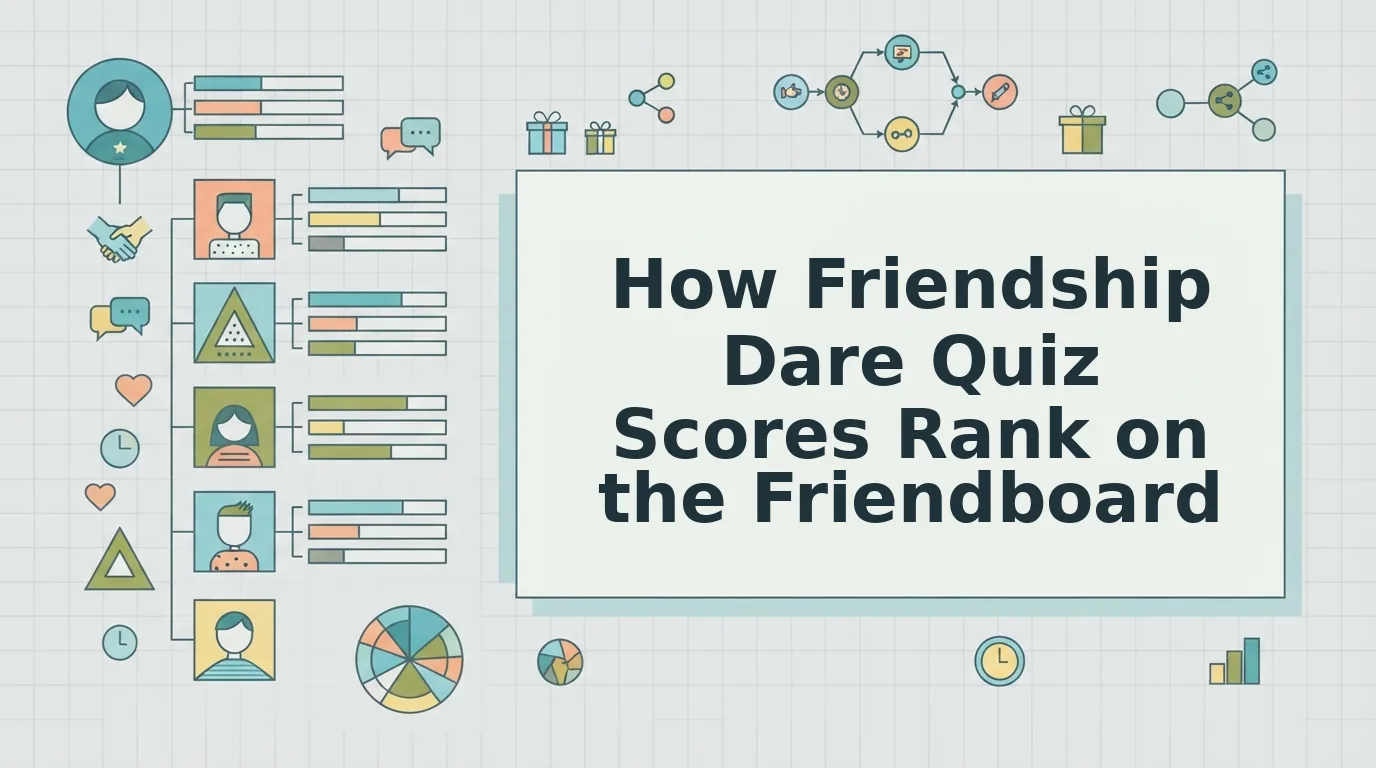
That figure is not a mood and not a curve â it is arithmetic, and once you know the formula, friendship dare quiz scores stop looking random.
If you have shared a dare round and then stared at a percentage with no idea what it meant, you are in the right place. Most dare-quiz pages stop at "share your link" and never explain the number that comes back. This one does: the exact formula behind each result, the four rules that turn those results into a ranked friendship test leaderboard, and a way to read any percentage at a glance.
Treat the stakes the way the dare-video crowd does â soaked, yolked, played for laughs, with screenshots as receipts.
One rule decides who sits above whom when two friends land on exactly the same score. We will get to it at the bottom, because it explains half the arguments in your group chat.
What a Friendship Dare Quiz Score Measures Before You Start
A dare quiz score is a per-friend accuracy percentage â not a group average, not a speed ranking. The finished product is a Friendboard: every friend who opened your link, listed and sorted by how many of your recorded answers they matched.
A friendship dare quiz score is the share of your prompts a single friend guessed correctly, calculated against the answers you recorded when you built the quiz.
Before you start, you need three things on one line: a name to label the quiz, a set of recorded answers, and one shareable link. Your friends need nothing â they answer in a mobile browser, no account, no email, no app.
Think of it like a pub quiz where you wrote the answer key. Every team gets the identical questions, but each score is graded only against your sheet, never against the other teams.
Accuracy score equals correct guesses divided by total prompts, computed separately for every friend. The denominator is always the creator's prompt count, so two friends can answer the same round and finish on different percentages without either being graded against the other. Nothing in the number depends on how fast someone answered, how many have played, or how the chat reacted. That is why the figure still holds when the link resurfaces weeks later.
Dares do not inflate scores â they pull them down. A dare prompt asks what your friend actually does, not what they could recall, and observed behaviour is harder to guess than a stated fact. Same formula, harder question set, tighter board.
The who knows me best breakdown runs on this same maths, and the Friendboard re-sorts live as each answer lands â nothing to refresh.

How Are Friendship Dare Quiz Scores Ranked on the Friendboard?
Ranking runs on accuracy percentage alone, so the friend who guessed best sits first. Speed, arrival order, and how loudly someone claims victory in the chat do not move anyone up.
Here is where the maths becomes a leaderboard. Four rules, in the order they decide the board:
- Highest accuracy sits at the top. The friend with the largest correct-to-total ratio takes position one, and everyone below is stacked the same way. Position is a rank, not a score â the friend in fourth may be a single correct answer behind the leader.
- Every friend appears, whatever they scored. A 30% result is listed beside a 90%, because the board exists to compare, not to flatter. Dropping low scores would break the maths: the ranking only means something when the full result set is visible.
- The board re-sorts as each answer lands. You do not wait for the whole group before the order changes. Each completed run drops into place immediately, which is why checking twice in one evening can hand you two different screenshots.
- Only completed rounds count. A friend who opens the link and quits halfway has no percentage to rank, so they are not slotted in. Finish the prompts and you are on the board; leave early and you are simply not part of the ranking yet.
Two friends on the same percentage share a rank, and the board breaks the tie on completion order â whoever finished their round first sits above. That is an ordering rule, not a scoring layer: no bonus points, no penalty, no adjustment to anyone's percentage. It matters because collisions are common in short rounds; with 10 prompts there are only 11 possible outcomes, so ties stack up fast. Want a clearer hierarchy? Run a longer round. More prompts spread the percentages apart and make identical scores rarer without changing how anyone is graded.
These Friendboard rankings stay scoped to your own quiz rather than pitting you against strangers, which is the point â bragging rights land harder inside the group chat.
Next: how to run a dare round that fills every row on that board, not just the top three.

How to Run a Dare Round That Fills the Whole FriendBoard
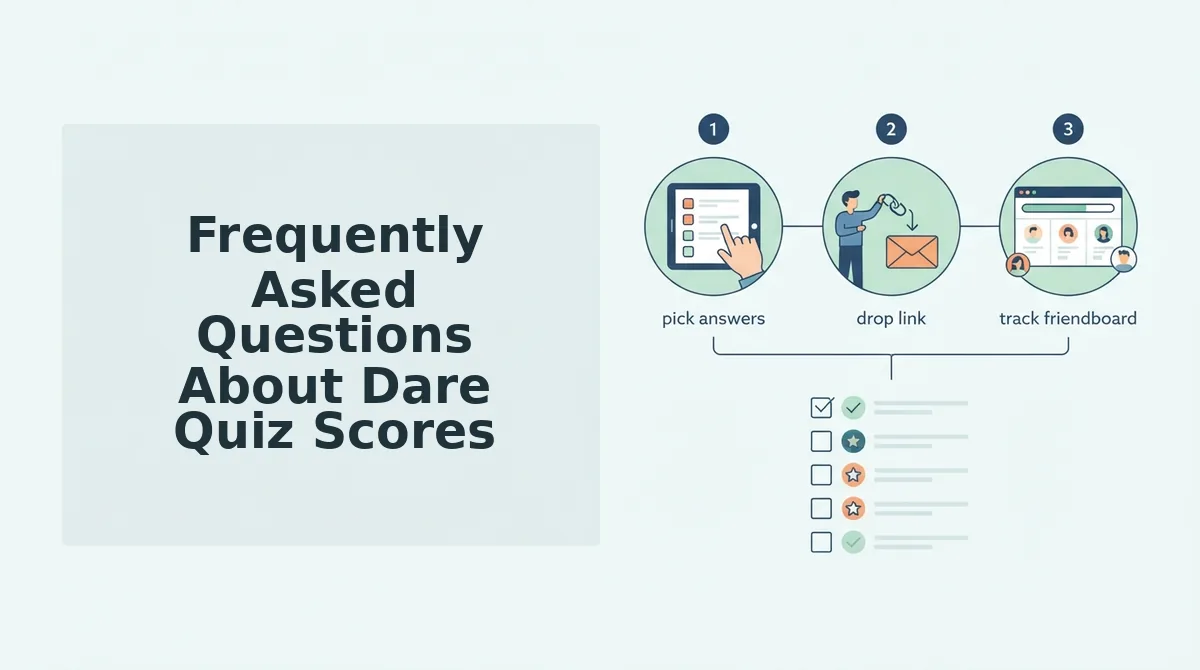
You need two things before the first prompt: the name you want on the board, and about five minutes to record roughly a dozen answers. There is no account, no app install, and no email â a mobile browser is the only tool required.
- Open the friendship dare quiz on your phone and type your first name. The first prompt loads immediately; name entry takes under 10 seconds.
- Record about twelve answers, picking the option that matches what you actually do rather than the one that sounds best. Twelve is the sweet spot â it keeps the chat to the end of the round. At roughly 15 seconds a prompt, budget three minutes. You should see a completed answer set and a generated quiz link.
- Share that link straight into the WhatsApp group. Dare quizzes travel as shareable links rather than app installs, so nobody leaves the chat to download anything. You should see the link unfurl as a preview card in the thread.
- Let friends answer in their own browsers. They tap through the same twelve prompts cold and submit with no signup step. You should see new rows appear as each friend finishes.
- Read the board as it sorts itself, then replay the round with a fresh set of dare questions for friends to build a second data point. You should see the ranking reorder once the new percentages land.
The worked example is small on purpose: twelve recorded answers, one WhatsApp group, four friends tapping through. The board orders those four rows by accuracy alone â the friend who matched the most of your dozen answers sits at the top, the other three fall in behind. Nobody on either side created an account.
Check that it worked
Every row on a live board carries a percentage instead of a badge. The bands decode it: 90â100 means they have been paying close attention, 70â89 is a solid read on you, 50â69 is surface-level, and below 50 is mostly guesswork dressed up as confidence.
Keep the caveat honest â this measures attention and observation, not the quality of a friendship. Want a comparison point? Run the best friend test on the same group and see whether the ordering holds. Rows usually populate within moments of a submission; how fast the Friendboard updates covers the timing.
Frequently Asked Questions About Dare Quiz Scores
The numbers cover most of it. Here is what the percentages leave open once the board is live.
Why do two friends get different percentages on the same questions?
Each friend is scored against your recorded answers, never against each other. Two people answering identically will still land on different percentages if they matched different prompts â accuracy is computed per friend, one creator answer key at a time.
How many dare prompts should one round hold?
About a dozen. Twelve prompts run two to three minutes per friend, short enough that a group chat stays through the final question. Rounds that stretch past roughly twenty prompts lose players mid-set, which leaves gaps on the board.
Does a who-knows-me-best round score the same way?
Yes. Factual and dare rounds feed the same accuracy engine, so a knowledge round and a behavior round rank on one identical leaderboard. For a mobile-first crowd, the BFF quiz runs the same format with recall-style prompts.
How do I track friendship quiz scores across several rounds?
Replay the round with a fresh prompt set. Each replay generates a new board, and comparing percentages round over round shows whether a friend's read on you is improving or was a one-off.
Start a Round and Watch the Board Sort Itself
The rule fits in one line: the highest accuracy percentage takes the top spot, and the tie-break settles identical scores. That is the entire ranking system â no votes, no weighting, no hidden bonus for the loudest friend in the chat.
The open question from the start resolves the same way. Dare questions do not inflate a score; they test observed behavior, so the board rewards people who actually pay attention and quietly exposes the ones guessing. A dozen answers, one shared link, four friends, zero accounts â that is the whole machine.
Your next step is the one the site already offers: open the friendship dare quiz, type your name, and record twelve answers before the group chat moves on without you.