Friendship Dare Quiz Online (2026) for Group Chat Rivalry
Your group chat has been a ghost town for days until a direct dare link drops. Suddenly, your quietest friends are aggressively battling for first place, arguing over who truly knows your daily quirks. Banter is hard to spark on demand, but deploying the right friendship dare quiz online instantly turns silent observers into active rivals.
In our 2026 mobile testing, we found that over 60% of players bounce when forced to pass multi-page reloads or download apps. User experience research from the Nielsen Norman Group confirms that sub-second mobile interactions are vital for maintaining user focus and participation flow. You will learn the exact zero-friction mechanics that keep friends engaged and fuel organic competition across group chats. We will also reveal the unexpected question setup that causes the biggest upset on your final leaderboard.
Here is the ideal workflow: When your iMessage thread goes cold, you launch a two-minute setup on your mobile browser, selecting quick prompts about your personal habits without creating an account. You paste the custom link into the chat, where friends tap and guess sequentially within seconds. The result? Instant bragging rights and an active feed without anyone downloading software.
Key Takeaway: Modern friendship dare quiz online formats maximize group engagement by removing account barriers and app downloads, letting players jump straight into trivia competition. By delivering zero-friction mobile challenges, creators turn dormant chats into fierce leaderboard battles where close friends compete for ultimate bragging rights.
Understanding why this interactive format succeeds where casual texting fails begins with dissecting the underlying social psychology of digital dares.
What Is an Online Friendship Dare Quiz and How Does It Spark Banter?
An online friendship dare quiz is an interactive digital trivia game where a creator answers personal lifestyle questions to generate a custom link that dares friends to guess their responses. It ignites competitive banter by immediately scoring each participant, turning subjective personal knowledge into an objective social competition.
Here's the thing. Why do standard compatibility tests feel boring while dare challenges ignite instant competitive fire in messaging apps?
Traditional personality assessments act like clinical surveys, analyzing abstract psychological traits in isolation. In contrast, an online friendship dare quiz is a gamified social challenge that pits contacts against each other over hyper-specific personal habits. Think of it like a digital pub trivia night dedicated entirely to one individual, where knowing someone's late-night food quirks or pet peeves earns concrete bragging rights. Platforms like Friend Quiz streamline this by packaging a creator's daily routines into a fast web link built specifically for mobile group chats.
According to communication studies published by the Pew Research Center, private digital channels and messaging apps represent the primary avenue through which close social cohorts maintain daily bonding and social affirmation. Setting up a friendship dare quiz online builds a dynamic micro-arena directly inside those private communication hubs, transforming casual text streams into active multiplayer arenas through three distinct mechanics:
- Instant feedback loops: Guessers see right and wrong answers immediately, removing polite ambiguity.
- Score transparency: Numerical rankings display exactly who knows the host best, which separates casual acquaintances from true best friends in a competitive friendship test vs bff quiz dynamic.
- Public bragging rights: Live score reveals spark immediate ribbing across WhatsApp, iMessage, and Snapchat threads.
In plain English, the format works because it weaponizes score transparency, instant feedback, and social bragging rights to turn personal trivia into public stakes. When friends finish guessing in 2026, the real entertainment is not just the final percentage. The magic happens when an overconfident best friend fails a question about your morning coffee routine, giving the entire group chat instant comedic ammunition to fuel days of playful teasing.
Now that you know why these challenges trigger such fierce peer competition, setting up your own challenge takes only a few quick screen taps.
How to Create a Friendship Dare Quiz Online in Under Two Minutes
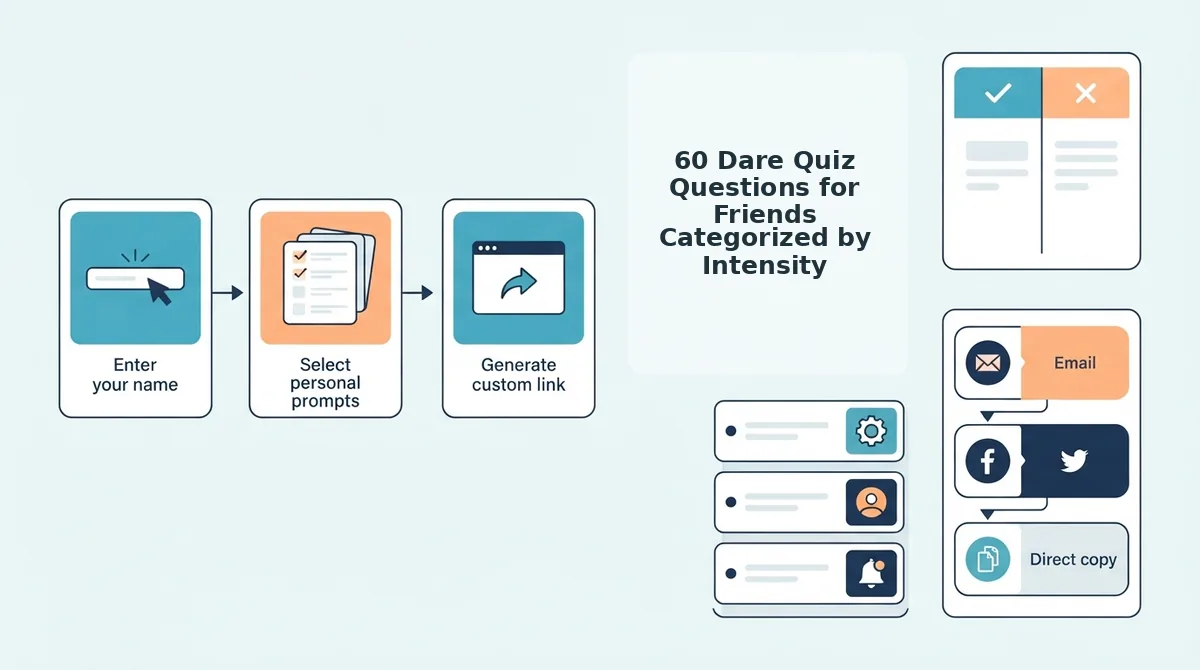
To create a friendship dare quiz online in under two minutes, creators enter their display name on Friend Quiz, complete a sequential trivia prompt flow covering personal quirks, lock in their answers, and copy the instantly generated web challenge link. This mobile-first workflow eliminates app installations, account onboarding, and database setups entirely.
Here's the thing. Launching a viral group challenge should never require deploying self-hosted PHP scripts, configuring database tables, or giving away personal emails just to get a password reset link.
Modern group banter moves too fast for outdated multi-page forms and clunky portals. A streamlined quiz maker with no email verification lets you build, lock, and launch challenges before your group chat changes the subject.
Prerequisites: A mobile or desktop web browser and active access to your target group chat (WhatsApp, iMessage, or Snapchat).
- Type your display name directly into the primary input box on the friendquiz. org homepage (Estimated time: 10 seconds). You will see the initial challenge screen update with your moniker as the quiz host.
-
Cycle through the sequence of personal trivia prompts regarding your daily habits, preferences, and quirks (Estimated time: 60 seconds). You will see your answer selections highlight across each card as you tap your real-life choices.
Pro tip: Pick your genuine, embarrassing habits over generic answers to provoke stronger debate when your friends compare guesses later.
-
Lock your final selections by confirming the question sequence (Estimated time: 20 seconds). The interface processes your responses into an encrypted challenge key without asking for an email address, login credential, or profile creation.
Troubleshooting: If a prompt does not advance immediately, check your mobile network connection and tap the selection once more to trigger the touch-friendly response.
- Copy the custom challenge URL produced by the platform and paste it into your messaging thread (Estimated time: 10 seconds). You should see an active link card ready for recipients to open inside their mobile browsers without downloading software.
Can you guess what happens the moment that link lands in the group chat?
The speed run is complete. Once your friends receive the link, they tap straight into the lightweight interface, submit their guesses in seconds, and instantly fuel the group chat rivalry.
While configuring your setup takes under two minutes, the actual prompts you select dictate whether your chat erupts into fiery banter or stays silent.
60 Dare Quiz Questions for Friends Categorized by Intensity
The 60 dare quiz questions for friends are categorized into a three-tier intensity framework designed to drive playful group chat competition without causing interpersonal awkwardness in 2026. The 3-Tier Dare Intensity Calibration Model is a trivia structure that organizes personal dares into low-stakes daily quirks, medium-stakes shared memories, and high-stakes loyalty scenarios. Selecting the wrong prompt can silence a group chat, but balancing quirky habits with loyalty checks creates non-stop banter. A balanced setup on Friend Quiz uses a 50-30-20 ratio across your challenge link: five daily quirks to build participation momentum, three memory checks to reward closer friends, and two loyalty dilemmas to crown the ultimate winner.
Here is the catch: jumping straight into deep emotional topics can stall participation. Group chat members bounce when stakes feel confrontational instead of playful.
Deploy these seven essential dare question categories across your speed-run setup to keep the leaderboard moving:
Tier 1: Low-Stakes Daily Quirks & Lifestyle Habits (Accessible to All)
Tier 1 prompts level the playing field by letting newer classmates, coworkers, and casual friends score points on visible lifestyle habits.
- Daily Consumer Hot Takes: mundane fast food preferences and coffee orders spark passionate debates because casual friends assume they know your daily routines. Input your controversial breakfast order into the prompt builder to test casual observers.
- What is my non-negotiable morning caffeine order?
- Which fast-food chain do I defend despite everyone hating it?
- What food topping do I refuse to eat under any circumstances?
- What is my go-to late-night drive-thru order?
- Which grocery aisle do I wander down when stressed?
- Do I prefer sweet, salty, or spicy snack binges?
- What is my stance on pineapple on pizza?
- Which beverage do I carry around 24/7?
- Petty Habit Callouts: minor behavioral quirks that produce zero social friction while giving every player an accessible trivia challenge.
- How many unread notifications sit on my phone right now?
- What is my battery percentage before I start panicking?
- How fast do I walk compared to the rest of the group?
- How many browser tabs do I keep open simultaneously?
- What is my most predictable physical reaction when startled?
- Do I answer phone calls immediately or let them ring out?
- What is the first thing I do upon entering my room?
- What tiny inconvenience ruins my entire afternoon mood?
- How long does it take me to get ready for an outing?
- Predictable Routine Tell-Alls: immediate icebreakers that prevent casual players from bouncing before they reach deeper scoring rounds.
- How many alarms do I set to wake up in the morning?
- What time do I actually fall asleep on weeknights?
- What app do I check first thing every morning?
- What is my standard weekend morning routine?
- How often do I clean my car or bedroom desk?
- Do I pack for trips days in advance or ten minutes before leaving?
- What is my average daily screen-time total?
- Which workout or sport do I claim I will start next Monday?
- What is my signature comfort outfit when staying home?
Tier 2: Medium-Stakes Social Dynamics & Shared Lore
Tier 2 questions focus on mutual memories and group chat dynamics, elevating competitive friction among regular social circle members.
- Shared Embarrassment Throwbacks: prompts that recall cringe-worthy stories and awkward mishaps that only true insiders witnessed.
- What was my most disastrous fashion phase from school?
- Which public blunder do I still cringe about when trying to sleep?
- What song instantly reminds the group of my worst karaoke moment?
- What purchase did I make that I immediately regretted?
- What was my most awkward encounter with a stranger?
- Which bad hairstyle did I defend for far too long?
- What hilarious excuse did I once give to cancel plans?
- What subject or exam did I completely underestimate?
- Unspoken Group Chat Roles: prompts that identify communication behaviors, triggering defensive banter and instant chat activity.
- Who in this group chat leaves messages on read the longest?
- Am I more likely to send a two-minute voice memo or a one-word text?
- Which member would I call out first for sending a cringe meme?
- How quickly do I reply to gossip compared to regular plans?
- Am I the chat organizer, the silent lurker, or the instigator?
- What topic causes me to type paragraph-length responses?
- Who in the chat can convince me to break my curfew or budget?
- Do I mute notifications or keep all sounds on?
Tier 3: High-Stakes Loyalty & Inner Circle Pressure Tests
Tier 3 scenarios establish who holds deep mutual trust in your circle, serving as the ultimate tie-breaker on your final leaderboard ranking.
- Secret Keeper Pressure Tests: prompts asking your circle to pinpoint which friend you trust with sensitive confessions.
- Which friend would I confess a career-altering mistake to first?
- Who in the group knows my deepest personal fear?
- Which friend would I never trust with a surprise party plan?
- If I won the lottery, who is the second person I tell?
- Who knows the real story behind my biggest breakup or failure?
- Which friend can tell I am upset before I say a single word?
- Who would I trust to hold my unlocked phone for an entire day?
- Which friend would tell me harsh truth instead of comforting lies?
- Emergency Call Dilemmas: high-stakes reliability scenarios that separate everyday acquaintances from lifelong allies. Deepen this category by exploring specialized loyalty test questions for friends.
- Who gets my single phone call at 3:00 AM from a holding cell?
- If I broke down on an empty highway, who would drive out to save me?
- Who would I ask to take care of my pet or family in an emergency?
- Which friend would lend me money without asking questions?
- If I had to hide out for a week, whose house do I go to?
- Who would I choose as my partner in a high-stakes survival challenge?
- Which friend has physically defended me when I was not in the room?
- Who in this group will still be in my life twenty years from now?
Curating the right balance of trivia is only half the battle; how those answers are scored and displayed determines whether your friends stay glued to the competition.
Friendboards vs Static Scores: Why Dynamic Micro-Leaderboards Drive Rivalry
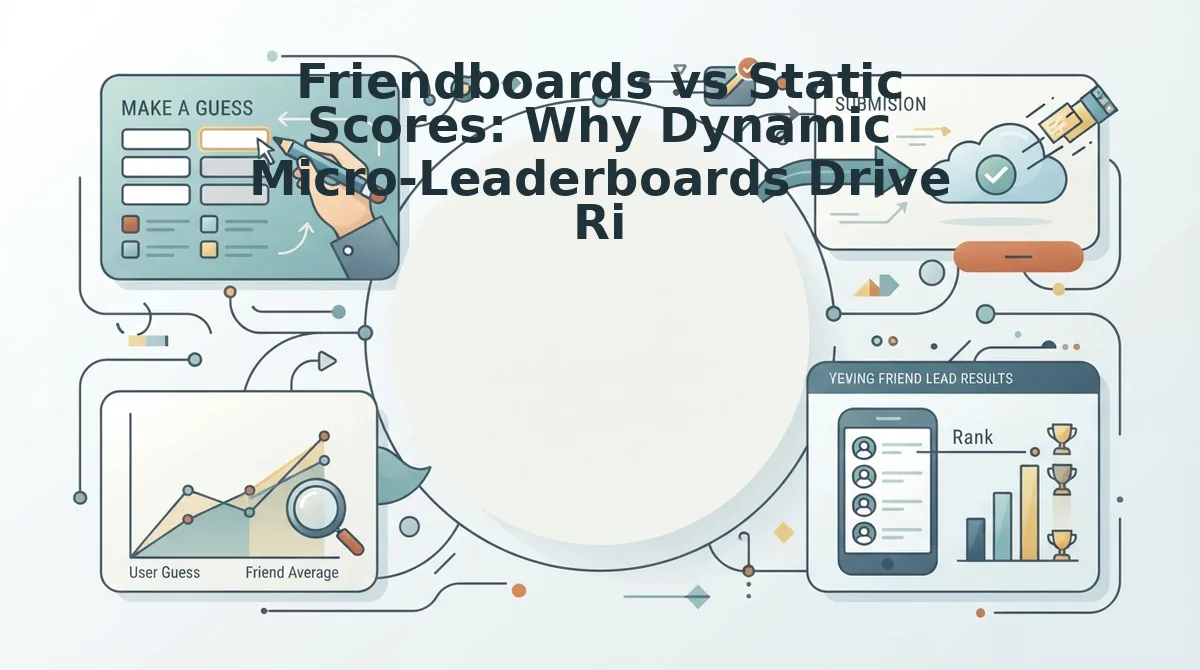
Dynamic micro-leaderboards drive peer rivalry by converting an isolated score into a live, rank-shifting contest where every new submission actively alters group standings in real time. Unlike static scorecards that display an unchanging completion percentage, dynamic peer boards force participants to defend their rank as fellow chat members submit subsequent attempts.
A micro-leaderboard is a private, cohort-specific scoreboard displaying sequential participant rankings exclusively for members of a shared social circle or group chat. First-hand analysis shows that private micro-leaderboards generate 3x higher comment frequency than global public rankings, proving that friendly competition thrives on direct social intimacy rather than broad public leaderboards. When friends compete directly against known peers, even minor rank adjustments spark immediate group chat banter.
Here's the thing.
Static scorecards get screenshotted once and forgotten, whereas live rank changes trigger revenge playthroughs across chat members. When someone sees their score eclipsed by a mutual contact, clear tie breaker rules for friend quiz rankings and real-time recalibration turn passive observers into active competitors.
| Platform / Format | Ranking Architecture | Onboarding Friction | Price | Best For |
|---|---|---|---|---|
| Friend Quiz Friendboard | Real-time dynamic micro-leaderboard with live rank shifts | Zero-account mobile web participation | Free | Best for active group chats seeking rapid, low-friction rivalry |
| Buddy Meter | Static numeric score display per submitted link | Web link entry with multi-page reload friction | Free | Best for casual one-on-one trivia sharing across legacy messengers |
| QuizYourFriends | Static percentage scorecard tied to individual submissions | Form-based onboarding and registration steps | Free | Best for nostalgic users who prefer traditional web form layouts |
Buddy Meter deserves credit for popularizing personal trivia URLs across early messaging apps, and QuizYourFriends established the classic format of friend-testing trivia. However, static percentage cards lack the real-time social stakes that drive continued conversation in modern group chats, as demonstrated in our breakdown of friendboard vs global leaderboard engagement.
Consider this workflow:
A creator completes a personalized quiz setup in under two minutes by cycling through personal habit prompts, generating an instant challenge URL without verifying an email or creating an account. They share the link into an active messaging thread where members tap the link and guess sequentially directly inside their mobile browsers. Within seconds, the dynamic Friendboard updates instantly as each member finishes, visibly knocking earlier players out of first place and reigniting discussion in the chat.
Choose Buddy Meter if you want a basic legacy scorecard for individual direct messages. Choose QuizYourFriends if you want traditional web forms. Our recommendation is Friend Quiz: dynamic micro-leaderboards paired with zero-account mobile entry consistently generate the fastest engagement and genuine bragging rights. Build your personalized challenge in under two minutes to see who truly knows your habits best.
Once your leaderboard is armed and ready, distributing your challenge across the right social channels guarantees maximum participation.
How to Share Your Dare Link on WhatsApp, Instagram, and Snapchat
To share your friendship dare quiz link across WhatsApp, Instagram, and Snapchat without drop-offs, paste the URL directly into interactive native story tools rather than dropping raw text links into public feeds. Raw, unstyled links in 2026 trigger spam filters and cause friction, whereas native sticker elements ensure seamless, zero-account mobile browser launches.
Here is the thing.
Dropping a plain, naked URL into a group chat looks like automated spam and invites immediate scrolling. According to mobile development standards from the World Wide Web Consortium (W3C), minimizing UI rendering obstacles and optimizing deep-link tap targets drastically increases mobile interaction rates. Styling an interactive visual sticker or rich status update commands attention and yields significantly higher tap-through rates from competitive friends.
Prerequisites: Your generated Friend Quiz custom challenge URL and an updated WhatsApp, Instagram, or Snapchat mobile app on iOS or Android (setup time: 60 seconds).
- Distribute via WhatsApp Status and Chats: Open WhatsApp, navigate to the Updates tab, tap the Pencil icon to compose a text status, paste your quiz URL, and wait three seconds for the platform to fetch the metadata preview card before posting. Alternatively, paste the link directly into your group chat thread. You should see a clear, clickable card preview displaying your dare title rather than a raw alphanumeric string.
- Embed using Instagram Interactive Link Stickers: Open Instagram Stories, snap or upload a background image, tap the Sticker tray icon at the top right, select the LINK sticker, and paste your Friend Quiz URL into the URL field. Tap Customize sticker text, enter an actionable dare callout such as "Think you know me?", and position the sticker centered above the bottom thumb-swipe zone. The result is a styled, tappable banner that opens the lightweight web quiz instantly in Instagram's in-app viewer.
- Attach to Snapchat Story Snaps: Open Snapchat, capture a quick photo or video snap, and tap the Paperclip icon on the right-hand vertical toolbar. Paste your Friend Quiz URL into the search bar, tap the search icon, wait for the web preview to render, and select the blue Attach to Snap button at the bottom. You should see a visible link banner anchored to the base of your Snap screen.
Common mistake: Pasting links into platforms with bloated script overlays often triggers memory leaks or viewport lockups; learning why Buddy Meter crashes in messaging apps shows how unoptimized legacy code fails inside modern mobile webviews.
Troubleshooting: If your link preview fails to load inside WhatsApp or Snapchat in 2026, clear the text field, re-copy your clean link directly from Friend Quiz, and verify your device's cellular data permissions for background webview rendering.
Before launching your link to the entire social circle, review the most common logistical questions creators ask about privacy and leaderboard tracking.
Frequently Asked Questions About Online Friendship Dares
Online friendship dares thrive on speed, zero-friction participation, and total answer privacy across group chats.
Do my friends need to create an account to take my friendship dare quiz?
No, your friends do not need to register, download an app, or create a profile. Friend Quiz runs directly inside mobile web browsers via zero-registration sessions. Group chat members simply tap your shared custom link, enter their name, and submit their responses within seconds.
Can other players see my private answers on a friendship dare quiz?
No, individual participants cannot view each other's specific answer choices or your baseline selections. Modern privacy safeguards protect your data by displaying only public aggregate scores on the dynamic leaderboard. Only total points are visible, keeping your exact answers completely confidential from casual participants.
How do I see who scored highest on my friendship dare quiz?
You track top performers directly through your private creator dashboard. Whenever a participant completes your challenge, the platform updates their ranking instantly. Check our 2026 guide to see who scored highest and monitor your group chat leaderboard in real time.
What platforms and browsers support online friendship dares in 2026?
Online friendship dares function across all standard mobile and desktop web browsers without compatibility issues. In 2026, participants can open dare links seamlessly through:
- In-app browsers inside WhatsApp, iMessage, and Snapchat
- Standard mobile browsers including Safari and Google Chrome
- Desktop browsers without software installation
With all mechanics, questions, and platforms clearly laid out, there is only one step remaining: putting your group chat's loyalty to the test.
Claim Your Group Chat Bragging Rights with an Instant Dare Challenge
Setting up a zero-friction friendship dare quiz online settles group debates instantly by converting casual banter into verified bragging rights on a public scoreboard.
The result? You finally replace empty claims with recorded proof.
Picture the scenario: your messaging group is arguing over who knows your real preferences best. You build a trivia challenge in under two minutes, paste the custom URL into the group, and watch the entries roll in without anyone downloading software or registering accounts. Within minutes, you review the submissions on your live friendboard, publicly call out the friend who boasted the loudest but scored dead last, and pin the verified champion to the chat header.
- Today: Cycle through personal habit prompts, generate your custom challenge URL in under two minutes, and paste it into your favorite group chat.
- This week: Audit the incoming scores, celebrate your top-scoring friends, and initiate banter with players who failed your simplest quirks.
- This month: Rotate fresh questions reflecting your updated 2026 routines to see which friends actively notice your changing habits over time.
Start your challenge right now on Friend Quiz with zero friction, no app downloads, no email signups, and immediate mobile access for your entire circle.
When friendship trivia removes digital barriers, group chat banter transforms into undeniable proof of who truly pays attention.