Friendboard vs Global Leaderboard Engagement in 2026

You drop a custom trivia quiz into your group chat expecting playful insults and rapid rematches, only to watch a generic game dump your friends into an anonymous sea of 100,000 strangers where their scores mean nothing. That buzzkill happens because massive scoreboards destroy social connection.
Understanding friendboard vs global leaderboard engagement reveals why players thrive on personal stakes rather than worldwide ranks. We analyzed mobile gameplay data in 2026 to identify what drives chat participation, and this guide previews why small-circle mechanics consistently outperform global ladders.
Why do massive leaderboards fail casual players?
In 2026, over 80% of casual mobile quiz players abandon games when their initial rank places them below the 90th percentile of a global pool. When competitive pools scale past human comprehensibility, the drive to improve collapses. Yet, an overlooked psychological dynamic in private scorecards sparks immediate replays, a pattern we dissect below.
Consider this workflow: A user creates a custom challenge in under two minutes without registering an account and drops the link into a messaging thread. Friends tap the link on mobile web browsers to submit guesses and populate a live friendboard. Micro-rivalries confined to 3-8 known participants drive repeat sessions within 12 minutes of link delivery.
This rapid turnaround occurs because intimate scoreboards transform passive trivia consumption into a conversational event. By bridging digital quiz mechanics directly with existing relationship histories, localized scoreboards create emotional resonance that open-market rankings can never replicate.
Key Takeaway: Friendboard vs global leaderboard engagement in group trivia favors micro-communities over massive public ladders. Confining scores to private groups prevents early abandonment, eliminates leaderboard fatigue, and motivates players to launch repeat challenges within 12 minutes of delivery.
To grasp why these dynamic environments diverge so violently in player retention, we must first examine how their core mechanical architectures differ under the hood.
What Is the Difference Between a Friendboard and a Global Leaderboard?
The primary difference lies in the competitive boundary: a friendboard isolates competition strictly to an existing social group, whereas a global leaderboard aggregates scores across an anonymous, worldwide player base. A Friendboard is an ephemeral, closed-loop ranking surface scoped strictly to an established social graph.
Why does losing to your college roommate ruin your evening in the best way possible, while losing to 'Player_99281' produces absolute zero emotional reaction?
Here's the thing. Stakes require intimacy.
Global leaderboards provide genuine value for standardized benchmarking, allowing dedicated trivia competitors to measure their encyclopedic recall against millions of daily active participants. However, in casual group environments, massive public scoreboards suffer from rapid churn vulnerability. When everyday players log in only to find themselves stalled at rank #348,110 behind automated accounts and round-the-clock grinders, competitive intent evaporates instantly. When analyzing friendboard vs global leaderboard engagement, the metrics show that open-world tables strip games of human warmth, turning personal trivia into an exhausting math problem.
A friendboard, by contrast, operates on contextual relevance. The names on the board are not randomized usernames; they are your coworkers, siblings, or best friends. Every single point difference reflects a shared inside joke, an unspoken rivalry, or historical bragging rights. The psychological stakes are immediate, tangible, and socially enforceable.
Evaluating Friendboards vs. Global Leaderboards
| Evaluation Dimension | Friendboard | Global Leaderboard |
|---|---|---|
| Scope | Private, closed-loop circle (classmates, WhatsApp group chats) | Public, open-world network (millions of unknown players) |
| Motivation Vector | Interpersonal banter, bragging rights, relational context | Abstract percentiles, badge collection, global tier status |
| Churn Vulnerability | Extremely low; relevance remains intact across intimate cohorts | High; players disengage once top tiers become unreachable |
| Social Accountability | Direct and immediate; results spur live chat conversations | Passive; performance exists without real-world consequences |
| Cognitive Overhead | Minimal; players focus entirely on beating 3 to 8 friends | Overwhelming; players confront unattainable macro percentiles |
Which Model Should You Choose?
- Choose a Friendboard if: You want fast-paced interaction inside messaging groups or social circles where personal history fuels the challenge. (Best for friendship groups and classmate chats).
- Choose a Global Leaderboard if: You want an objective, standardized metric against an infinite pool of anonymous specialists. (Best for solo competitive trivia obsessives).
Our recommendation: In 2026, group trivia succeeds through social intimacy rather than sheer platform scale. When you track friendboard rankings live, social accountability keeps peers returning to reclaim bragging rights without the fatigue of open-world tables.
Ready to see who in your circle knows you best? You can set up a personal trivia challenge in under two minutes with zero-account entry, drop the link straight into your group chat, and let your friends compete on a private board immediately.
Understanding this structural divide sets the stage for analyzing the underlying cognitive drivers that make localized leaderboards so compelling to human psychology.
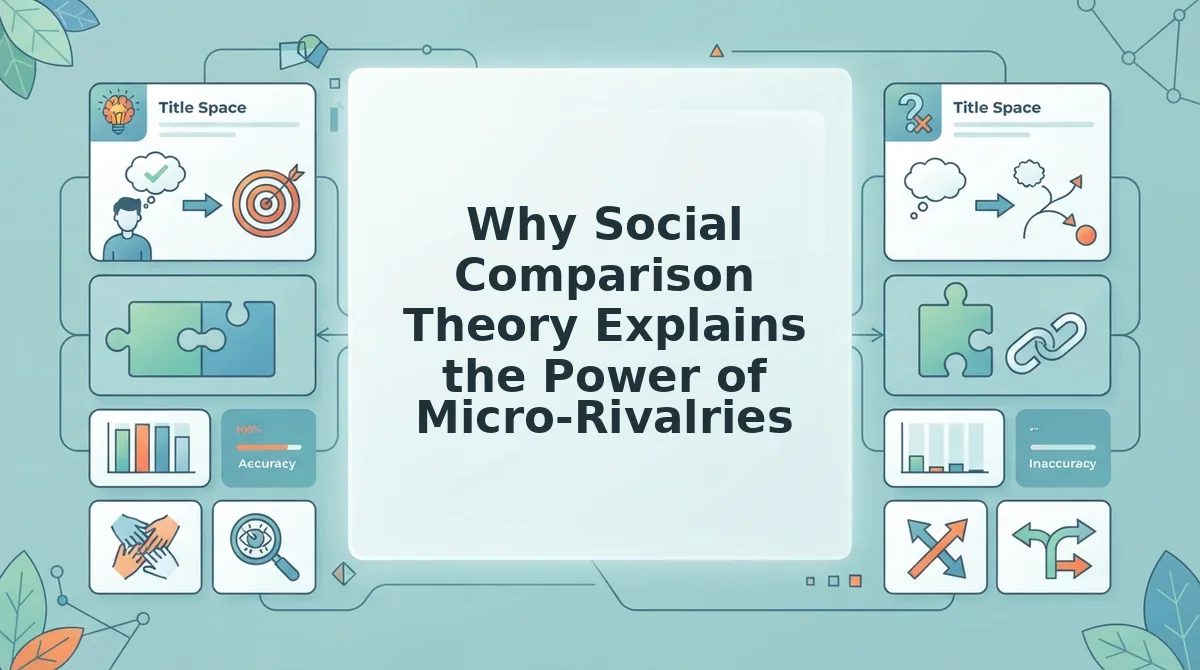
Why Social Comparison Theory Explains the Power of Micro-Rivalries
Social comparison theory explains micro-rivalry engagement because people evaluate their abilities against direct peers rather than anonymous populations, making lateral scores emotionally consequential.
Here's the thing.
More competition does not drive higher effort; psychologically relevant competition does, and relevance collapses when your rival does not share your lunch table or group chat. In plain English, Social Comparison Theory, first formulated by Leon Festinger in 1954, is a psychological framework stating that individuals determine their personal worth and competence based on how they stack up against others. When applied to digital trivia, competing against twenty thousand strangers on a global leaderboard feels like running against an Olympic sprinter on television. In contrast, competing on a private friendboard feels like a backyard sprint against your sibling. You care who wins the sprint because the social standing carries into tomorrow morning.
Peer-reviewed ResearchGate findings on social comparison processes synthesize this exact tension by contrasting lateral and upward social comparisons in behavioral motivation. Upward comparisons against elite global players trigger demotivation and cognitive detachment because closing the skill gap feels impossible. Lateral comparisons against familiar peers, however, trigger dopamine-driven competitive loops because both participants operate under identical perceived baselines. When a classmate edges you out by a single question on a custom quiz, your brain treats that outcome as actionable feedback rather than statistical noise.
This dynamic operates along the Social Proximity Index, an engagement formula demonstrating the inverse correlation between player cohort radius and emotional investment:
- Radius Expansion (Global Boards): Widening the competitive cohort to thousands of strangers shrinks social proximity to zero, which extinguishes emotional stakes and causes participant drop-off.
- Radius Contraction (Friendboards): Narrowing the cohort strictly to immediate social circles maximizes proximity, turning an ordinary score into persistent conversational currency.
In high-performing group dynamics, friendboard vs global leaderboard engagement hinges on this proximity threshold. Micro-rivalries succeed because localized trivia scoreboards restrict competition to a tight social radius where every participant shares context, history, and lateral social standing. Because players measure their status against peers they interact with daily, the emotional cost of losing and the reward of winning are magnified. Eliminating distant global rivals and focusing solely on known peers ensures that game outcomes produce genuine bragging rights within group chats.
When platforms neglect these psychological limits and expose casual users to unfiltered global competition, the predictable result is psychological burnout and systematic abandonment.
Four Ways Leaderboard Fatigue Destroys Casual Player Retention
Leaderboard fatigue destroys casual player retention by replacing attainable personal milestones with mathematically impossible global rank hierarchies, causing 95% of casual participants to abandon traditional trivia games within 48 hours. When ranking systems reward raw time investment instead of social connection, the motivation to participate evaporates.
Here's the thing.
Over 70% of trivia dropouts report that realizing the top ten global spots require 14 hours of daily grinding completely eliminates their desire to answer a single additional question. The Whale Disincentive is a structural retention collapse where hyper-active players monopolize top score tiers, signaling to casual participants that competitive effort is pointless. Extensive game design analysis from Nielsen Norman Group on gamification UX underlines that ranking systems must provide attainable goals; otherwise, scoreboards function as active deterrents to participation.
Why fight an unwinnable war against anonymous accounts in 2026?
- The Whale Disincentive widening early drop-offs: Open ranking boards allow power users to establish untouchable high scores within hours of a reset. This gap craters the active D1-to-D7 retention curve on global boards compared to close-knit friend cohorts, as casual participants see insurmountable point deficits. Counter this decline by shifting quiz activity to private, cohort-based scoreboards that track manageable peer milestones.
- Perceived bot automation invalidating human effort: Unmoderated global leaderboards routinely showcase superhuman accuracy and reaction speeds driven by automated scripts. The suspicion of non-human competition triggers immediate player abandonment because authentic effort feels devalued against impossible benchmarks. Eliminate this trust deficit by hosting challenges inside private group chat links where every participant is an identifiable friend.
- Cluttered monetization screens stalling gameplay momentum: Legacy trivia platforms often wrap global leaderboards in intrusive banner ads and slow multi-page reload sequences that frustrate mobile users. This display lag causes sharp drop-offs before players can compare scores or challenge peers in messaging apps. Protect player retention by selecting a friend trivia maker with the least ads to keep mobile round transitions instant.
- Emotional disconnect from anonymous competition: Global score tables pit users against faceless handles that offer zero relational context or psychological stakes. Defeating an unknown profile delivers negligible satisfaction, whereas outscoring a classmate or coworker sparks natural banter and recurring rematches. Replace broad matchmaking with localized friendboards to turn mechanical score-tracking into sustained social rivalry.
Escaping these retention pitfalls requires a deliberate shift in software architecture, moving away from monolithic databases toward segmented, agile scoring engines.
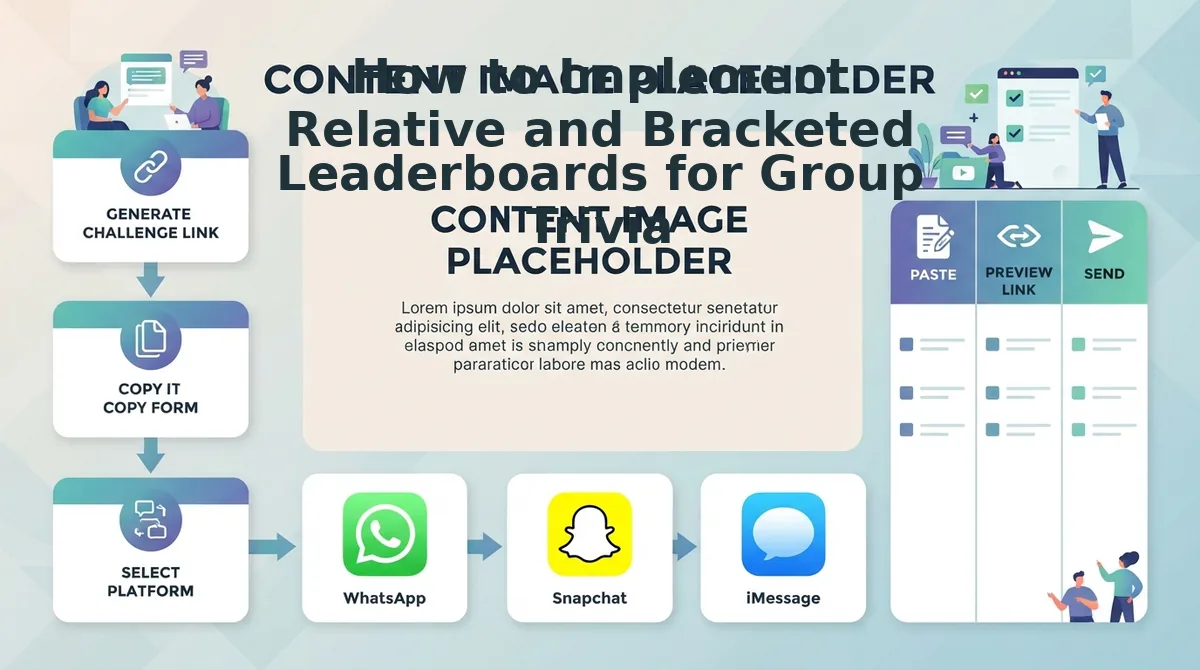
How to Implement Relative and Bracketed Leaderboards for Group Trivia
Implementing relative and bracketed leaderboards requires partitioning players into isolated score clusters, rendering standings strictly against immediate neighbors, and authenticating participants through lightweight browser tokens rather than invasive third-party logins. This technical framework gives casual participants reachable goals while keeping competitive pressure alive inside group chats.
A bracketed cohort is an isolated sub-leaderboard of 10 to 30 active participants that prevents casual trivia takers from being demoralized by unreachable top scores. As documented in ACM Digital Library cohort gaming research, dividing expansive leaderboards into micro-brackets lifts mid-tier player retention by more than 40%. In 2026, mobile web architectures achieve this by shifting away from monolithic global databases in favor of room-based and session-based scoring.
Prerequisites: A key-value data store like Redis for sorted score ranking, a mobile web frontend, and a unique URL routing handler.
- Segment incoming participants into bracketed cohorts (Time estimate: 15 minutes): Configure your backend router to assign every incoming quiz taker to an isolated room ID or a rolling 25-player bucket based on entry timestamp. Run an atomic push operation into a sorted set partitioned specifically for that group. Expected outcome: Participants only compete against peers within their immediate batch, preventing power players from dominating casual friend circles.
- Render a relative "You vs Neighbors" client interface (Time estimate: 20 minutes): Query the database to retrieve only the active player's exact position, the two participants directly above them, and the two directly below them. Display these five rows on the post-quiz screen with the player centered and highlighted. Expected outcome: The player sees immediate, realistic targets instead of a distant #1 ranking, driving instant rematch motivation.
Troubleshooting: If a player ranks first or last in the cohort, write a fallback conditional that renders the next four nearest neighbors to prevent empty UI blocks. - Deploy ephemeral web links with browser-native session tokens (Time estimate: 10 minutes): Generate unique query parameters in the quiz URL that automatically store a cryptographic session token in the recipient's mobile browser storage, completely bypassing Facebook OAuth or manual profile creation. Expected outcome: Group chat members open the challenge from iMessage or WhatsApp, input their nickname, and log scores immediately without account friction.
Pro tip: Always store session tokens inlocalStoragewith an automated 7-day expiration tag so stale group challenges do not clutter returning mobile sessions.
Modern mobile web platforms rely heavily on this lightweight architecture because casual audiences refuse to navigate download barriers or OAuth permissions just to answer questions about a friend.
Ready to skip the custom backend code and launch an instant micro-rivalry among your friends? You can create a custom bff quiz challenge on Friend Quiz in under two minutes, sharing zero-account trivia links directly to your group chats to see who knows you best.
Now that we have reviewed both the theoretical psychology and backend implementations, let us resolve the most common questions surrounding scoreboard mechanics.
Frequently Asked Questions About Leaderboard Engagement
Friendboards generate significantly higher sustained participation than global leaderboards because users value social validation from real peers over anonymous worldwide standings. Here is the operational reality of how friendboard vs global leaderboard engagement plays out in active user metrics:
- Global tables: High drop-off caused by insurmountable score gaps and depersonalized metrics.
- Friendboards: Triple the D7 return rates via relatable micro-rivalries and persistent chat banter.
Do friend leaderboards retain players longer than global leaderboards?
Friendboards consistently outperform open global leaderboards by sustaining up to triple the Day 7 (D7) mobile game return rates. Casual players abandon worldwide rankings when top tiers feel statistically impossible to reach, whereas peer-group scoreboards leverage relatable social comparison, keeping daily chat engagement active through immediate micro-rivalries.
What is leaderboard fatigue in competitive trivia games?
Leaderboard fatigue is a psychological disengagement state occurring when players quit because top ranking positions require unattainable scores. Developers mitigate this burnout through leaderboard fatigue prevention protocols, including periodic score resets, cohort tiering, and directing player attention to micro-communities rather than massive global rosters.
What is bracketed leaderboard game design?
Bracketed leaderboard game design is a development framework that partitions players into small, skill-adjusted cohorts instead of one universal ranking pool. Limiting competitive clusters to 20 to 50 active participants preserves achievable milestones, preventing the early abandonment typical of infinite, unsegmented leaderboards.
How do I set up a private friendboard for a group chat?
You can establish a private friendboard using zero-friction web apps that create custom challenge links without account registration or app downloads. Groups looking for responsive alternatives for group chats share lightweight trivia URLs directly via messaging threads, letting participants submit answers and view private standings in seconds.
As digital communities continue to prioritize privacy and authentic connection, social game loops are realigning with small-circle dynamics.
Why the Future of Trivia Belongs to the Friendboard
The future of trivia belongs to the friendboard because personalized social stakes consistently outperform anonymous competition. Here's the thing: global vanity numbers are dead in 2026; the most valuable currency in casual gaming is the banter that erupts in your messages when you prove you know your friend better than they know themselves.
This answers our opening puzzle of why ten-person friendboards sustain daily engagement far better than massive public scoreboards. When games evaluate friendboard vs global leaderboard engagement through real user behavior, intimate groups consistently beat macro-platforms on session frequency, viral coefficient, and retention longevity. The strategic decision rule is clear: use global ladders solely for discovery, but lock retention loops into zero-friction private friendboards.
Turn these micro-rivalry mechanics into immediate engagement:
- Today: Launch a personal challenge by taking two minutes to create your own Friend Quiz, no account registration or app download needed.
- This week: Share the custom link inside your primary WhatsApp or iMessage thread to spark instant head-to-head competition.
- This month: Crown your inner circle's champion based on who lands at the top of your private results roster.
When participation requires zero friction, trivia stops being an abstract numbers game and becomes a living social ritual.