Loyalty Test Questions for Friends (2026) 85 Scenarios & Signs
Viral 2026 YouTube loyalty test formats from creators like Marlon and iKnowAyrel are engineered to destroy friendships for clicks, not measure genuine fidelity. Manufacturing fake betrayals on camera guarantees instant relationship breakdowns rather than real proof of devotion. When you create artificial honey traps, staged infidelity setups, or planted rumors, you measure how people react under weaponized deception rather than their authentic, everyday commitment.
You want to see who truly has your back in your inner circle, but setting toxic undercover traps is a recipe for disaster. According to clinical research published by the American Psychological Association, interpersonal trust deteriorates exponentially when individuals feel subjected to covert surveillance, whereas transparent mutual vulnerability strengthens relational security.
Instead, you need constructive, competitive loyalty test questions for friends that measure who actually remembers your daily life. Below, you will discover high-stakes trivia prompts, leaderboard dynamics, and proven ways to spark bragging rights without alienating your group chat.
Having tested dozens of group chat dynamic challenges, we discovered that the sharpest loyalty check is never an emotional ambush, it hinges on one specific routine prompt that quietly catches even your closest friends off guard.
Consider this workflow: A creator enters their name on Friend Quiz, answers prompts about their daily habits in under two minutes, and shares the generated URL to iMessage. Friends tap the link on mobile with zero account onboarding, submit sequential guesses, and instantly generate an honest knowledge leaderboard.
Key Takeaway: Constructive loyalty test questions for friends replace toxic social-sting drama with transparent personal trivia challenges. By measuring how accurately your circle remembers your real-world habits and quirks, you spark healthy competition and reveal genuine dedication without sabotaging trust.
Understanding this critical distinction between trap-setting and honest verification is the first step toward auditing your social circle. Let's examine the exact prompt structures that reveal genuine character without sacrificing psychological safety.
What Are the Best Loyalty Test Questions for Friends?
The best loyalty test questions for friends are direct, transparent prompts that measure how reliably someone protects your private secrets, respects personal boundaries, and supports you during unexpected hardships. Friendship loyalty testing is transparent mutual accountability rather than covert surveillance. Think of healthy loyalty testing like a structural safety inspection on a house before a storm hits, confirming the foundation holds firm without deliberately sabotaging the walls. In plain English, these questions evaluate mutual devotion through genuine memory, consistency, and daily personal habits.
Here’s the thing.
What separates an honest character evaluation from toxic paranoia?
Genuine loyalty tests never rely on deceptive traps or manufactured social drama. Instead, pairing friendly competition with structured questions to see if someone is a true friend reveals who consistently pays attention to your life in 2026. A friend who remembers how you take your coffee after an overwhelming week demonstrates practical attentiveness, which research from the Pew Research Center links directly to sustained digital intimacy and durable peer support.
The 10-Question Loyalty Baseline
Use these prompts to progress from basic personal knowledge to high-stakes character metrics:
- Everyday Habits: What is my exact comfort food order when I have had an exhausting day? (Evaluates whether a peer notices your passive decompression rituals when you lack the bandwidth to explain them.)
- Everyday Habits: Who is the first person I reach out to when receiving life-changing news? (Reveals whether they accurately understand where they, and others, stand in your support ecosystem.)
- Everyday Habits: Which specific habit or phrase of mine signals that I am secretly annoyed? (Measures emotional intelligence and whether they can decode your social micro-expressions before conflict flares.)
- Protective Boundaries: What is one private boundary I have established that you never cross? (Tests mutual respect regarding sensitive topics, personal space, and emotional bandwidth.)
- Protective Boundaries: If an acquaintance criticizes me when I am not in the room, how do you handle it? (Determines proactive social defense versus passive complicity in gossip.)
- Protective Boundaries: What personal secret have I trusted you to keep entirely confidential? (Identifies whether your shared confidences remain locked within an airtight vault.)
- Protective Boundaries: How do you manage a public disagreement between us versus a private one? (Separates peers who seek social performance points from those who prioritize authentic relationship preservation.)
- Crisis Reliability: Would you answer immediately if I called for urgent transportation at 3:00 AM? (Evaluates practical, real-world utility during moments of vulnerability.)
- Crisis Reliability: When did you last offer me honest, uncomfortable feedback instead of a flattering excuse? (Differentiates superficial yes-men from authentic confidants willing to risk brief discomfort for your long-term growth.)
- Crisis Reliability: What concrete step would you take first if you noticed my mental health declining? (Validates whether they take intentional, perceptive action during prolonged emotional distress.)
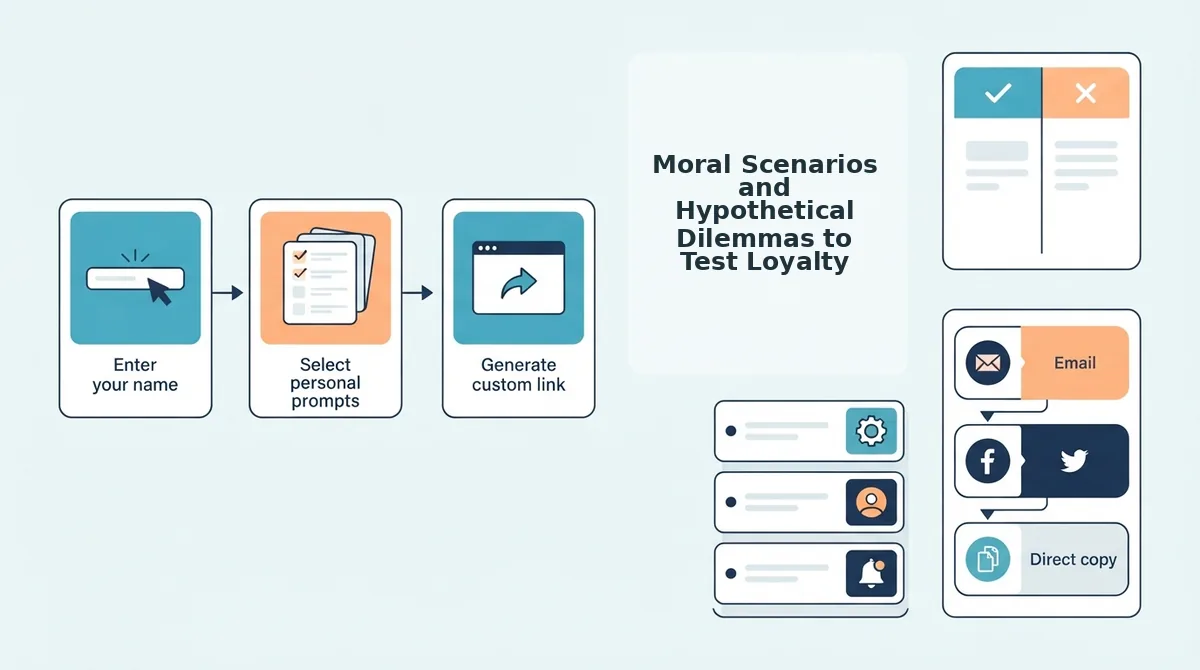
You can package these baseline prompts into a real-time challenge using Friend Quiz. Simply typing your name on the homepage lets you build a personalized speed run quiz in under two minutes, creating a shareable URL that your group chat can complete on mobile web browsers without creating an account or downloading an app.
Before launching any prompt into your messaging channels, however, you must understand the psychological dividing line between harmless gamified competition and destructive relational sabotage.
Is It Toxic to Test a Friend's Loyalty? (The Friendship Matrix)
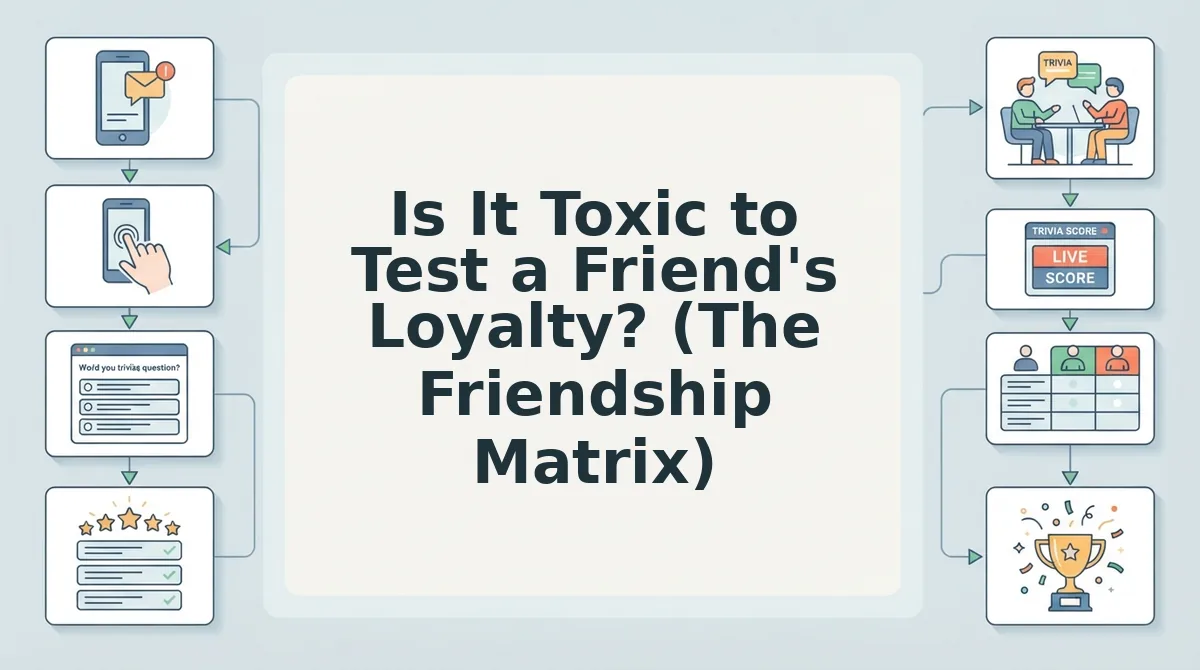
Testing a friend's loyalty is toxic when conducted through deceptive, covert traps, but healthy and engaging when executed as transparent, consensual trivia competition. Secret loyalty checks signal relational insecurity, whereas overt friendship challenges convert personal history into entertaining social currency.
Here's the thing.
Staging a fake romantic interest to slide into your best friend's direct messages or planting deliberate gossip as a leak trap breeds paranoia. In contrast, dropping a custom personal trivia link into your group chat tests memory openly, sparking playful bragging rights rather than hostility. Sociologists studying contemporary digital intimacy emphasize that deceptive behavioral stings destroy the foundation of emotional safety outlined by Psychology Today's relational trust research, while gamified social validation reinforces mutual belonging.
The Loyalty Verification Matrix is an evaluation framework that categorizes friendship evaluations across two distinct dimensions: trust intention (suspicious surveillance versus playful validation) and execution method (covert deception versus overt challenge). In 2026, social circles increasingly reject deceptive behavioral stings in favor of transparent digital challenges that test mutual attentiveness without emotional manipulation.
How does covert verification compare to modern trivia formats?
| Verification Method | Trust Intention | Setup Friction | Relational Risk | Best For |
|---|---|---|---|---|
| Covert Sabotage (Fake accounts, leak traps) | Suspicious & defensive | High (hours to orchestrate) | Catastrophic (breaks baseline trust) | Best for individuals seeking confirmation before ending a relationship |
| Legacy Web Quizzes (Buddy Meter, QuizYourFriends) | Playful & social | Moderate (multi-page forms, ad lag) | Zero (consensual trivia) | Best for users who prefer retro web formats and tolerate display ads |
| Lightweight Mobile Quizzes (Friend Quiz) | Playful & competitive | Low (under two-minute speed run) | Zero (clean leaderboard rivalry) | Best for active group chats wanting zero-account mobile gameplay |
Choose covert sabotage if you already believe a relationship has fatally broken down and you want documented justification to walk away. Choose legacy trivia platforms like Buddy Meter if your peer group values early-web nostalgia and does not mind navigating display banner clutter or multi-page reload delays to view scores.
Choose lightweight platforms like Friend Quiz if you want immediate participation across WhatsApp, iMessage, or Snapchat, where recipients answer sequential prompts without downloading apps or creating accounts.
Our recommendation is to always select overt, transparent trivia challenges over covert relationship testing. Open competition produces measurable data on who knows your habits best while reinforcing group camaraderie instead of sabotaging it.
Once you embrace transparent accountability, you can introduce nuanced hypothetical situations into casual group conversations to gauge emotional maturity and boundary protection.
Moral Scenarios and Hypothetical Dilemmas to Test Loyalty
Moral loyalty scenarios are hypothetical social stress tests designed to measure how a peer protects your reputation, boundaries, and emotional safety when you are not in the room. In 2026, measuring true allegiance requires evaluating these dilemmas against clear behavioral standards rather than relying on polite assumptions.
Here is the thing.
A loyalty dilemma is an actionable prompt used to evaluate real-time peer integrity during social conflict. Evaluating responses against a strict green-flag versus red-flag scoring rubric exposes whether a peer defends your interests or enables quiet sabotage.
- The Empty-Room Slander Defense: What happens when someone talks trash about you in a room where you are not present? This tests proactive boundary defense and public allegiance. A green-flag response shuts down the gossip instantly or exits the conversation, whereas a red-flag response nods along passively or feeds the rumor mill under the guise of listening. Add this scenario into a custom link challenge via the Best Friend Quiz setup to see which group members spot your boundaries immediately.
- The Career Envy Mirror: How does a peer react when you land a major professional promotion or creative milestone that they also wanted? This dilemma tests career envy and uncovers hidden status rivalries within a social circle. A green-flag response celebrates your advancement openly with authentic enthusiasm, while a red-flag response offers backhanded compliments, minimizes the effort involved, or goes conspicuously silent. Test this reaction by comparing direct verbal congratulations against private group chat engagement.
- The Mutual Secret Vault: What does a companion do when an estranged mutual acquaintance asks for personal updates about your private life? This dilemma measures secret protection and emotional discretion under subtle social pressure. A green-flag response establishes an airtight boundary by refusing to disclose your personal business, whereas a red-flag response leaks sensitive details to earn social validation from an outsider. Evaluate this by observing whether shared confidences ever resurface in broader conversation.
- The Unpopular Defense Stance: Will a companion publicly defend your moral stance during a heated group disagreement when the rest of the room opposes you? This counterintuitive dilemma measures intellectual loyalty over social comfort. A green-flag response openly supports your right to your viewpoint even at the risk of group disapproval, while a red-flag response joins the dogpile or offers support only in private direct messages later. Use direct group polling to identify who stands up when consensus shifts.
Consider this real-world scenario: A quiz creator wanted to identify which friends consistently defended their personal boundaries in group discussions. The creator entered their name on the platform homepage, selected specific boundary defense prompts, generated a personalized link in under two minutes, and shared it across active messaging channels. Recipients completed the challenges directly in their mobile browsers without downloading software or creating accounts, revealing precise scoring outcomes that separated loyal defenders from passive listeners.
While deep moral scenarios reveal long-term ethical integrity, everyday communication happens through mobile messaging. Knowing how to assess attentiveness through chat is just as critical.
How to Test Your Friends Loyalty Over Text Without Ruining the Vibe
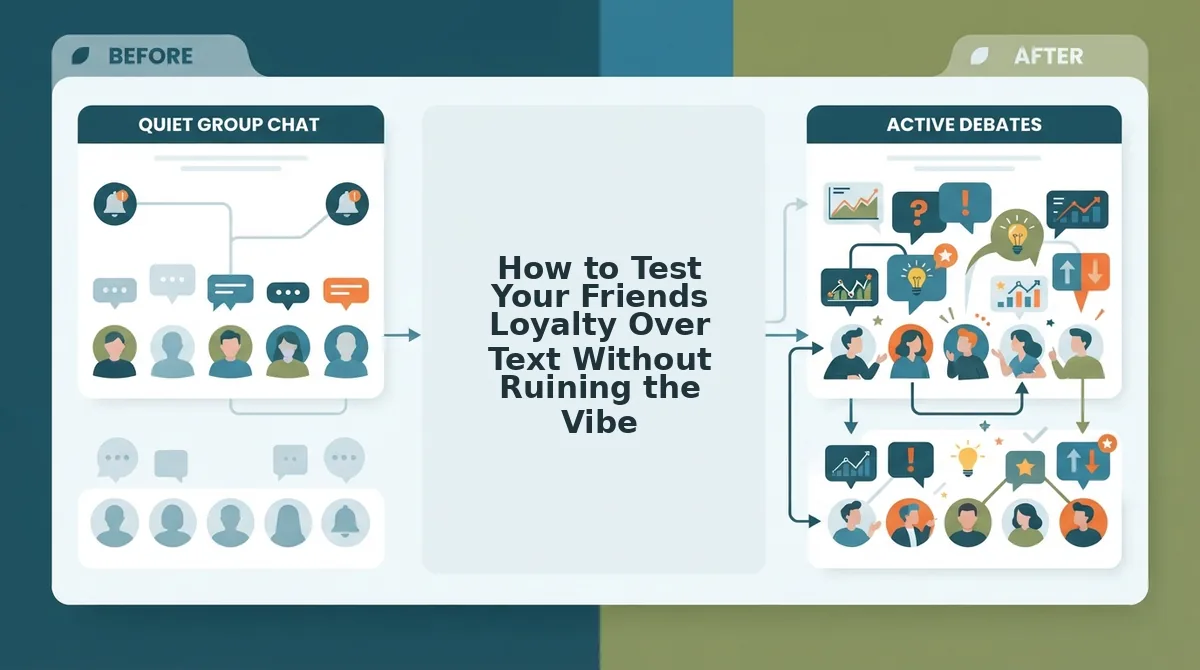
Testing a friend's loyalty over text requires assessing genuine attentiveness and low-stakes availability through organic conversation rather than manipulative drama. By using natural conversational prompts, you can measure reliability without sparking tension or resentment.
Here's the thing. Can you measure someone's real loyalty through an unread notification?
Conversational loyalty testing is the process of evaluating a friend's emotional presence and dependability using subtle, everyday chat prompts. Before you begin, ensure you have an active one-on-one or group thread on WhatsApp or iMessage. This three-step conversational prompt formula takes under five minutes to execute.
- Send a low-stakes decision prompt (Time: 30 seconds). Text your friend a quick dilemma that requires an immediate, grounded opinion, such as asking them to choose between two outfits or pick a lunch spot before a meeting. You should receive a direct response within a reasonable window, signaling that they prioritize your everyday needs when you reach out.
- Drop an active listening recall hook (Time: 1 minute). Reference a specific personal detail or milestone you shared earlier in the week, asking a question like, "Do you remember the deadline I mentioned for that project?" Your expected outcome is an engaged response that either recalls the context or asks an authentic follow-up question. Common mistake: Accusing them of neglecting you if they forget a minor detail; genuine forgetfulness differs from intentional disinterest.
- Launch a lighthearted trivia showdown to verify mutual effort (Time: 2 minutes). Navigate to friendquiz. org, type your name, select your personal habits, and generate a customized challenge link. Share the URL directly into your group thread to see who invests the time to guess your answers and claim bragging rights. When learning how to test your friends loyalty over text, this gamified approach converts quiet observation into friendly rivalry. You should see completed scores populate on your leaderboard in real time without forcing anyone to register an account.
Pro tip: Keep the tone light by framing trivia results as humorous group banter rather than a strict compatibility audit.
Troubleshooting: If a friend leaves your messages on read or skips the trivia prompt entirely, do not escalate the conversation with confrontational texts. Simply observe their communication pattern over the next 48 hours; true loyalty reveals itself in consistent engagement, not instant replies during busy workdays.
When you transition from individual texting threads into full-blown group chats, the dynamic shifts from quiet attentiveness to high-energy competition. That is where humor becomes your best diagnostic tool.
Funny Loyalty Test Questions for Group Chats That Spark Honest Rivalry
Funny loyalty test questions are low-stakes trivia prompts focused on personal quirks and daily habits that reveal how closely your friends pay attention without sparking actual conflict. By replacing heavy philosophical interrogations with witty personal trivia, you discover who notices your daily realities while keeping group morale sky-high.
Here's the thing.
Group chat loyalty questions work best when they focus on predictable habits rather than sensitive relationship milestones. By testing friends on fast food orders, minor irritations, and social reflexes, you turn basic friendship knowledge into friendly competition. Banter scoring mechanics convert personal trivia into real-time leaderboard rivalries, allowing players to compete for bragging rights as scores update instantly. This structure lets everyone in the group expose hilarious lapses in memory, like who completely blanks on your default order, while keeping the mood lighthearted and engaging.
A friendship loyalty challenge is a lightweight trivia quiz designed to test how accurately peer circles recall each other's routines, pet peeves, and personal preferences.
Picture this: you pull into the drive-thru, and your supposed best friend confidently orders you the exact meal you hate. Who actually knows your true staples?
- The Drive-Thru Order Disaster: This question asks friends to name your exact default fast food combo down to the drink choice. It matters because true loyalty means never having to explain your dipping sauce preference under pressure. Drop this question into your challenge and award bragging rights to the friend who gets the details right.
- The Unfiltered Pet Peeve: This prompt tests which minor daily inconvenience drives you completely up the wall. It matters because observant friends recognize what ruins your mood before you even speak. Input three subtle irritations alongside your real pet peeve to see who genuinely spots your triggers.
- The "Worst Habit" Exposure: This counterintuitive loyalty check asks friends to pinpoint your most chaotic personal routine, from chronic lateness to leaving unread texts. It matters because real friends recognize your flaws and call them out without hesitation. Force your group chat to vote on your most obvious fault to instantly spark honest debate.
- The 2:00 AM Crisis Call: This question asks who in the group you would actually call first during a minor late-night emergency. It matters because it reveals who understands their practical role in your social circle versus who just brings the banter. Use it to ignite competitive arguments over which friend is genuinely the most reliable.
- The Flake-Out Excuse: This prompt reveals your signature lie for bailing on weekend plans to stay on the couch. It matters because real companions decode your social battery and know when you are fabricating an excuse. Ask friends to select your go-to cancellation line to reveal who sees through your polite brush-offs.
- The Screen Time Confession: This prompt challenges friends to guess which mobile application consumes most of your battery every single day. It matters because it reveals who pays attention to where you actually spend your digital time. Add your top four used apps into a prompt to expose who tracks your online obsessions.
- The Comfort Show Loop: This question tests which specific movie or television series you rewatch when dealing with stress. It matters because shared entertainment habits form the foundation of casual hangout time. Challenge your circle to guess your comfort series to separate your day-one friends from casual acquaintances.
Ready to see where your group chat truly stands? Create your custom challenge in under two minutes, text the link to your chat, and watch the live Friendboard rankings crown your truest friend.
Even with clear frameworks and lighthearted prompts, navigating friendship dynamics often triggers unexpected social questions. Below are direct answers to the community's most pressing concerns.
Frequently Asked Questions About Testing Friendship Loyalty
Direct behavior during everyday friction reveals genuine loyalty faster than artificial drama.
Here is the thing.
What is the absolute most reliable test of true friendship in 2026?
The most reliable test of true friendship is observing how someone handles your private boundaries, successes, and absent reputation. Genuine loyalty shows up when a friend defends your name in group chats when you are offline, celebrates your wins without passive aggression, and respects communicated limits without turning distant or punitive.
How do I tell the difference between healthy boundaries and ghosting?
Distinguish healthy boundaries from ghosting by tracking communication intent and closure:
- Healthy boundary: A friend explicitly states they need space to recharge and sets a clear timeframe to reconnect.
- Red-flag ghosting: A friend abruptly vanishes during unresolved tension, using silence to punish, manipulate, or avoid accountability.
Why do people use trivia quizzes to test friends?
People use trivia challenges like Friend Quiz to spark friendly rivalry without the toxicity of deceptive real-world traps. Deploying structured loyalty test questions for friends through digital habit challenges reveals who pays attention to daily preferences and personal quirks in group chats, turning loyalty checks into lighthearted competition through instant link sharing rather than stressful interrogations.
What should I do if a close friend fails a loyalty test?
Address the underlying pattern through a direct, private conversation rather than escalating conflict in front of mutual peers. Focus on specific observable actions rather than accusations. If their breach involved broken confidentiality, malicious gossip, or chronic unreliability, reevaluate their access level and transition them from an inner-circle confidant to an acquaintance.
Can playful competition ruin a close friendship?
Playful competition only damages friendships when insecure individuals tie their personal self-worth to winning or use scores to humiliate others. When framed as shared entertainment in casual group threads, low-stakes trivia challenges strengthen peer bonds by celebrating mutual knowledge, validating shared memories, and encouraging humorous banter among friends.
Recognizing the difference between healthy engagement and quiet disinterest gives you the clarity you need. Now it is time to put these principles into action.
Turn Friendship Loyalty Checks Into Playful Group Competition
Testing your friends should strengthen mutual bonds through playful trivia challenges rather than erode trust through manufactured suspicion. When you replace toxic behavioral traps with transparent trivia, you create a social space where loyalty is celebrated through shared laughter rather than private anxiety.
Here's the thing. Fabricated emergencies and covert loyalty tests don't reveal devotion; they project insecurity. The truth teased at the beginning of this guide is clear: genuine loyalty is proven through consistent attention, not calculated ambushes. Swapping relationship-ending honey traps for zero-account mobile browser trivia turns private doubts into high-energy group chat banter.
- Today: Stop running covert tests and create your own Friend Quiz in under two minutes to establish a fun baseline of who knows your daily habits.
- This week: Drop the challenge link into your messaging thread so friends can compete sequentially on their mobile browsers without signing up or downloading an app.
- This month: Check the live leaderboard and award bragging rights to the friend who accurately remembers your quirks, cementing positive reinforcement across your circle.
Setup takes under two minutes with zero profile setup, email confirmation, or app downloads needed. True loyalty is never proven by surviving a manufactured crisis; it is proven by someone caring enough to remember who you actually are.