Why friends stop playing your friend quiz after one round
Three names sit on your Friendboard. The group chat that was supposed to fill it has moved on to a voice note about someone's parking ticket, and the quiz you built in two minutes has gone quiet.
Searching why friends stop playing a friend quiz at 11pm usually comes with a private suspicion that the questions were bad. The likelier culprit is timing: most rounds die at the score reveal, not at question one, because nothing at that moment invites anyone back. That is a re-invite problem, and it costs less to fix than rebuilding the quiz from scratch.
What follows is a diagnostic timeline for where rounds actually stall, then seven fixes you can run in the next group chat. Three things have to be true before any of them work: the chat is awake when the link lands, your prompts are answerable by someone who is not you, and one person agrees to be the host who nudges. Try the friendship test format first if you want a live example of a round a friend can finish on one thumb, no account required. As for the quietest reason round two never happens, it has nothing to do with anyone getting bored.
What Actually Ends a Friend Quiz Round After the Score Reveal
Rounds rarely end on a wrong answer. They end in the minute after the scores land, when the chat reacts and then has nothing left to do.
The Round-One Curve is the four-point timeline every shared quiz travels along, from the link landing in the chat to the first silence after the reveal.
- Link open â whether anyone taps it at all depends on when and where it lands.
- First answer â the friction test: account walls, long forms, and multi-screen pages lose people here.
- Score reveal â the payoff, and the exact moment most creators assume the round is finished.
- First silence â the gap where no follow-up is announced, so nobody has a reason to return.
The curve matters because it keeps the diagnosis honest. Almost all the drop-off you are worried about happens after the payoff, not before it â which means harder questions and better prompts are the wrong lever to reach for first.
Think of a score reveal with no announced follow-up as a message sent into a group chat that ends in a full stop: nobody owes a reply to a full stop. The callback gap is structural, not personal.
Why did my friends stop playing my friend quiz after one round? Because the round had a beginning and a payoff but no announced second beat. Friends answer once, see the standings, and wait for someone to say what happens next. When nobody does, the quiz stops being an event and becomes a link that already got used. The fix is not more questions â it is a scheduled follow-up posted in the same chat, with a time attached. Creators who add that callback get a second round without ever asking for one.
The other early failure point sits before question three, at guest play mistakes that lose friends before question three. The Friendboard updates as answers land, so the standings themselves can carry the callback.
How to Fix Each Drop-Off Point in Seven Steps
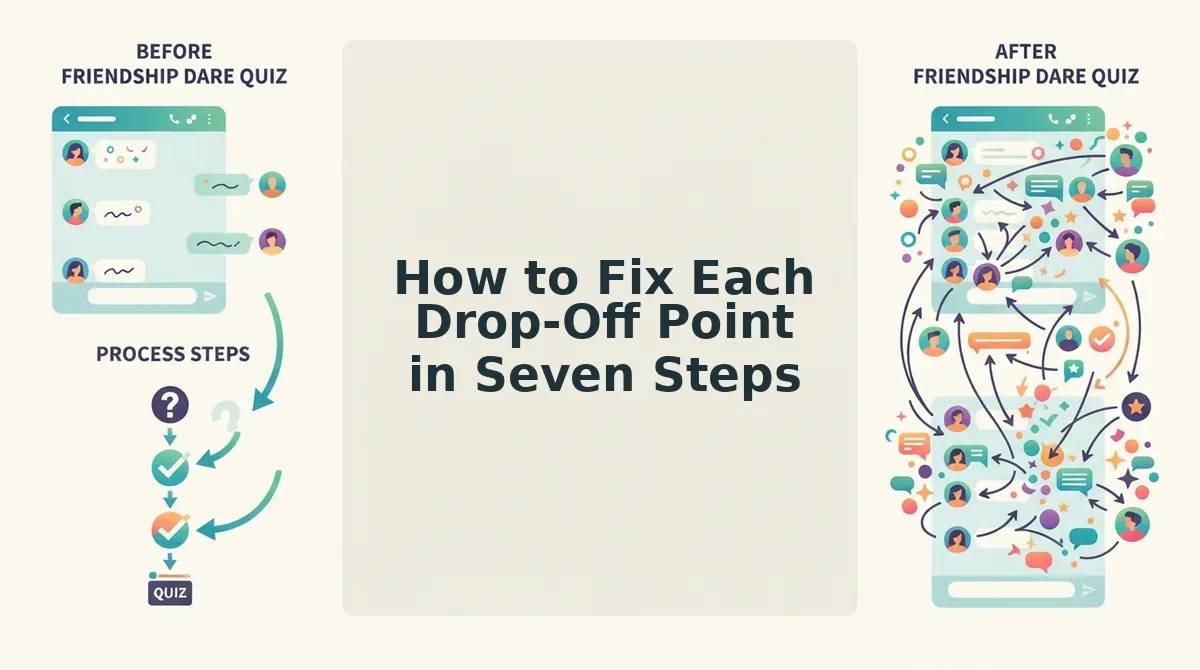
These seven fixes map onto the four curve points â link open, first answer, score reveal, first silence â and none takes longer than two minutes to execute.
What you need before you start: your quiz link, a group chat that is actually awake, and one person willing to be the named host. No downloads, no logins.
- Post while the chat is live, and tag two people by name. A bare link dropped into a cold thread at 9am sinks under memes and voice notes within the hour; the same link at 9pm rides the top of the chat. You should see two answers land within five minutes.
- Calibrate the prompts to the 40% rule. Keep at least 40% of your questions answerable by anyone in the chat, and treat two answerable prompts for every curveball as the working mix. If every question is a private in-joke, expect scores in the low single digits, which reads as unfair rather than funny. The best friend quiz page shows prompts with a wide enough spread to copy the pattern.
- Shorten the round and tighten the score spread. Eight questions caps the damage; fifteen turns one bad start into a lost cause. Aim for scores clustered within three or four points. A runaway Friendboard winner is the loudest dropout signal, not proof of a great round â once the top spot is decided, the rest of the board has nothing to play for.
- Shrink the answer path to one thumb and one page. No account wall, no email field, no multi-screen form. If your own link stalls on a phone, open it in a mobile browser before reposting. Success is a friend who taps, answers, and sees a score without navigating anything.
- Announce the scores in the chat yourself. Post the standings, tag the person who finished bottom, and state when round two opens. A reveal with no announced follow-up is a message nobody owes a reply to.
- Change the round type, not the friend group. A second round of the identical format gets a flat "again?" from the chat. A friendship dare quiz resets the expectation and gives the bottom half of the board a reason to come back.
- Host the second beat. No participant will send the nudge on your behalf. The round has no second act unless one person names a time â "scores at 8, round two at 9" â and reposts the link when that time arrives.
Read the Friendboard as a participation device rather than a ranking device: the target is a board with every name on it, not a tidy winner at the top. New quizzes take the same two minutes as the first, need no login, and start collecting answers the moment the link lands.
Before you post round two, check whether the fix actually registered.
How Do You Know the Fix Worked Before Round Two
A friend quiz fix worked when four things happen in the first hour: half the group answers unreminded, the bottom half of the Friendboard returns, scores spread instead of clustering at one perfect result, and someone mentions a prompt. Those signals predict a second round better than raw player count.
- Answers arrive without a reminder. Count how many responses land before you post the link a second time â that gap is the honest measure of whether the first message cut through. If replies only appear after a nudge, the problem was share timing, not the questions.
- The bottom half of the Friendboard comes back. A round is retaining people when low scorers reopen the board later to see where they lost points. Watch the stragglers, not the winner; their return is the real retention metric.
- Scores spread across the range. Clustering at 9/10 or at 2/10 means the prompts failed calibration. A spread from middling to high means the difficulty is doing its job, so treat spread as a health signal rather than a win signal.
- Someone asks about a specific prompt. A "wait, how did you know that?" is the only reliable proof a question was memorable rather than guessable. Note which prompt triggered it and reuse that format in round two.
- Conversation continues past the reveal. Watch whether the chat keeps moving after the score post or dies on it. Silence at the reveal is the signature of a round with no second beat.
Wondering whether your friend quiz is too easy? Look at the distribution of scores before you look at the top one. If most players land within a point or two of perfect, the prompts are pullable from your visible habits rather than from shared memory, and the round reads as a formality instead of a test. A healthy set usually leaves a visible gap between the person who knows you best and the person guessing.
Five checks before you share again:
- Three or more prompts an outsider could not guess.
- One prompt aimed at each tier of friend, not only the closest.
- Link posted when the group chat is actually awake.
- A follow-up line ready for the reveal, not just the link.
- A second-round idea already in mind, starting with the BFF test.
Friend Quiz Questions Creators Keep Asking
These are the questions that show up after a quiet round, answered short enough to use on their own.
How do I start a second round without nagging?
Frame the repost as an update, not a request: "New round is live, different prompts, two minutes." A changed quiz justifies a second message, so the chat reads news instead of a plea. Send it once, to the same thread, and let the link do the asking.
Why won't my quiz link open on a friend's phone?
The failure usually sits in the hand-off between an app and the browser, not in the quiz itself. Links tapped inside in-app browsers on social apps can stall; ask your friend to open it in Safari or Chrome. Full fixes: quiz link not opening on phone.
Should I rebuild the quiz or re-share the same one?
Rebuild when the prompts were the problem â friends scored near zero or near ten because the questions were unfair or guessable. Re-share the same link when the timing was the problem and most people never answered at all. Same questions at a new moment costs nothing.
How long should a round stay open?
Keep it live for roughly a day, then close it by posting the results rather than leaving it open indefinitely. A deadline gives the chat a reason to answer now, and a posted finish line turns scattered replies into something people want to be part of.
What to Change Before You Post Round Two
The round did not die because your friends stopped caring. It died because it had no second beat â one answer each, one score reveal, then silence, because nothing in the design asked anyone to come back.
Fix the timing and the difficulty before you fix the friend group. Re-read the calibration step and count how many of your prompts an outsider could guess; if it is more than two, rebuild rather than repost. Then build a fresh round with a spread of prompts â name, questions, link, no account needed â and drop it into the same group chat tonight while the conversation is still live. That same-chat re-share is the strongest close you have.
Start a new round on Friend Quiz before the chat goes quiet.