Why a small friendboard beats a big leaderboard for banter
You type your name, tap through a dozen habit prompts, and drop the link into a group chat that is already three conversations deep. Eleven friends open it. Three answer. Then nothing.
That stall is the small friendboard vs big leaderboard question in miniature. A quiz link costs nothing to receive and something real to answer, because every guess is a public bet on how well you know someone.
The silence stings. It is not stage fright, though. It is arithmetic.
Here is what this section sets up:
- A reply-budget way to size a group before you send
- Five small-board mechanics you can run today
- One honest case where a big leaderboard actually wins
There is also a ceiling nobody sets on purpose, and most creators hit it without ever noticing the number.
By the end you should have a board that finishes: a short list of people, a Friendboard that fills in, and a quiz worth re-running. This advice covers group chats and close circles only â classrooms, streams, and events run on different rules.
What it looks like in practice: create the quiz on your phone â name, prompts, done in under two minutes, no account and no download â then send it to four people in one chat rather than forty in a broadcast. Each answers in the mobile browser within a minute of opening it. Their guesses land on the Friendboard, the chat reacts to the wrong ones, and the board fills instead of stalling. The step most creators skip comes next: run it again next month with the same four people and fresh prompts.
Short answer: small boards finish more often because every extra player adds social cost to guessing, while big boards win on spectacle. That is a decision model built from reply cost, not measured data â reasoning you can test on your own group.
So which size actually produces better banter, and where does the trade-off flip?
Is a small friendboard better than a big leaderboard?
For banter in a group chat, a small friendboard almost always beats a big leaderboard. A board sized to the people who genuinely know your habits produces faster replies, sharper inside jokes, and rankings worth arguing about. A public leaderboard produces reach, not conversation. If you want a running joke that survives the week, keep the group tight. If you want volume, go wide.
A friendboard is a private ranking of the people who answered one quiz. A leaderboard is that same ranking opened to everyone who receives the link, including people who barely know you. Reply rate is the share of people who open the link and finish it â the only metric that decides whether a quiz becomes a group chat topic or a dead URL.
The Reply Budget is the simple rule that every invitee spends a slice of the group's attention and risks a little public exposure, so past some point each added friend raises your quiz's visibility while lowering how many people actually finish it.
Why does the curve bend? Four costs stack up. Reply fatigue sets in when the quiz lands next to nine other unread links. Silent lurkers read the questions, feel unqualified, and never submit. Ranking anxiety makes a low score feel public in a way a private ranking does not. And diluted bragging rights mean nobody can claim the top spot with confidence once forty names are in the list.
Here is the sizing model, framed as a heuristic rather than a measured result:
| Group shape | Board type | Expected dynamic | What to cap |
|---|---|---|---|
| Close circle who know your daily habits | Friendboard, invite-only | Fast replies, real rivalry, hard banter | Cap at the people you would text at 11pm |
| Mixed group of school, work and old friends | Friendboard, one per sub-group | Some lurkers, quieter rankings | Cap each round to one shared context |
| Whole contact list or public post | Leaderboard | Reach without conversation, ranking anxiety | Cap expectations â treat it as promotion, not banter |
The small board wins on banter, but the big leaderboard has honest strengths: classrooms, event hosts, and streamers benefit from reach and a single visible scoreboard. A big board is best for anyone whose goal is awareness rather than conversation. A small friendboard is best for the group chat instigator who wants replies tonight.
Small boards come with prerequisites: one group that actually knows you, prompts about your real habits rather than generic trivia, and a link that plays directly in the browser with no download or login.
What we'd choose: the small friendboard, because every extra invitee trades completion for visibility, and completion is where the jokes live. Choose the big leaderboard only if reach is the point.
Curious how a tight ranking reads before you pick a size? Running a friendship test with one friend shows you the Friendboard layout in under two minutes, no account needed.
The harder part is holding the group small once the link is out â and that is exactly what the next section covers.
How to keep your Friendboard small on purpose
Keep a Friendboard small by sending the quiz link to one group chat at a time, writing prompts only that group can answer, and staggering later rounds instead of broadcasting everywhere at once. Setup takes about ten minutes, and nobody needs an account, an email, or an app.
Small, though, isn't the same as exclusive.
Before you start: have your habit and quirk answers ready and one live WhatsApp, iMessage, or Instagram thread open. The quiz runs in the mobile browser, so there is nothing to install on either side.
The five-step small-board playbook
- Cap the first send to one tight group. Paste the link into a single existing chat rather than three. You should see the first answers land inside that conversation window, while the quiz is still the newest thing in the thread. 2 minutes.
- Write inside-joke and habit prompts only that group can answer. Type in the coffee order, the Sunday plan nobody keeps, the film you defend. Skip anything generic. You should see prompts that read like an inside conversation, which is what makes friends finish. 5 minutes.
- Share into one chat with a single line of context. Paste the link with something like "six questions, no login, be honest" instead of a bare URL. Friends tap and answer in the browser, and you should see names appear on the Friendboard with no install step. 1 minute.
- Keep bragging rights on the Friendboard. A Friendboard is the live ranking attached to your quiz, visible to the friends who answered it. Read the scores there and let the group screenshot them itself. You should see the banter stay where it started â in the chat. 2 minutes.
- Release staggered rounds to the next group. Send the same link to a second cha t chat only after the first round closes. Staggering keeps each invite from colliding with the last, and you should see a fresh Friendboard fill instead of a dead link. 3 minutes.
Total setup: under ten minutes per quiz. Start with five questions and one link, then judge the result by how many friends answer within the hour. Read the Friendboard, not your own hopes for it.
How to tell your small board is working
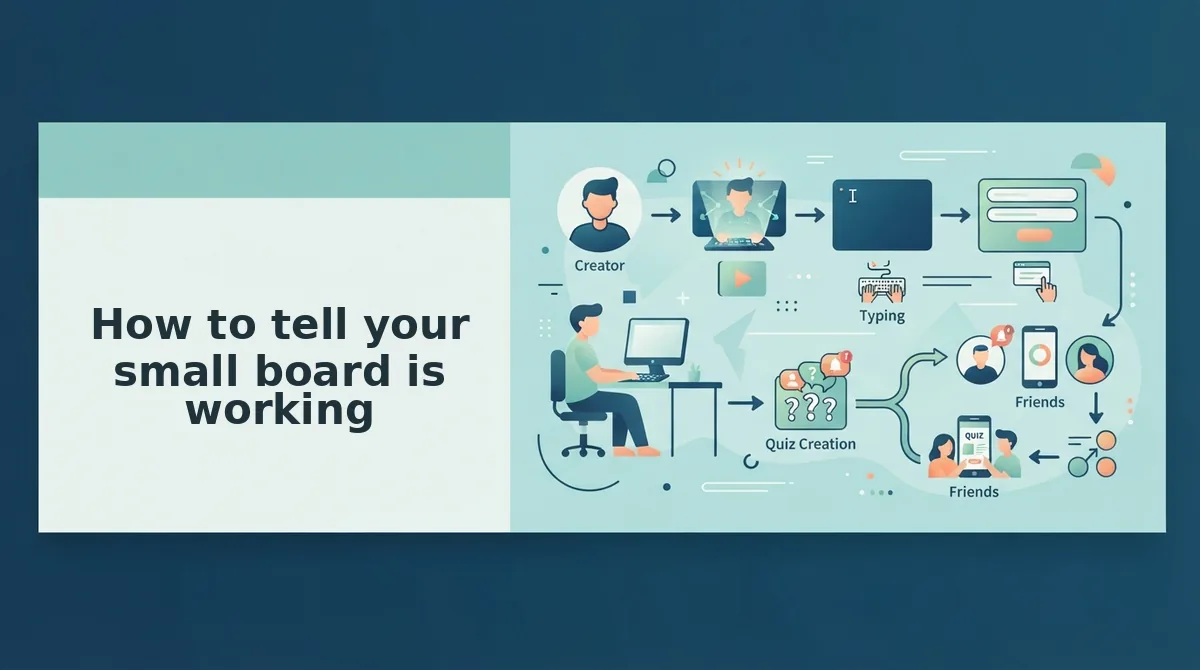
Board health is the share of invited friends who actually finish your quiz, and you can read it in the group chat instead of a dashboard.
Start simple. Count finishes against invites. If five people got the link and four posted a score, the board is healthy. Two out of five means the invite list outgrew the group's attention.
Move to the ranking. Watch the live Friendboard rankings as answers land. A working board reshuffles within the first ten minutes, because friends answer close together and immediately check who leads.
Look for the advanced signal. Friends argue about one specific prompt, or someone asks for a rematch. That is the strongest evidence the quiz fit the group, and the natural moment to send a friendship dare quiz as the replay round.
Think of it like a group chat where everyone replies versus a broadcast channel with read receipts: same number of people, very different amount of life.
Two warning signs need fixes, not more invites. If answers stall after the first two, your board is too big, so cut the invite list or stagger the drop. If the chat reacts but nobody opens the link, the prompts are too generic, so swap in inside-joke questions.
Small friendboard vs big leaderboard FAQ
How many friends is too many for a friend quiz?
There is no hard number, but a workable rule of thumb: stop adding people once the next invitee would not get most of your prompts right. Past that point they add volume, not banter. Treat it as a heuristic, not a measured threshold.
Do leaderboards make people quit?
No verified data links rankings to drop-off, so treat confident claims in either direction with suspicion. Ranking anxiety is real for some people â the friend who lands last may go quiet. Friendboard-only rankings, visible to invited friends rather than the public, keep the tension friendly.
When is a big leaderboard the right call?
A big leaderboard wins when spectacle matters more than intimacy: classrooms, live events, and streamer audiences watching scores land in public. Choose it when the fun is a crowd reacting together rather than people who already know each other well.
How many friends should take my quiz?
Enough that the board reshuffles, few enough that everyone finishes â usually one group chat rather than your whole contact list. If you want one-on-one bragging rights instead, send the best friend test.
Start with one group, not every chat
The Reply Budget in one line: every invite spends attention and social exposure, and past a point each extra friend makes finishing less likely, not more.
That is the finding the whole comparison turned on â the board that finishes is the board that stayed small enough for everyone to care about the same inside jokes.
Tonight, pick one group chat and send one link. When the last answer lands, plan the next round with the dare quiz and keep the invite list exactly as it was.
Enter your name on friendquiz.org and your quiz is built in under two minutes â no account, no download.