How to Use Friendboard Scores to Plan a Rematch
Your group chat went silent three minutes after the quiz link expired. The scores are in, someone posted a screenshot of the Friendboard, and now everyone's waiting for the next move, but nobody knows what a 2-point gap actually means versus a 10-point blowout. That hesitation is exactly where rematches die.
You're right to feel stuck. A raw score tells you who won, but it doesn't tell you what to do next. That's why learning how to use friendboard scores to plan a rematch matters more than the quiz itself.
Here's what you'll learn: a three-tier framework that maps any score gap to a specific rematch strategy, a fairness protocol that keeps the loser engaged instead of rage-quitting, and the timing trick that turns a rematch into a chat event. One surprising finding: a 1-point gap isn't a loss, it's a rivalry, and it demands an instant rematch, not a strategy overhaul. Keep reading to see why the tightest scores produce the most rematch energy. When you're ready, Friend Quiz's instant link generation means you can rebuild and reshare a rematch in under two minutes.
Read the Score Gap Before You Hit Rematch
A score gap is the point difference between the top scorer and the next closest player on a Friendboard, and it determines whether your rematch should be instant, adjusted, or completely restructured. Reading this gap before you rebuild the quiz prevents the most common rematch failure: repeating the same questions and getting the same lopsided result.
Think of a score gap like a race finish. A photo finish demands an immediate rerun under identical conditions. A half-lap lead means the track was fine but the runner needs a different lane. A full-lap blowout means you change the course entirely. Your Friendboard works the same way.
Here is the three-tier Score-Gap Decision Framework:
| Gap Size | What It Means | Rematch Strategy |
|---|---|---|
| Tight (0-2 points) | Rivalry, not a loss | Immediate rematch with the same questions |
| Medium (3-5 points) | Clear edge, but beatable | Rematch with 50% new questions |
| Wide (6+ points) | Category mismatch or knowledge gap | Category swap plus a redemption round |
A 1-point gap is a rivalry, not a loss. When two friends land within a point of each other, the quiz didn't reveal a winner, it revealed a tie that luck decided. Rematch instantly with identical questions so both players can prove the first result wasn't a fluke.
For a medium gap, swap half the questions to remove any accidental advantage from question order or phrasing. Keep the core categories the same so the leader's legitimate knowledge still counts, but introduce enough new material that the underdog has a fresh path to close the distance.
A wide gap signals a structural problem, not just a skill difference. The leader likely dominated specific categories. Swap those categories out entirely and add a redemption round, a short bonus section where the lower-ranked friend picks the topic. This shifts the test from "who knows the creator best" to "who adapts fastest," which is a fairer fight.
Build a Rematch That Feels Fair, Not Rigged
A fair rematch keeps the lower-ranked friend engaged by giving them structural advantages, category pick, question preview, and first-answer position, without changing the core scoring rules. If the rematch feels rigged in either direction, the loser checks out and the chat dies for good.
Prerequisites: You need the original quiz link or your saved question list, the Friendboard scores from the first round, and a group chat where both players are still active. Total setup time: under five minutes.
- Open your original quiz and identify the leader's strongest categories. Look at which question types the winner answered correctly and which ones the loser missed. You should see a clear pattern, usually two or three categories where the gap formed.
- Swap out those dominant categories for neutral ones. Replace the leader's best topics with questions about shared experiences, mutual friends, or inside jokes that neither player has an obvious edge on. This neutralizes the leader's advantage without punishing them for being good.
- Let the underdog pick one category from the new set. Send them the category list and let them choose one they feel confident about. This single choice shifts the emotional frame from "I'm losing" to "I have a say."
- Give the underdog first-answer position. In the rematch, the lower-ranked friend answers first on every question. This removes the psychological pressure of chasing and lets them set the pace.
- Reset the stakes with a new wager. Announce a fresh consequence, loser buys coffee, winner picks the next movie, or a friendship dare quiz as the tiebreaker. New stakes shift focus from the old loss to the new game.
One creator swapped three questions from the leader's strongest category, let the friend pick the replacement topic, and gave them first-answer position. The rematch ended with a 1-point gap, and the group chat stayed active for another hour debating whether the result was luck or skill.
The Redemption Round Protocol works because it addresses the emotional reason people decline rematches: nobody wants to lose twice in a row. Giving the underdog category pick, question preview, and first-answer position converts a likely repeat loss into a genuine contest. The leader still has to earn the win, but the underdog no longer feels set up to fail. This protocol matters most for wide gaps, where an unadjusted rematch would simply confirm the original result and end the rivalry permanently.
Once the rematch is built and both players have accepted the new terms, the next decision is when to drop the link, and timing changes everything.
Time the Rematch for Maximum Chat Energy
Chat Energy Timing is the practice of launching your rematch link when group conversation momentum is highest, not when it's most convenient for you. The score gap tells you what to change; timing tells you when the group will actually care.
Think of chat energy like a campfire: you can add a log while flames are high and get instant heat, or wait until the coals are glowing for a slower, longer burn. Both work, but they produce very different reactions.
The 24-Hour Window: Ride the Momentum
If your friendboard just updated and the banter is still flying, launch within 24 hours. Fresh scores mean fresh trash talk. The emotional stakes are already live, so a rematch link dropped now feels like a natural next move, not a desperate redo.
The 3-Day Reset: Let the Sting Fade
If the original quiz ended in a blowout or someone got genuinely roasted, wait at least three days. This lets bruised egos cool off and turns the rematch into a redemption arc instead of a pile-on. Anticipation rebuilds, and the link lands as an event rather than an argument.
Here's the part most creators skip: match your timing to the type of gap. A narrow 1-2 point gap is perfect for the 24-hour window, the rivalry is already simmering. A 5+ point blowout needs the 3-day reset so the losing friend actually wants to play again. If you're unsure which dynamic fits your group, a best friend quiz with tighter, more personal questions tends to produce the narrow gaps that thrive on immediate rematches.
Launch the Rematch Link in 3 Steps
You need your original quiz link, your friendboard score gap, and a group chat that's still active. Total time: under five minutes. Each step below moves you from analysis to a live rematch link that actually gets clicked.
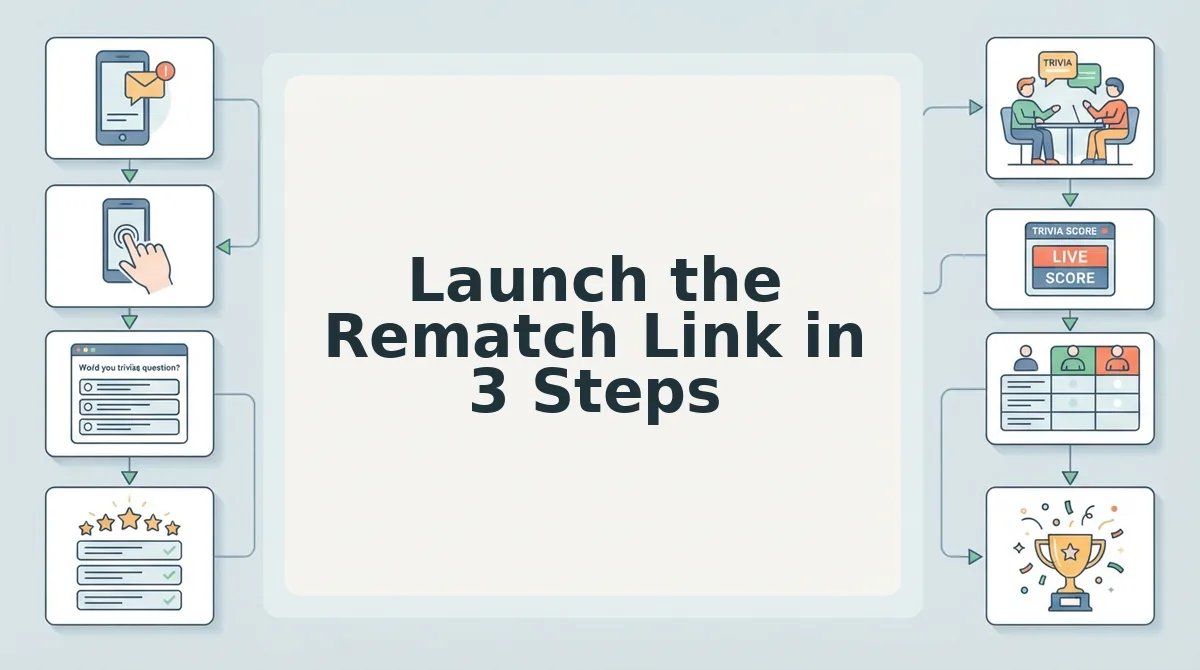
- Copy your original quiz link. Open your friendboard, tap the share icon on your original quiz, and copy the URL. You should see the link in your clipboard with the same quiz title and your name attached. This is your baseline, the rematch builds from here, not from scratch.
- Tweak your answers or questions based on the score gap. Reopen the quiz editor and adjust the specific prompts where friends scored lowest. If everyone missed your coffee order, change the wording or swap in a more distinctive habit. You should see the updated answers reflected in the preview before you publish. This step takes about two minutes and directly addresses the gap you identified.
- Drop the link with a challenge line that references the gap. Paste the new link into your group chat with a one-liner tied to the score difference, something like "You all got 3 out of 8. Run it back." You should see the first click within minutes if your timing follows the Chat Energy rule from the previous section. A bff test rematch works best when the challenge line names the exact gap, so nobody can pretend the first round didn't happen.
If the rematch link sits unclicked for more than an hour, the chat energy has already moved on. Wait for the 3-day reset window and re-drop with a fresh challenge line.
Rematch FAQ: Quick Answers Before You Send the Link
Friendboard scores are only useful if you act on them correctly. These answers cover the most common rematch questions so you can send your link with confidence.
How do I use friendboard scores to plan a friend quiz rematch?
Look at the score gap first: a narrow gap means tweak one or two questions and rematch fast; a wide gap means change several prompts and wait a few days. Then adjust the specific questions where friends scored lowest, and launch the new link with a challenge line that names the gap directly.
What does a big score gap mean for a rematch?
A big gap means your questions were either too obscure or too generic for your friends to answer. It signals that you should replace the lowest-scoring prompts with more distinctive, observable habits, things friends would actually notice about you in daily life, not trivia only you know.
Should I change questions for a rematch?
Yes, but only the questions where most friends scored wrong. Keep the questions everyone got right, they build confidence and keep the quiz feeling fair. Changing every question resets the rivalry to zero, which removes the stakes that make a rematch fun.
How soon should I send a rematch link?
Send within 24 hours if the chat is still active and the gap is small. Wait three or more days if the original result caused friction or the gap was large. Timing matters as much as content: a rematch dropped into a dead chat gets ignored regardless of how good the questions are.
If you're still unsure whether your original quiz was measuring the right things, run a friendship test first to recalibrate your question set before committing to a rematch.
Ready to turn a quiet friendboard into a rivalry that keeps going?
Turn a Quiet Friendboard Into a Rivalry That Keeps Going
A quiet Friendboard isn't a dead end, it's a score gap waiting to become a storyline. The 3-tier framework gives you the read: small gaps under 5 points mean one strong round flips the board, mid gaps of 5-15 points reward targeted question swaps, and gaps above 15 points call for a format reset, not just a rematch. What feels fair to one group may feel rigged to another, so the fairness protocol only works when everyone agrees on the rules before the link goes out.
Here's the synthesis that ties it together: the rematch isn't about winning back points, it's about making the gap itself the reason to keep playing. A 12-point deficit with a "no repeat questions" rule creates more chat energy than a tied board with nothing at stake.
Your next move is one action: open Friend Quiz, rebuild your quiz with the gap-adjusted questions, and send the rematch link to the same group chat. No app, no login, no friction, just a fresh board and a reason to check back.
"The best rematch doesn't erase the score gap, it weaponizes it into the next round's opening line."