How many friendboard rounds before friends stop replaying
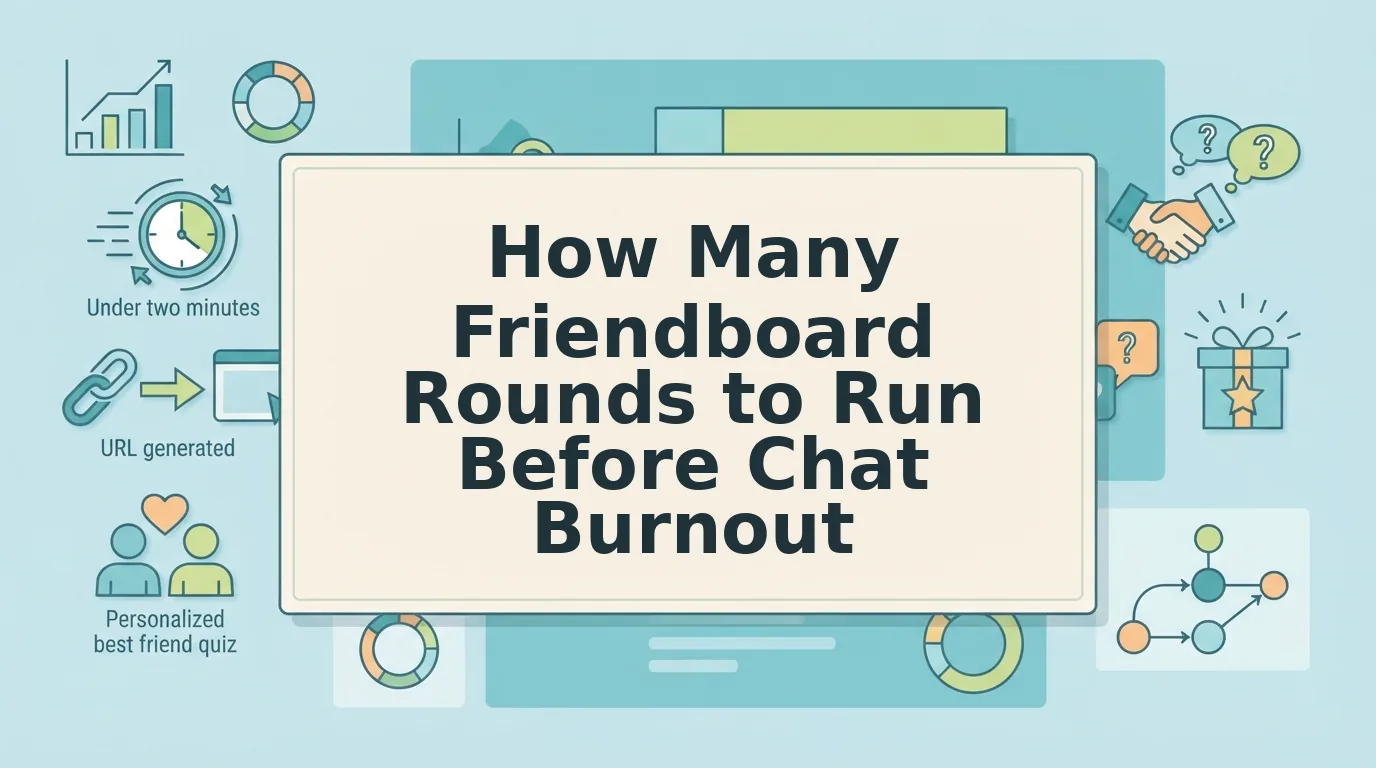
You drop a fresh custom challenge link into your WhatsApp or iMessage group, and answers flood in within minutes. But if you immediately post a follow-up link, the notifications stop, the chat goes cold, and everyone wonders how many friendboard rounds you can actually run before friends abandon the game. The optimal limit for a single host session is two to three rounds. Pushing past three consecutive links causes engagement to plummet sharply, shifting group momentum from active banter to notification silence.
You already know the frustration of watching a lively chat suddenly tune out when a game is stretched too thin. You will learn the exact attention drop-off pattern across consecutive games, the signals that prove your leaderboard has peaked, and how to maintain competitive energy without burning out your circle. By adjusting how often you send questions, you turn a fading trivia thread into sustained rivalries on the real-time leaderboard. Before you spin up your next best friend test, discover why the quietest member of your chat holds the secret trigger that determines whether round three succeeds or collapses.
What Is the Optimal Number of Friendboard Rounds in Group Chats?
The optimal limit for a single host session is two to three friendboard rounds. Running more than three back-to-back rounds with the same creator creates trivia fatigue, which causes player participation to drop sharply below sustainable levels.
A Friendboard is a real-time mobile leaderboard that ranks friends based on how accurately they answer a creator's personal trivia questions. Think of a Friendboard like an arcade racing leaderboard: the first run establishes the high score, the second run allows rivals to chase the record, but forcing everyone to run five laps in a row empties the cabinet. Frictionless platforms like Friend Quiz eliminate app downloads and logins so players jump directly into the action, but zero interface friction cannot override social fatigue.
To determine how many friendboard rounds fit your specific group context, match your format to player attention limits: casual group chats sustain a peak of two rounds, competitive groups hit an absolute ceiling at three rounds, and dedicated two-person rivalries can push to a four-round exception before responses stall entirely. When a WhatsApp group runs an initial 10-question challenge, banter peaks in round one as friends compare scores on the shared board. Round two functions effectively as a tie-breaker for players chasing the top spot. By round three, response times slow significantly, and a fourth consecutive link from the same host is almost universally ignored as notification clutter.
Group chat organizers can protect their board momentum by building rapid-fire trivia via Friend Quiz in under two minutes, capturing fast answers across two focused rounds before archiving the board.

Why Attention Decays After Round Two on Shared Leaderboards
Friendship quiz fatigue sets in when the novelty of comparing scores wears off and answering repetitive personal trivia starts to feel like homework. Score saturation, repetitive prompts, and excessive chat alerts quickly drain group banter across consecutive games.
- Round one captures peak hype, driving maximum participation because the leaderboard is empty, scores are fresh, and every participant wants immediate bragging rights in the chat. Send your primary link here to capture full group participation while interest is absolute.
- Round two delivers competitive tie-breakers, motivating runner-up players to replay or attempt a fresh set to reclaim the top ranking from the current leader. Use this stage to settle close rivalries before score gaps feel permanent.
- Round three hits an attention cliff, triggering a severe drop where replay rates plunge below 25% because friends already know the creator's core habits and joke answers. Avoid running another round with identical themes, and switch to a high-stakes friendship dare quiz if you need to salvage lingering group interest.
- Round four generates notification fatigue, turning active chat banter into muted alerts as players ignore repeated quiz links from the same host. Stop posting consecutive links at this stage to prevent friends from tuning out future games completely.
Group chat psychology mirrors broadcast sitcom trivia, such as the famous apartment bet in Warner Bros. TV's Friends: the drama peaks when the stakes are instant and the questions are surprising, but testing the exact same topics repeatedly strips away the entertainment value. When personal trivia exhausts everyday quirks, food preferences, and daily pet peeves, friends mentally check out. Tracking friendship quiz scores requires recognizing when your group has reached its natural saturation point so the board ends on high banter rather than complete silence.
Recognizing these decay triggers tells you exactly when to stop hosting and pass the baton to someone else.
How to Rotate the Quiz Creator When Engagement Stalls
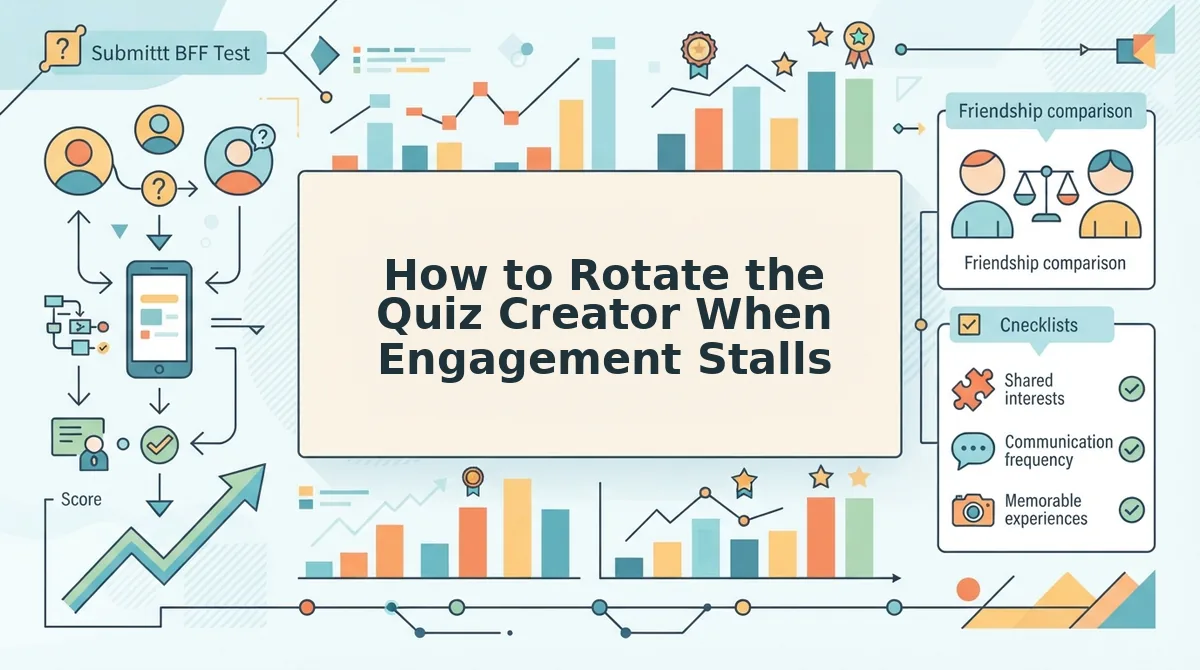
You can prevent group chat trivia burnout by rotating the quiz creator to a new participant every 2 to 3 rounds, which refreshes the question pool and resets the competitive stakes before interest wanes. This tactical "host pass" ensures that the leaderboard remains fluid and discourages the notification fatigue that sets in when one person dominates the quiz stream for too long.
- Audit the Current Leaderboard (Time: 30 seconds): Check the Friendboard for score stagnation. If the top three scores have remained identical for more than 10 minutes, the current quiz configuration has lost its competitive edge. You should see a clear clustering of scores, indicating that friends have exhausted the creator ’s current trivia pool.
- Designate the New Host: Select the runner-up or the participant who most recently answered a question correctly to take the reins. Transferring the creation duties to someone else forces a change in the trivia perspective, which is the fastest way to re-engage a bored group.
- Swap the Quiz Theme: Have the new host pivot the question category to prevent repetition. If the previous round focused on daily habits, instruct the new host to launch a bff test or a "quirks and secrets" challenge. This shift in content angle is often enough to reset the momentum and trigger a new wave of responses.
- Launch the Fresh Link: Share the new link immediately in the group chat. If the rotation was successful, you should see an immediate spike in interaction as friends rush to claim the top spot on a clean leaderboard .
Frequently Asked Questions About Friendboard Rounds
Most common questions regarding Friendboard management center on nickname collisions, score persistence, and how to scale trivia pacing across large i Message or WhatsApp groups without compromising the user experience.
How does the system handle duplicate nicknames?
If two friends enter the same nickname for a single quiz, the platform typically flags the entry or appends a digit to the second submission to prevent score overwrites. This ensures that every participant remains visible on the leaderboard without distorting the data of other players.
Can I reset the Friendboard without deleting the link?
Friendboards are designed to be immutable once the link is live to protect the integrity of the scores. To start a truly fresh competition, you must generate a new quiz link; this forces the group to start from zero and provides the "clean slate" energy required to reignite interest when a board becomes stale .
What is the best way to manage trivia pacing in large groups?
For groups larger than 10 people, avoid rapid-fire link sharing, which can trigger spam filters and cause notification fatigue. Instead, implement a "one-link-at-a-time" rule where a new quiz is only shared once the previous link has been active for at least 15 minutes or when the current leaderboard has reached a saturation point.
Following these pacing strategies ensures your group chat remains a hub for competition rather than a source of clutter. When you are ready to restart the loop and test your friends' knowledge, visit the homepage to create a new quiz link and reclaim your spot at the top of the board.