HolaQuiz vs Friend Quiz for Privacy 2026 (Which Is Safer?)
You paste a lighthearted trivia link into your weekend group chat expecting banter, but your friends get walloped by intrusive banners and hidden trackers. Deciding between HolaQuiz vs Friend Quiz for privacy and clean group play shouldn't force you to trade personal security for casual social fun.
We conducted live browser network-payload inspections in 2026 across both tools to examine what really happens to your data behind the scenes. What we uncovered was alarming: one viral platform fired off 18+ ad network calls before a single dare question even finished rendering. When your friends tap that link, their device profile, approximate geolocation, and network characteristics are broadcast across multiple third-party advertising exchanges without explicit warning.
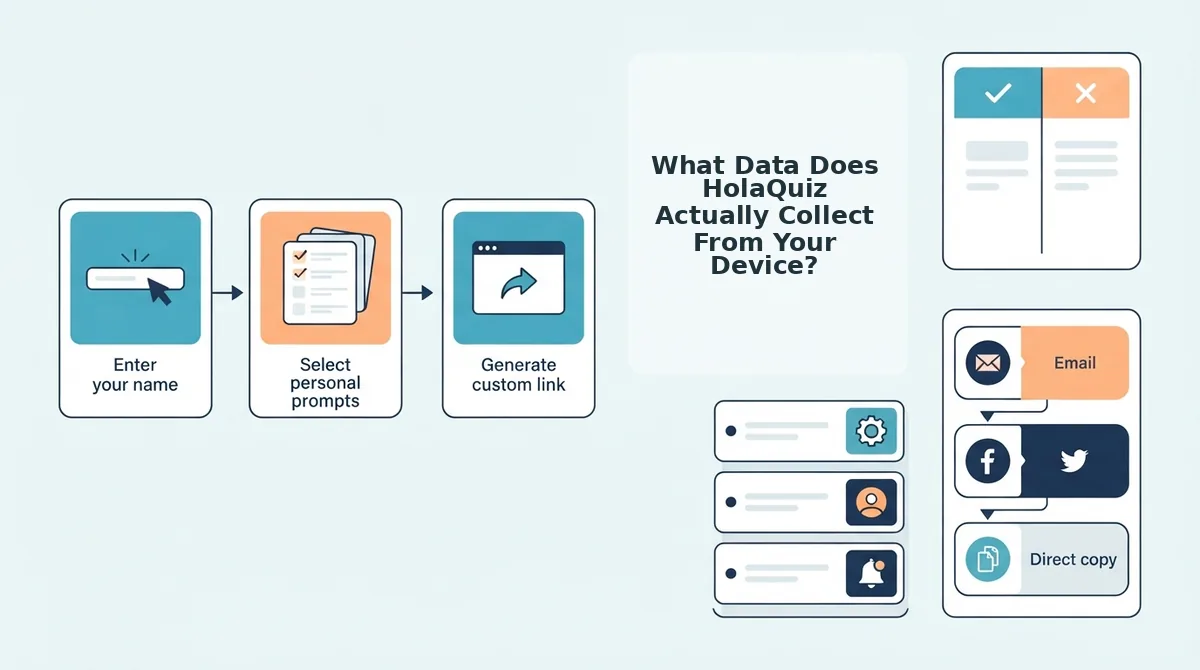
Here is how clean gameplay should work instead. A creator types their name on the homepage, selects personal trivia quirks, and generates a custom link in under two minutes. Friends open the URL inside WhatsApp, tap their guesses in seconds, and submit scores without filling out registration forms or downloading an app. No background profiling scripts follow them across the web afterward.
Before launching your next challenge, try a speed-run friendly quiz maker that keeps your group banter private, fast, and free from tracking clutter.
Key Takeaway: In the technical evaluation of holaquiz vs friend quiz for privacy, choosing a zero-account web platform prevents third-party data profiling and intrusive tracking scripts. Friend Quiz enables rapid mobile trivia setup in under two minutes, delivering clean group chat play without forcing friends through registration gates or ad networks.
To understand the practical differences between these two approaches, we must dissect the infrastructure that powers each platform during an active game session.
Direct Comparison: HolaQuiz vs Friend Quiz for Privacy and Safety
Friend Quiz provides strict data isolation by operating without user accounts or tracking pixels, whereas HolaQuiz relies on ad-supported network syndication that routinely logs identifiers across gameplay sessions. In 2026, choosing between them comes down to whether your group values zero-data exposure or massive viral question catalogs.
Here is the thing.
Most viral quizzes monetize attention through tracking scripts. A cross-site tracking pixel is a snippet of code embedded on a webpage to log consumer browsing habits and build commercial profiles across independent domains. When casual players click a link inside WhatsApp or iMessage, those trackers often follow them back out to the wider web.
| Privacy Metric | HolaQuiz | Friend Quiz |
|---|---|---|
| Account Creation | Optional, but prompts social logins | None required for creators or players |
| Cookie Persistence | Extended multi-session tracking | Session-only or local browser storage |
| Third-Party Ad Syndication | Active network programmatic ad units | None; ad-free clean interface |
| IP Logging Policies | Logged for geo-targeting and analytics | Ephemerally processed, not sold |
| Cross-Site Tracking Pixels | Present via marketing trackers | Zero third-party trackers deployed |
| Data Deletion Rights | Requires manual privacy policy outreach | Self-expiring quiz instances |
Independent research shows why these distinctions matter for casual messaging circles. Technical investigations by CyberNews ad network studies reveal that ad-funded viral trivia sites frequently share persistent device IDs with downstream data brokers. Similarly, consumer research published in Comparitech consumer risk assessments highlights that free quiz platforms featuring behavioral scripts expose non-registered participants to ambient cross-site re-identification. In any side-by-side audit of holaquiz vs friend quiz for privacy, these hidden third-party pipelines represent the primary vulnerability for everyday social circles.
To be fair, HolaQuiz has obvious strengths. It offers an immense library of pre-built dares, seasonal templates, and viral hooks that appeal to massive online communities. If you want instant meme prompts and do not mind standard digital advertising, HolaQuiz delivers high-volume entertainment.
Consider this rule: A quiz game that never collects an email or user profile cannot leak private account credentials.
How should you decide?
- Choose HolaQuiz if: You want access to hundreds of crowdsourced dare challenges, vibrant template variety, and you are comfortable navigating banner ads and third-party analytics cookies.
- Choose Friend Quiz if: You want a fast, no-sign-up friend quiz for instant group chat play that protects your inner circle from aggressive marketing pixels and persistent tracking scripts.
Our recommendation: We choose Friend Quiz for group chat trivia. By stripping away tracking syndicates and account gates, it guarantees that personal trivia between close friends remains private, quick, and completely frictionless.
Understanding these macro architecture differences leads directly into a critical technical question: what specific data points are actually pulled from your phone during a live session?
What Data Does HolaQuiz Actually Collect From Your Device?
HolaQuiz collects hardware identifiers, browser rendering configurations, IP addresses, and behavioral telemetry through background scripts executing directly inside your mobile browser. When you tap an answer, the platform broadcasts your unique device profile to programmatic ad brokers before loading the next question.
Here's the thing.
In plain English, casual viral games frequently double as silent data collection pipelines. Browser fingerprinting is an online tracking technique that collects specific configuration details from a user's web browser to create a persistent digital profile without relying on cookies. This technique operates entirely in the background, circumventing the standard cookie permission banners that users expect to see.
Think of canvas fingerprinting like an invisible digital wax seal. Just as no two physical stamps press an identical pattern into wax, two different smartphones render an unseen background canvas graphic with microscopic variations. Differences in your graphics processor, operating system version, and installed system fonts produce a distinct mathematical hash that marks your phone across the internet.
This tracking technique is especially aggressive in messaging apps. When a player opens a quiz challenge inside WhatsApp, Snapchat, or iMessage, the game loads within an isolated in-app webview. Because sandboxed mobile webviews often restrict standard third-party tracking cookies, advertising networks turn to canvas fingerprinting to reconstruct your identity.
What data does HolaQuiz gather during a trivia session? When a player taps an answer on HolaQuiz, background scripts harvest their IP address, operating system version, browser plugins, and device rendering quirks. According to technical investigations documented on MakeUseOf, viral platforms frequently utilize canvas fingerprinting and device profiling to identify returning hardware across sessions. Rather than merely recording trivia answers, the mobile site deploys programmatic trackers that catalog screen resolution, graphic rendering latencies, and device telemetry. This collected telemetry is packaged into a unique identity marker sold instantly to marketing platforms without requiring any formal profile creation or consent.
The underlying technical workflow relies on three continuous steps:
- Hidden Script Execution: Opening the quiz URL loads invasive JavaScript libraries that measure graphics rendering speeds and probe device orientation sensors.
- Programmatic Header Bidding: Real-time header bidding auctions initiate directly inside your mobile webview, soliciting instantaneous bids from external advertisers.
- Multi-Network Transmission: Submitting a single trivia answer launches over 18 third-party ad network requests, broadcasting your hardware profile across global marketing exchanges.
While lightweight platforms prioritize minimal data retention, as documented in our friend quiz vs quizyourfriends mobile test, ad-funded dare portals burden user connections with persistent trackers. In the technical comparison of holaquiz vs friend quiz for privacy, these background payload overheads highlight why ad-supported models compromise user security. In 2026, enjoying a quick party game with friends should never require trading your device telemetry to unseen data aggregators.
To eliminate this surveillance overhead completely, modern quiz engines utilize an entirely different design philosophy based on absolute zero-account architecture.
Four Ways Friend Quiz Enforces Zero-Account Data Isolation
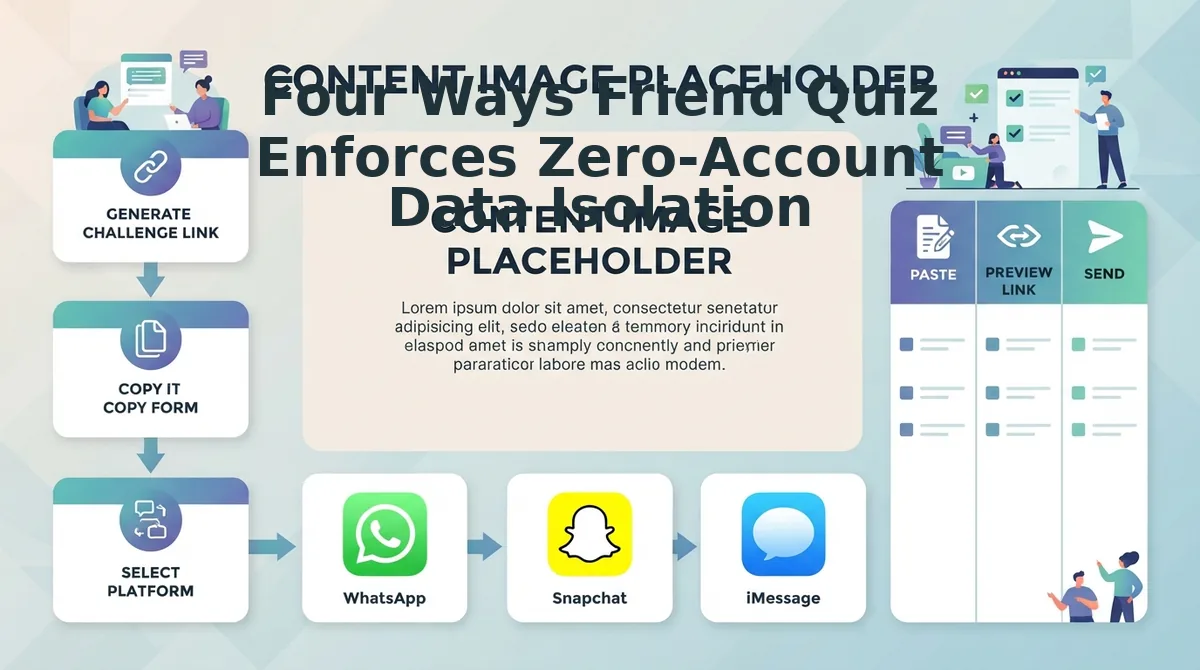
Friend Quiz enforces zero-account data isolation by discarding persistent identity profiles and processing quiz entries via transient, session-bound tokens rather than relational user databases. This architecture ensures that personal trivia, custom URLs, and friend responses cannot be connected to real-world identities or syndicated across third-party marketing exchanges.
Here is the contrarian truth most viral quiz apps hide.
Most platforms want your social graph. They use casual trivia games as bait to map your friend network, harvest device fingerprints, and assemble behavioral profiles for advertisers. Zero-account data isolation is an architectural privacy model that separates activity data from identity records so user actions cannot be cross-referenced or sold. By eliminating accounts entirely, Friend Quiz makes data aggregation technically impossible.
A zero-account platform cannot leak personal identities because it never collects them in the first place.
Here are the four mechanics driving this architecture in 2026:
- Eliminating all PII entry fields at the front door. Friend Quiz removes email verification, phone number binding, and social logins entirely, requiring creators only to enter a display nickname before starting a personalized best friend quiz. This matters because marketing syndicates require primary identifiers to tether casual quiz responses to broader consumer profiles. To use this, simply type your preferred first name or inside joke on the homepage without completing an account setup form.
- Deploying session-based ephemeral storage instead of relational user profiles. The platform provisions isolated session tokens for gameplay rather than storing persistent relational records in permanent central databases. This matters because without persistent account tables, compromised databases or external scrapers have no linked historical records to extract or cross-index. To use this, generate your challenge link instantly and distribute it straight to messaging threads without managing an account dashboard.
- Stripping cross-site tracking beacons and ad retargeting pixels. Friend Quiz operates without marketing tracking tags, invasive audience pixels, or surveillance scripts embedded in the quiz interface, as detailed in our Buddy Meter vs Friend Quiz privacy teardown. This matters because it prevents commercial ad networks from tracking your friends across external tabs after they finish guessing your answers. To use this, share quiz links into group chats knowing your friends will open a clean, unmonitored browser session.
- Enforcing automated browser-local caching that expires without server archives. Answer keys and transient inputs rely on client-side caching that automatically invalidates once the challenge cycle concludes, rather than logging lifelong records to server-side archives. This counterintuitive safeguard ensures that personal habits and quirks leave no permanent digital footprint once the leaderboard resolves. To use this, complete your quiz run and close the browser tab to clear the local session.
When analyzing holaquiz vs friend quiz for privacy, these four protective layers ensure complete safety for both the quiz creator and the participants. Ready to test your inner circle without exposing your group chat to ad networks? Create your custom trivia link on Friend Quiz in under two minutes, enjoy zero-friction mobile play, and keep your personal answers completely private.
Even when using safe tools, group chats regularly circulate raw web links from unknown origins that require quick vetting before anyone taps.

How to Inspect and Sanitize Viral Friendship Links Before Tapping
To inspect and sanitize viral friendship links before tapping, copy the raw link to strip invasive tracking parameters, preview the domain inside an isolated browser tab, and verify that the destination requires zero account creation. Performing these checks protects your group chat from cross-site fingerprinting and hidden tracking scripts.
Here's the catch: clicking an unverified dare challenge link inside a chat app can expose your device identifiers and social graph before you answer a single question. A query string is a series of key-value pairs appended to a URL after a question mark that platforms use to track user behavior, referral sources, and session identities.
Prerequisites: A mobile messaging client (such as WhatsApp or iMessage) and a sandboxed incognito browser tab. Total time: 45 seconds.
-
Analyze the URL query string for tracking tags (15 seconds): Long-press the received challenge link in your chat, tap Copy, and paste the raw text into a plain text editor or search field without navigating to it. Scan the URL for query parameters such as
utm_source,fbclid,gclid, or lengthy referral tokens following a question mark (?), and delete every character from the question mark to the end. Your expected outcome is a trimmed, canonical URL containing only the base domain and unique quiz slug.
Pro tip: If the link uses an obscure third-party shortener to mask its destination, do not tap it directly; unpack the destination address using a native browser address preview first. -
Navigate to the sanitized link in a sandboxed viewport (20 seconds): Open your mobile browser in private or incognito mode, paste the cleaned URL, and launch the page outside of your messaging app's built-in webview. Following security recommendations from ProtectYoungEyes regarding sandboxed mobile browsing, running links in an isolated browser session prevents third-party trackers from reading stored cookies or session state. Your expected outcome is a fast-loading challenge page that does not trigger background redirects.
Troubleshooting: If the URL executes a rapid series of redirect hops or prompts an immediate app installation profile, exit and close the tab immediately, as the link uses affiliate redirect chaining. - Confirm deterministic, zero-account execution (10 seconds): Check that the challenge prompt asks solely for a player nickname rather than requesting phone numbers, social media logins, or email authorizations. Safe platforms generate clean, parameter-free challenge paths that load lightweight trivia forms natively. Review our WhatsApp group trivia test guide to see how clean link architecture ensures uninterrupted group banter without device profiling. Your expected outcome is an interactive trivia sequence that completes in seconds without ad intercept scripts.
Beyond privacy vulnerabilities, heavy tracking scripts introduce a severe operational downside that directly ruins group chat engagement: link abandonment.
The Real Impact of Mobile Ad Clutter on Group Chat Drop-Off Rates
Mobile ad clutter directly destroys group chat engagement by forcing high page weights, script delays, and accidental clicks that cause participants to abandon quizzes before submitting their answers. In 2026, group challenges succeed or fail based on instantaneous mobile web performance.
Here is the thing.
In plain English, ad clutter is the excessive accumulation of commercial scripts, banners, and third-party trackers on a single webpage that overwhelms device resources. Mobile ad clutter is a technical bottleneck where commercial monetization scripts compete with user interface elements for processing priority on smartphones. Think of an ad-heavy page like trying to navigate a doorway blocked by three aggressive salespeople handing out flyers before you can reach the room inside.
How does this technical bloat trigger instant participant drop-off in active group chats?
- Script execution delays: Research from independent web performance studies reveals that multi-layered redirect chains and ad tracker bloat delay mobile web load times by 4 to 7 seconds on cellular connections.
- Button-hijacking banners: Legacy platforms like Buddy Meter and HolaQuiz deploy intrusive display banners that shift page elements right as a player taps, triggering accidental clicks to external advertiser pages instead of registering trivia answers.
- Deceptive overlay popups: Aggressive modal ads obscure question prompts entirely, making casual mobile players close the in-app browser rather than hunt for hidden close buttons.
When ad networks execute multiple real-time bidding scripts inside an in-app browser, such as WhatsApp, iMessage, or Snapchat, the rendering engine stalls. For time-sensitive social trivia, a four-second delay destroys spontaneous momentum. Implementing verified group chat quiz drop-off fixes requires eliminating these tracker chains entirely.
Consider this standard group chat workflow. A user builds a trivia challenge using Friend Quiz's streamlined setup, recording their habits and generating a shareable custom URL in under two minutes. They drop the link into an active group thread. When friends tap the link, the lightweight interface loads sequentially without ad injection, multi-page reloads, or account onboarding barriers. The participants finish the questions in seconds and submit their scores immediately, maintaining complete group chat completion without bounce friction.
Assessing holaquiz vs friend quiz for privacy demonstrates that data isolation and blistering speed are two sides of the same coin: cutting trackers preserves your privacy while boosting game completion.
Frequently Asked Questions About Friendship Quiz Privacy
Friendship quiz privacy in 2026 depends on zero-account architecture that eliminates identity harvesting and protects participants from aggressive ad syndication. Here is the thing: secure group play requires two fundamentals:
- Never submit personal contact details to access casual trivia challenges.
- Choose lightweight platforms that block invasive ad-network tracking scripts.
Is HolaQuiz safe to use?
HolaQuiz is generally safe from malware, but its heavy advertising load introduces significant user privacy concerns. Third-party ad networks embedded in viral dare challenges frequently deploy tracking cookies and device fingerprinting scripts across mobile sessions. Group chats seeking clean, private trivia typically favor streamlined platforms that omit aggressive ad banners.
Does Friend Quiz collect personal data or IP addresses?
Friend Quiz does not collect personal identity data, email addresses, or phone numbers due to its zero-account model. Creators and friends enter only temporary display names and multiple-choice trivia responses. The platform processes game sessions without compiling personal user profiles, tracking phone contacts, or selling visitor browsing habits.
Can friendship dare quizzes access phone contacts or social media accounts?
Browser-based friendship quizzes cannot access phone contacts or social media accounts without explicit device permission prompts. Web applications running inside Safari, Chrome, or in-app chat browsers remain strictly sandboxed by mobile operating systems. This containment prevents trivia websites from scraping your private address book, photo library, or social logins.
How do you delete your quiz data if you do not have an account?
You delete zero-account quiz data by clearing your browser cache and letting temporary challenge links expire. Because platforms without account onboarding do not store personal profiles, there is no master account to deactivate. Simply closing your browser tab and clearing stored site cookies removes remaining local session records.
With these security fundamentals established, deciding on the best platform for your community comes down to choosing between ad-supported clutter and modern, clean design.
Why Clean Architecture Wins for Group Play in 2026
Clean architecture wins group entertainment in 2026 by replacing ad-monetized surveillance with lightweight, zero-account ephemeral play that guarantees personal privacy.
Here is the truth legacy dare platforms hide: casual trivia never requires background tracking scripts, device fingerprinting, or battery-draining ad networks to spark competitive fun. When platforms treat player attention as programmatic advertising inventory, viral momentum dies. Resolving our opening comparison, Friend Quiz is the platform that truly protects your group chat by ditching persistent accounts and invasive telemetry entirely.
In the final analysis of holaquiz vs friend quiz for privacy, users no longer have to tolerate tracking cookies just to enjoy lighthearted dares with friends.
Upgrade your group chat standard with these actionable steps:
- Today: Stop circulating bloated dare URLs that demand intrusive permissions or disrupt gameplay with obstructive banner reloads.
- This week: Test zero-friction web challenges inside iMessage or WhatsApp to eliminate player bounce and maximize leaderboard participation.
- This month: Standardize on privacy-first party games that keep personal habits and answers strictly isolated between friends.
Experience seamless social trivia without risking your circle's digital safety. You can start an instant Friend Quiz challenge in under 60 seconds, no account creation, app downloads, or personal data required.
Authentic group entertainment thrives on effortless social rivalry, never on monetizing your circle's private data.