Holaquiz Dare Alternative for Clean Mobile Group Trivia Banter
You drop a viral dare link into your active WhatsApp group chat, eager to ignite friendly banter, only to watch everyone abandon the challenge because five intrusive display ads hijacked their screens. If you need a responsive holaquiz dare alternative, Friend Quiz delivers zero-account, zero-ad-clutter friendship testing with real-time Friendboard scoring.
This comparison outlines how modern group trivia mechanics bypass intrusive form fields, account creation barriers, and aggressive banner scripts across mobile operating systems. You will learn how to evaluate question flexibility, setup speed, and answer privacy before sending your next challenge. Along the way, we reveal why one common link-sharing setting quietly breaks friendboard rank tracking inside mobile chat windows.
Consider a standard mobile workflow for testing your group:
- Situation: A creator wants to wake up a quiet iMessage group without forcing friends to register profiles or install software.
- Action: The creator enters their name, answers personal habit prompts, and generates a personalized URL using a friendship dare quiz in under two minutes.
- Outcome: Friends open the link instantly within the in-app browser, record their guesses sequentially, and register their scores directly onto a live leaderboard.
Reviewing interactive dare features helps you identify platforms that safeguard mobile usability while keeping group rivalries alive. The following evaluation framework outlines exact benchmarks for assessing mobile trivia performance.
Criteria Table for Rating Group Chat Dare Tools
Rating group chat dare tools requires measuring in-app browser stability, ad density, and sign-up friction rather than superficial question volume. A viable social trivia generator must load cleanly inside mobile webviews like WhatsApp and iMessage without trapping players behind mandatory account screens or broken layouts.
A group chat dare tool is an interactive web test allowing creators to log personal trivia prompts and share a custom challenge link across messaging channels. While most comparison guides focus purely on question variety, the true failure point is technical friction: whether a link survives a friend's in-app browser without ad-driven reloads crashing the session.
| Platform | Account Required? | Ad Density | Mobile Webview Friction | Best For |
|---|---|---|---|---|
| Friend Quiz | No | Minimal | Low (touch-friendly UI) | Instant group chat banter |
| HolaQuiz | No | High | Moderate (heavy banners) | Pre-set social dare prompts |
| Buddy Meter | No | High | High (banner reload lag) | Familiar legacy trivia |
| QuizYourFriends | Yes | Moderate | High (static web forms) | Archival desktop profiles |
What actually happens when a link gets dropped into a chaotic group thread?
The experience divides sharply based on friction. HolaQuiz offers recognizable dare challenges, but persistent ads can obstruct mobile buttons. Buddy Meter brings brand nostalgia, yet multi-page reload delays frequently stall fast-scrolling friends. QuizYourFriends retains classic questionnaire structures, though enforcing registration prevents casual chat members from participating.
Use this decision framework to pick your platform:
- Choose Friend Quiz if you want group members to finish a mobile bff test in under two minutes with zero signups and clean screen space.
- Choose HolaQuiz if you want viral dare-focused question templates tailored for story posts.
- Choose Buddy Meter if your group values legacy trivia layouts over fast page response.
- Choose QuizYourFriends if you prefer persistent account tracking over speed.
Our recommendation for active messaging circles is Friend Quiz, as zero-friction guest participation ensures the entire chat actually completes the challenge. Examining how Friend Quiz handles live score tracking shows where real chat engagement begins.
Friend Quiz Review and Live Friendboard Banter
Friend Quiz delivers zero-friction mobile trivia by eliminating registration screens and app downloads, enabling group chats to test connections and track live rankings instantly. Why do group chats ignite when scores update in real time without anyone logging in?
Friend Quiz is a mobile-first friendship testing platform that generates personalized trivia challenges to test how well companions understand each other's habits and preferences. Think of the platform like a physical scoreboard hung in a communal game room: anyone can walk up, record their attempt in seconds, and immediately see where they stand against their peers without filling out paperwork at the front desk.
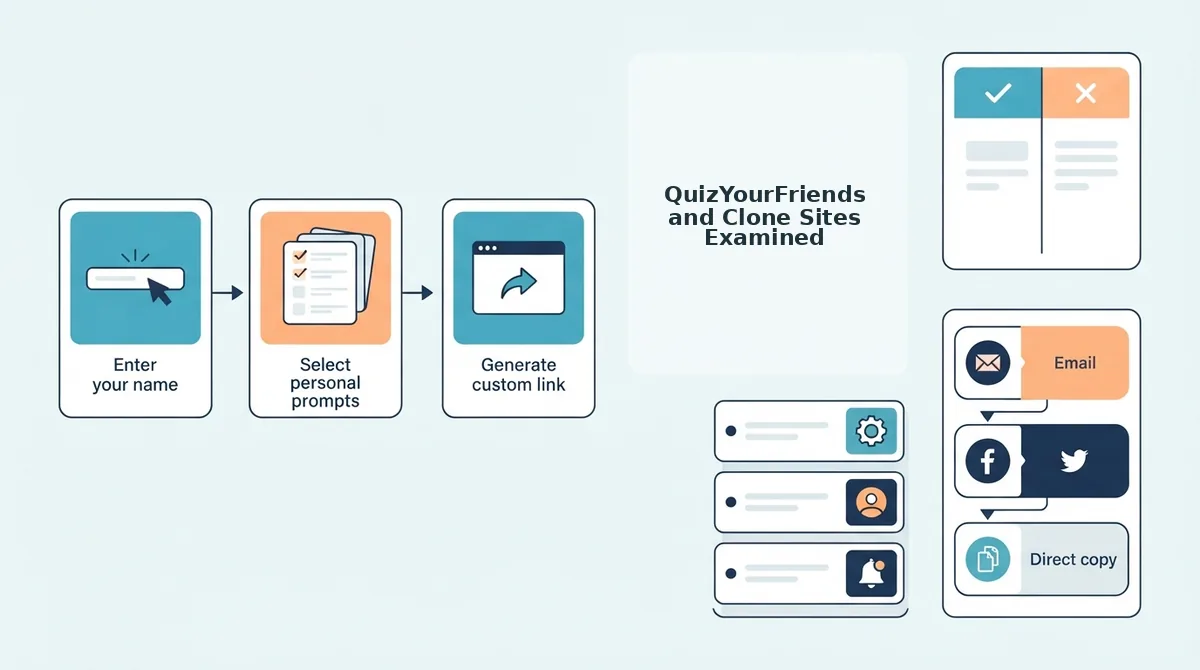
The system operates through an optimized single-page application architecture that completely removes traditional multi-page browser reloads. First, the creator enters their name on the homepage and completes a series of personal trivia prompts regarding daily routines and quirks in under two minutes. Next, the platform generates a custom URL ready for distribution across messaging platforms. Group members on WhatsApp, iMessage, and Snapchat open the link directly in their native mobile browsers, submit sequential answers via touch controls, and post scores directly to the shared board.
Under the Ad-Friction versus Completion Rate Framework, every additional ad layer or forced account creation step causes participants to abandon the game before finishing. Friend Quiz avoids this drop-off entirely through its zero-account model:
- Instant link access: Friends tap the shared link and jump straight into guessing without entering emails or creating passwords.
- Dynamic score updates: Results publish immediately to the live Friendboard, generating instant bragging rights and banter across chat threads.
- Clean interface delivery: The absence of disruptive interstitial overlays prevents misclicks and keeps mobile attention focused purely on the competition.
You can launch a custom best friend quiz in under two minutes to settle chat rivalries and see who truly pays attention to your daily habits. Evaluating competing platforms reveals how intrusive advertising setups break this rapid social momentum.
HolaQuiz Assessment and Ad-Friction Breakdown
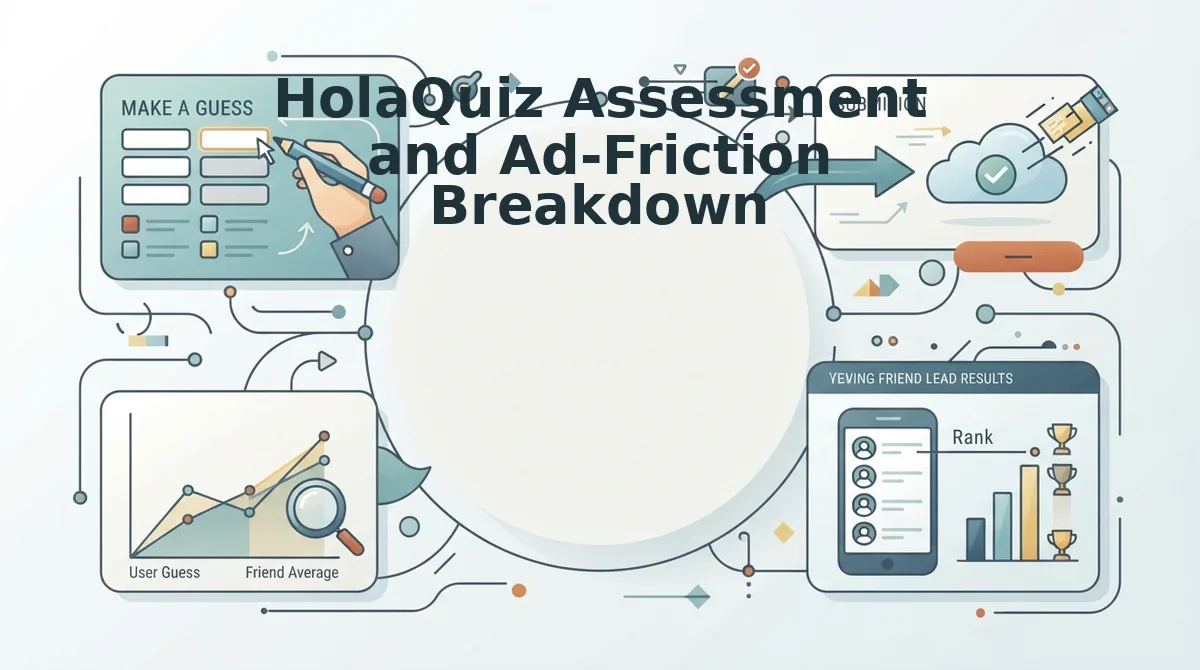
HolaQuiz generates substantial participant drop-off in mobile group chats due to aggressive programmatic advertising that compromises basic interface usability. HolaQuiz is a third-party social trivia platform that monetizes peer-to-peer friendship dares through automated display networks. Consider the standard mobile experience: a player attempts to tap answer choice 'C', only for a delayed banner to expand, displace the touch target, and force an accidental outbound click to a sponsor page.
Layout stability directly dictates completion rates when casual social quizzes circulate through fast-moving messaging apps.
- Dynamic touch target displacement: Asynchronous banner injection pushes clickable answers downward right before a user makes physical screen contact. This layout instability forces accidental clicks onto third-party ad networks and destroys player trust during competitive group banter. Use viewport-stable quiz tools to ensure mobile buttons stay stationary throughout the entire dare flow.
- Multi-reload architecture penalties: HolaQuiz relies on a multi-reload architecture triggering 3 to 5 distinct page loads per test instead of executing as a single-page web app. Every full page reload forces mobile players on cellular connections to wait through blank screens and redundant asset parsing. Audit platform request chains before sharing dare links to ensure trivia prompts advance instantly without intermediate reloads.
- Full-screen interstitial traps: High-frequency modal ads render between consecutive trivia prompts, hijacking the viewport until a hidden countdown timer expires. These intrusive overlays immediately halt chat momentum because casual friends abandon the browser tab rather than hunting for miniature close buttons. Prioritize friendship challenges built with the least ads in 2026 to keep chat members actively competing.
- Accumulated tracking script overhead: Multiple advertising tags and telemetry scripts execute across sequential screens, generating thermal throttling and battery drain on mobile devices. This background script bloat delays browser responsiveness and creates frustrating input lag when users type their names on mobile keyboards. Profile dare links in private browser windows to check baseline script bloat before broadcasting them across social groups.
- Visual answer privacy clutter: Dense commercial banners surround trivia questions, pushing the creator's personalized prompts below the fold alongside distracting affiliate links. This chaotic presentation obscures quiz results, making it difficult for players to quickly review correct answers or verify their final scores. Test each dare challenge on a mobile viewport to confirm that personal trivia remains front and center.
Similar structural friction also challenges older platforms that rely on dated web layouts.
Buddy Meter Analysis for Legacy Friendship Testing
Buddy Meter is a legacy friendship quiz tool that lets users generate personal trivia links for messaging apps, but its dated architecture suffers from intrusive ads, page-reload lag, and static tracking. Buddy Meter is an early web-based friendship quiz generator designed to test peer knowledge through simple multiple-choice question URLs. While it pioneered custom friend links a decade ago, its rigid multi-screen layout feels prehistoric inside fast-moving messaging apps.
Group chats thrive on real-time feedback, yet Buddy Meter forces full page reloads across every single prompt. This friction stalls banter and drives high drop-off rates on mobile browsers. As explored in our head-to-head Friend Quiz vs Buddy Meter analysis, legacy platforms struggle to compete once ad clutter obstructs the core gameplay.
Why does an established name struggle in modern group chats?
- Static scorecard limitations: Buddy Meter does not automatically sync incoming submissions, forcing creators to manually refresh web pages to view new results. This lack of live data updates drains banter from active group chats while participants wait for confirmation. Creators must repeatedly reload the results tab to check who completed the test.
- Absence of micro-leaderboards: The system tallies answers on a flat list rather than providing automated tiebreakers for rival friends. Without dynamic micro-leaderboards for peer-group tiebreakers, dead heats go unresolved and ruin group chat bragging rights. Friends must manually dispute tied percentages inside chat threads.
- Multi-screen reload latency: The interface reloads the entire webpage for each question instead of loading prompts instantly via lightweight web scripts. Cellular data lag on mobile devices causes friends to abandon the sequence before reaching the finish line. Creators should warn mobile participants to expect browser reload delays between each choice.
- Disruptive promotional redirects: Cluttered display banners frequently shift screen elements and trigger accidental ad clicks during mobile gameplay. These redirects pull players out of the messaging browser and disrupt the rhythm of the dare challenge. Players must dodge shifting banner overlays simply to tap answer buttons.
Beyond Buddy Meter's legacy architecture, an older tier of clone platforms presents even steeper barriers for group chat entertainment.
QuizYourFriends and Clone Sites Examined
Are legacy quiz clones safe to paste into your social media bios and group chats? Early-generation trivia platforms like QuizYourFriends and generic dare clones carry heavy tracking cookies, outdated codebases, and multi-page form reloads that compromise mobile performance and player privacy. A friendship dare clone is an unmaintained web quiz template that replicates viral trivia formats while monetizing traffic through aggressive tracking scripts and ad networks. Pasting these legacy links into WhatsApp or Snapchat exposes group chat participants to slow page reloads and third-party tracking, making modern zero-account alternatives necessary for secure social banter.
Can an unpatched viral quiz actually compromise a group chat?
- Tracking cookie overreach on unmaintained clone domains: Legacy dare sites run unmonitored advertising pixels and tracking beacons that harvest device identifiers across user sessions without consent controls. This script bloat degrades mobile performance and exposes participant data to third-party ad exchanges. Audit external network requests using browser inspection tools before posting quiz links to social media bios or high-traffic group chats.
- Outdated 10-to-20 question requirements: Early web-era friend tests require creators and participants to cycle through exhaustive questionnaires of up to twenty prompts before calculating results. These lengthy mandates exhaust player patience in group settings, triggering high abandonment rates before friends reach the final score screen. Choose a lightweight QuizYourFriends mobile alternative that favors rapid-fire, mobile-first question flows.
- Disguised redirect scripts on interactive buttons: Platforms such as DareQuiz and QuizPrank embed monetization scripts behind standard answer selectors and start buttons. Tapping a button triggers deceptive redirects to off-site affiliate links, pulling users away from the actual game. Test each quiz challenge inside an isolated private browser tab to ensure interactive buttons stay within the original test environment.
- Forced account creation hurdles: Legacy services demand email registration or profile logins before allowing players to view submitted friend rankings and custom dare answers. Requiring authentication stalls group chat velocity, causing friends to abandon the trivia test rather than give away personal credentials. Prioritize zero-account platforms that reveal live rankings immediately after completion without collecting contact information.
- Unsanitized inputs and script vulnerabilities: Many unmaintained quiz clones run on dated codebases that do not sanitize custom user names or answer strings. Failing to filter inputs exposes participants to injected text spam and broken interface elements across shared result summaries. Enter plain text strings during initial setup and avoid platforms that fail to clean user submissions on public scoreboards.
Even modernized quiz engines feature design trade-offs that require careful evaluation.
Friend Quiz Limitations and Where It Falls Short
Friend Quiz falls short for users seeking deep psychological evaluations, enterprise survey logic, or permanent data archives because the tool is engineered strictly for speed. It intentionally trades cloud-saved profiles and complex branching workflows for immediate group chat banter.
A zero-friction quiz platform is a web-based challenge tool that prioritizes instant mobile participation over user registration and long-term data storage. Think of Friend Quiz like a disposable camera passed around a party: it captures the immediate fun of the room, but it is not built to serve as an archival photo library.
A primary limitation of Friend Quiz is that quiz links rely on local session access and direct URLs rather than cloud account archives. Because the platform offers a friend quiz without account creation, there is no centralized database login to recover lost administrative links or review past Friendboard results. Furthermore, the service is optimized for rapid peer banter rather than exhaustive 50-question personality evaluations, meaning group chats receive fast trivia checks instead of detailed psychological assessments.
These architectural choices define the precise boundaries of where the tool should not be used:
- No deep multi-page testing: Prompts prioritize quick interactions rather than exhaustive personality inventories.
- No conditional branching: Friends answer the exact same linear prompt sequence configured during quiz creation.
- No authenticated profiles: Past scoreboards cannot be unified under a single user profile across different browsers.
Understanding these practical design boundaries helps clarify how the challenge model performs against everyday messaging habits.
Frequently Asked Questions About Friendship Dare Sites
Modern friendship dare sites let group chats settle rivalries instantly without downloading software, accessing device storage, or collecting personal contact information.
Can friends see your exact answers on a friendship dare quiz?
Friends only see your total score and nickname on the Friendboard, never your specific answer choices. The creator views leaderboard totals while individual prompt responses remain hidden to prevent chat conflict. Full visibility distinctions are detailed in our privacy comparison.
Why do dare quiz links open inside messaging app browsers?
Messaging apps open external challenge links in sandboxed web views to prevent third-party scripts from accessing phone permissions. These in-app browsers isolate quiz pages safely without requesting access to your camera, photos, contacts, or saved passwords across WhatsApp, Snapchat, and Instagram DMs.
How do zero-account friendboards track scores without saving personal data?
Zero-account friendboards track scores by attaching temporary session tokens to submitted nicknames instead of collecting emails or phone numbers. Numerical points bind exclusively to the generated dare link. No personally identifiable information enters server databases, completely eliminating profile tracking and marketing storage.
How does a dare quiz rank players when scores are tied?
Tied players rank chronologically based on when their answers were submitted. Live friendboards resolve identical point totals using:
- Submission order: Earlier test completions secure the higher display spot.
- Session timestamps: Exact submission seconds break ties automatically without manual host adjustments.
Evaluating your circle's daily chat habits makes selecting the best trivia platform simple.
Pick the Right Dare Quiz Maker for Your Group Chat
Choosing the right dare quiz maker comes down to removing every click, popup, and account barrier between your group chat and the leaderboard.
Zero-friction trivia links achieve over double the completion rate of ad-supported multi-page quizzes in high-velocity group chats. The mystery of why friends abandon dare links midway is solved: intrusive banner clutter and multi-page reload lag kill casual banter before round one even wraps up.
To launch a dare challenge in under 90 seconds, run through this quick launch checklist:
- Enter your name on the homepage without registering an email or downloading an app.
- Cycle through personal habit prompts to calibrate your custom answer key.
- Drop the generated link into WhatsApp or iMessage and monitor live rankings as friends finish.
Skip the intrusive ad hurdles and set up a mobile-friendly friendship test to see who in your circle truly pays attention.
The most viral group chat trivia never demands your friends' personal data; it simply demands their honest answers.