How to Settle Group Chat Rivalry With a Dare Quiz
Your group chat has been arguing for three days about who would survive a zombie apocalypse, and nobody has budged an inch. Sound familiar? The problem isn't the argument, it's that you're trying to settle group chat rivalry with dare quiz mechanics without any actual scoring system. Group chat instigators on WhatsApp, iMessage, and Snapchat have zero patience for app installs or account logins, which is why unstructured "just do it" dares always fizzle out.
Here's the fix: a three-minute framework called the Dare Arbitration Protocol that turns any stalled argument into a scored, screenshot-proof verdict. You'll learn how to nominate the dispute, assign tiered dares, and crown a winner on a live Friendboard, no referee required.
By the end, you'll have a repeatable system for every future chat standoff. And there's one surprising reason most dares fail that has nothing to do with the dare itself, it's revealed in the scoring step below. Ready to settle this? Open the friendship dare quiz and follow along.
Why Group Chat Arguments Need a Scoring System (Not Just More Opinions)
A scoring system is a shared, visible point structure that converts subjective "I totally would've survived" claims into objective, ranked outcomes. Without one, every dare challenge collapses into three predictable failure modes: manual tallying errors, disputed scores, and a dead chat by the next morning.
Think of a scoring system like a referee at a pickup basketball game. Without one, every foul call becomes a negotiation, every point gets contested, and the game dissolves into arguments about the argument. A live Friendboard works the same way, it turns "he said/she said" into ranked outcomes with bragging rights attached, so nobody has to remember who completed which dare or argue about whether it counted.
The progression is simple. At the basic level, you assign one point per completed dare and track it manually. This works for two-person chats but breaks down the moment a third friend joins. At the intermediate level, you introduce tiered point values, harder dares earn more points, which creates strategic decision-making about which dare to attempt. At the advanced level, you use a real-time Friendboard that updates instantly, eliminates tally disputes, and produces a screenshot-proof final ranking that ends the argument permanently.
Unstructured dares fail because there is no referee, no objective points, and no live scoreboard. When three friends all claim they "basically did" their dare, the chat devolves into competing narratives. A structured friendship dare quiz with a visible scoring layer removes ambiguity: the dare is either completed and scored, or it isn't. The Friendboard displays the current standings after every round, so the next argument starts from a shared, agreed-upon baseline rather than a fog of selective memory.
The Dare Arbitration Protocol: Nominate, Dare, Score
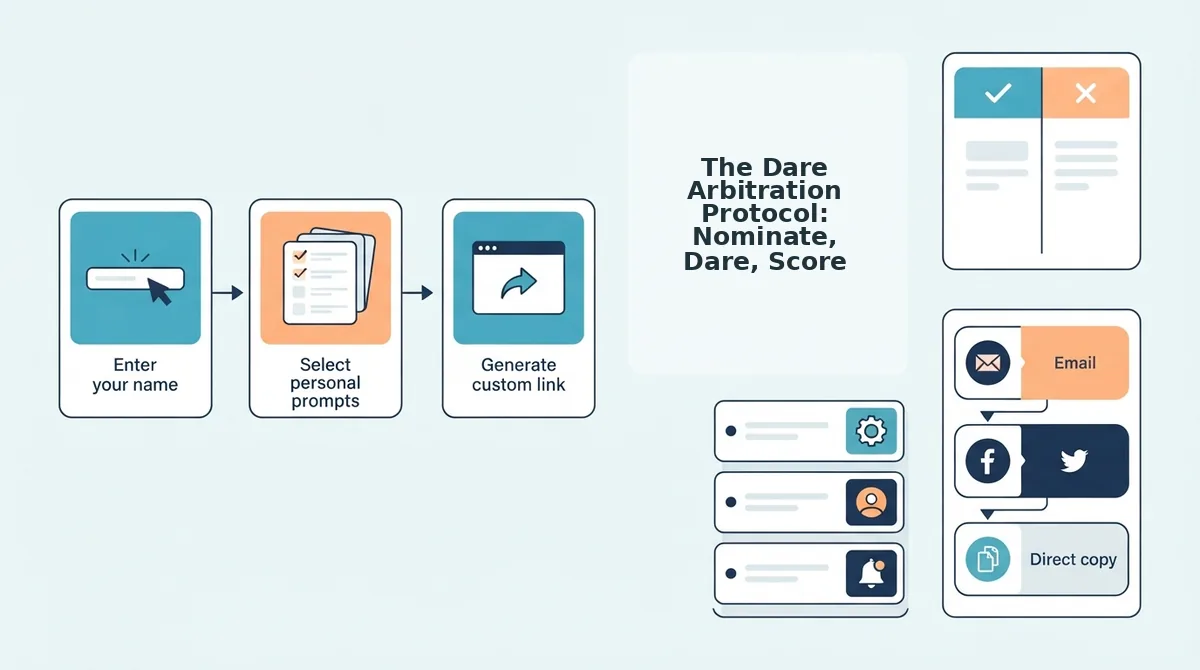
The Dare Arbitration Protocol is a three-step framework for resolving group chat disputes through tiered dares and real-time scoring. You'll need one open group chat, the friendship dare quiz link, and roughly three minutes per round.
- Nominate the dispute. Open your group chat and type the exact argument you're settling, for example, "Who would last longest in a haunted house?" Have every participant reply with a one-line claim. This step defines what "winning" means before any dare is issued, so the final score can't be reinterpreted later. You should see everyone's claim in the thread within 60 seconds.
- Assign tiered dares. Use three dare levels: Safe (low-stakes, doable in under a minute, like sending a voice note of your best ghost impression), Spicy (moderate risk, requires proof, like posting a 10-second video reenacting your survival plan), and Savage (high-stakes, chat-voted, like changing your group chat nickname to "Haunted House Victim" for 24 hours). Each tier carries escalating points: Safe earns 1, Spicy earns 3, Savage earns 5. The chat votes on which tier each participant must attempt based on how confident their original claim sounded.
- Score on the Friendboard. Open the friendship dare quiz link and enter each completed dare as it happens. The Friendboard updates in real time, showing ranked standings after every round. You should see a live ranking with the current leader highlighted. Screenshot the final Friendboard and post it back to the chat, that screenshot is your proof, and it ends the argument.
The tiered system matters because it rewards risk proportionally. A participant who only completes Safe dares can still win if they're consistent, but a Savage dare can swing the entire ranking in one move. This creates genuine strategic tension: do you play it safe and accumulate points, or gamble on a Savage dare to leapfrog the leader? The Friendboard makes that tension visible to everyone in real time, which keeps the chat engaged instead of waiting passively for results.
Once your first dispute is settled, you'll want a ready supply of dares that actually work in real chats, here's how to build them.
Tiered Dare Questions That Work in Real Group Chats
Dare quizzes work best when the stakes escalate in clear tiers, so nobody feels ambushed and the rivalry stays fun. Use these seven dare categories in order, moving up a tier only when the group agrees the argument deserves it.
- Safe tier: harmless icebreakers that keep everyone engaged. These dares require zero embarrassment and work for new group chats or mixed friend circles. Use them for low-stakes arguments like "who picks the movie" or "who pays for the next round." Examples: voice-note your best impression of the person you're arguing with, or post your most recent camera roll photo with zero context.
- Safe tier: self-deprecating confessions that level the playing field. These dares force the loser to admit something mildly embarrassing, which humanizes them and keeps the chat laughing instead of fuming. Use them when the argument is about a subjective preference, not a factual claim. Examples: admit your most-played song from five years ago, or share the last thing you Googled at 2 a.m.
- Safe tier: creative challenges that redirect energy into content. These dares turn the rivalry into shareable material for the chat, which keeps engagement high even for spectators. Use them when the group is bored and the argument is more about entertainment than resolution. Examples: draw the argument's topic in 30 seconds and post the photo, or rewrite the group chat's last 10 messages as a dramatic screenplay.
- Spicy tier: stakes that raise the temperature without crossing lines. These dares introduce mild public exposure or temporary inconvenience, which makes winning feel earned without risking real fallout. Use them for mid-level disputes where both sides are genuinely invested. Examples: change your display name to whatever the winner chooses for 24 hours, or send a pre-written embarrassing text to a mutual friend and screenshot the reply.
- Spicy tier: timed dares that add pressure and proof. These dares require the loser to complete a task within a deadline and post evidence, which prevents stalling and keeps the resolution clean. Use them when the argument has dragged on and the chat needs closure. Examples: post a 15-second dance video to the group within 10 minutes, or reply to your last three unread DMs with "I lost a bet, ask me anything."
- Savage tier: definitive dares for rivalries that need a clear winner. These dares carry real consequences that the loser will remember, which makes them appropriate only for long-running rivalries or high-stakes arguments. Use them sparingly and only when both parties explicitly agree to the terms. Examples: the loser buys the winner's next meal, or the loser posts a public story praising the winner's "undeniable superiority" for 24 hours.
- Savage tier: permanent bragging-rights dares that settle the score for good. These dares create a lasting artifact in the chat or on social media, which gives the winner a permanent receipt. Use them for season-finale arguments or annual friend-group traditions. Examples: the loser changes their group chat nickname to a winner-chosen title for one month, or the loser records a 30-second video admitting defeat and the winner pins it. For a full set of ready-made dare questions, try a who knows me best dare quiz that packages these tiers automatically.
How a Live Friendboard Turns Arguments into Bragging Rights
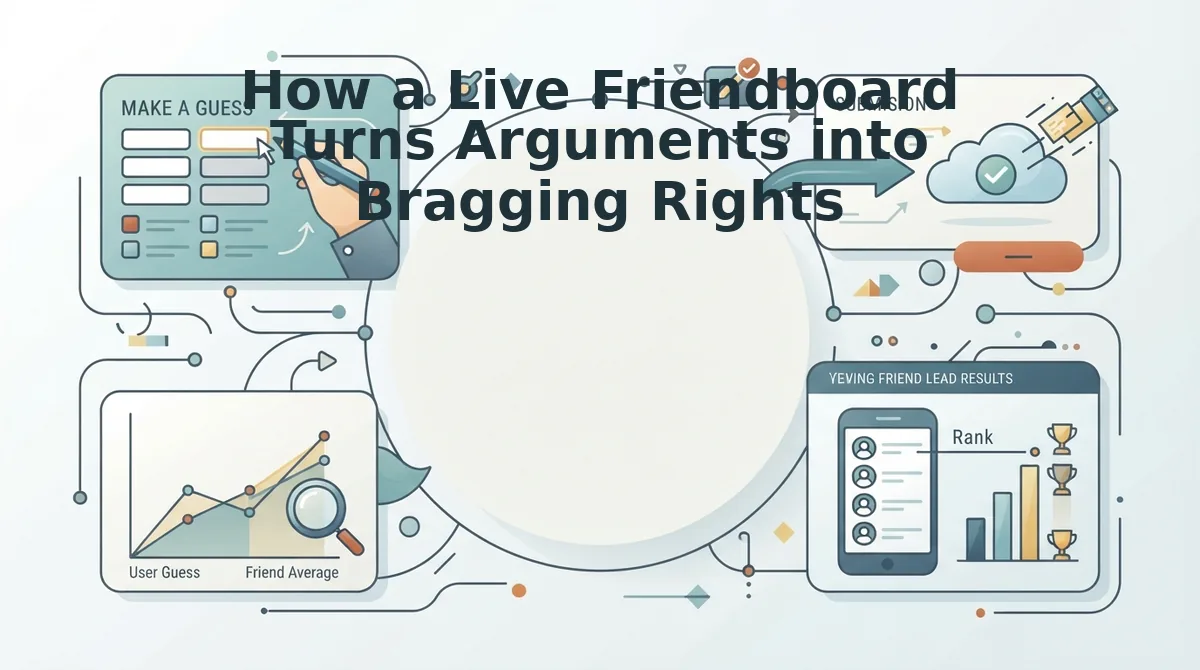
A live Friendboard is a real-time ranking display that updates every time a friend submits quiz answers, showing who's winning without anyone needing to tally scores manually. Think of it like a sports scoreboard at a stadium: the moment a point is scored, everyone sees it change, and nobody has to argue about what the score actually is.
Before a Friendboard exists, group chat arguments end in chaos. Someone screenshots their answers, someone else disputes the math, and the chat either dies or devolves into a wall of "no you didn't" messages. The open loop of "who actually won" stays open, and the rivalry fizzles without a resolution.
After a Friendboard goes live, the workflow is simple. The quiz creator sends one shareable link to the group chat. Friends tap the link, answer the dare questions on their phones, and the Friendboard updates instantly with their scores and rankings. No app download, no account login, no spreadsheet. The loser sees their name at the bottom in real time, and the winner gets a screenshot-proof result they can post anywhere.
For a concrete example: imagine two friends arguing over who knows the group's inside jokes better. One creates a friendship test scoreboard, sends the link, and within five minutes the Friendboard shows a ranked list. The winner screenshots it, posts it to the chat, and the argument is over. The bragging rights are now attached to a visible, shareable artifact rather than a disputed memory.
This mechanic works because it converts subjective rivalry into objective ranking. The Friendboard removes the two things that keep arguments alive: ambiguity about the score and friction in calculating it. When the score updates itself and everyone can see it, the only thing left to argue about is what the loser has to do next.
FAQ: Settling Group Chat Rivalry with a Dare Quiz
How do I settle a group chat argument with a dare quiz?
Create a dare quiz with escalating tiers, send the shareable link to the group chat, and let a live Friendboard track scores in real time. The loser completes the agreed dare, and the winner gets a screenshot-proof result. No app download or account is required.
What dares are safe for a group chat?
Safe dares include self-deprecating confessions, voice-note impressions, creative drawing challenges, and timed tasks with proof posted to the chat. Avoid dares involving public embarrassment, real money, or anything that could damage relationships outside the group.
How do we track who's winning?
A live Friendboard updates rankings automatically every time someone submits answers, so everyone sees the current standings in real time. This eliminates manual tallying and disputed scores. The final ranking is screenshot-proof and shareable.
Can I make a dare quiz without an app?
Yes. Friend Quiz runs entirely in a mobile browser, so you can create a dare quiz and share the link without downloading anything or creating an account. Try a bff test to generate a ready-made quiz in under a minute.
Turn the Next Argument Into a Scoreboard Moment
The Dare Arbitration Protocol works because it replaces opinion with structure: Nominate, Dare, Score. No app download. No account. Just a shareable link that drops straight into your group chat and starts collecting answers in seconds.
Here's the pattern that ends arguments fastest:
- Nominate the disputed claim, who said it, who denies it, what's at stake.
- Dare both sides to prove it with a dare quiz built for your group chat.
- Score the results live on a Friendboard, where bragging rights update in real time.
What starts as a petty disagreement becomes a recurring game your friends actually want to play. The rivalry doesn't disappear, it gets a leaderboard. And the next time someone claims they know you best, you won't argue. You'll send a link.
The group chat doesn't need a referee. It needs a scoreboard.