Friend quiz format mistakes that make group chats go quiet
Nobody played because the format didn't fit the audience, the stakes felt too personal for the group, or the link had too much friction. A quiz the chat actually finishes depends on two things you need to know first: who is in the chat and how close they are. Match the format to that closeness.
You drop the link, read receipts pile up, and the chat goes silent. It stings, but your questions are rarely the problem. Most silence comes from friend quiz format mistakes: the wrong quiz type, sent to the wrong people, through a clunky link.
Picture a Friendship Dare quiz landing in a brand-new class group. Nobody knows each other well enough to risk a dare, so nobody taps. Swap in a light BFF quiz and resend it.
This guide explains why a friend quiz goes unanswered. It then walks through seven fixes, and each one names the format to send instead. One mistake happens before anyone sees question one, and most people never notice it.
Sound familiar?
Why Did Nobody Play the Quiz You Sent to Your Group Chat?
Format matters more than questions. Most quizzes die because the format didn't fit the group, even when the questions were good.
A friend quiz is a quiz about the creator that friends answer and get scored on. Quiz format is the combination of who the quiz is about, who receives it, and how personal the stakes are.
Think of it like picking a game for a party. A high-stakes truth-or-dare round works with your closest friends. At a mixer full of strangers, it empties the room.
Why did nobody play my friend quiz? Usually, one of three format problems stopped people. First, the format didn't fit the group's closeness. A dare or crush quiz sent to near-strangers feels risky, so everyone waits for someone else to go first. Second, the stakes were too exposing, with questions that could embarrass players in front of the whole chat. Third, the link had friction, such as a login screen, popups or pages that reload, so people on their phones gave up. Fix the format before you rewrite a single question, and the same chat becomes far more likely to play.
A low-stakes friendship test makes a safe first send. You can build one in under two minutes, and friends need no account or app download to play.
How to Fix the 7 Friend Quiz Format Mistakes Step by Step
Fix each mistake by matching the quiz type, the audience and the link experience to your group. Before you start, you need your phone, the group chat you plan to use, and about two minutes per quiz.
- Don't send a dare quiz to a new group. Use the closeness rule: dares fit tight groups, and new groups get gentler formats. Once you switch, people should start tapping the link instead of waiting for someone else to go first.
Is a dare quiz okay for a new friend group? Usually not. A friendship dare quiz raises the stakes by attaching a challenge to wrong answers. That only works when players trust each other enough to laugh it off. In a new group, people don't yet know where the lines are, so a dare feels like a risk and most people skip the link. Start with a light quiz that everyone can answer without feeling exposed. Save the dare version for after the group has some shared banter.
Send instead: a light BFF quiz.
- Keep the love calculator one-on-one. Here's where it gets awkward: a love calculator posted to a group puts two people on the spot in front of everyone. Use this rule for who receives it: the person you're curious about, and nobody else. The group chat should stay relaxed instead of cringing.
Send instead: a private one-on-one send, or a best friend quiz for the group.
- Send a quiz about you, not a self-test. Popular YouTube quizzes from channels such as Mister Test (96,295 views) and Psych2Go (38,097 views) are solo self-tests. Each viewer gets a private result, so a group chat has nothing to compete over. A quiz about you gives every friend the same target to answer.
Send instead: a quiz about your own habits and quirks.
- Cut inside-joke questions for broad chats. In a large group, drop questions about private memories only one friend shares, nicknames from one circle, and references to old drama. Players should feel they have a fair shot at every question.
Send instead: questions about your favorite foods, daily habits, and likes and dislikes.
- Avoid account walls, ad clutter and page reloads. This is the mistake that happens before anyone sees question one. Sign-up screens, popups and multi-page reloads kill momentum, and many friends quit before question three. Friction is part of the format you choose.
Pro tip: Before you share the link, test it on your own phone and open it the same way your friends will. It should take one tap to start answering.
Send instead: a no-login link that opens in the mobile browser.
- Add a scoreboard. A Friendboard is a live leaderboard that ranks who knows the creator best. Share the link to it after the first scores come in. You should see friends replaying to beat each other.
Send instead: a quiz with a live Friendboard.
- Stop using one format for every occasion. Match the format to the moment. Each pick should feel obvious for the occasion.
- Birthday: a best friend quiz about you
- New group: a light BFF quiz
- Best friend: a dare quiz
- Crush: a one-on-one love calculator
The next section maps every format to how close your group is and how exposed players will feel.
Which Friend Quiz Format Fits Your Group? The Closeness x Exposure Matrix
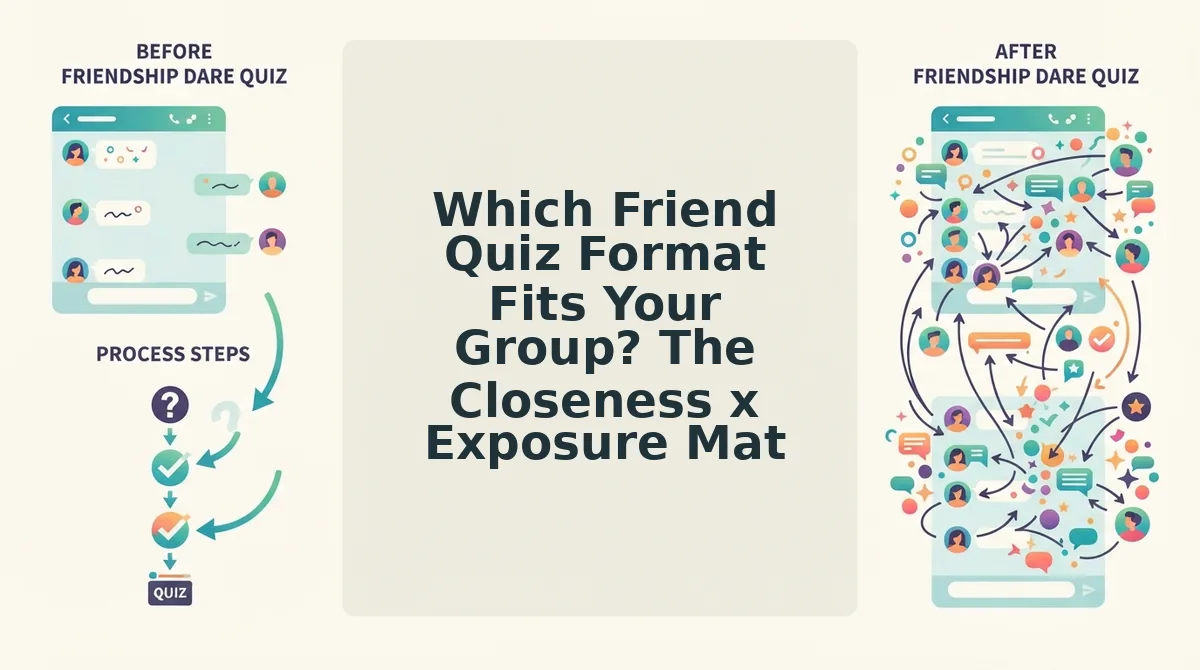
The Closeness x Exposure Matrix matches a friend quiz format to two factors: how well your group knows each other (new or tight) and how personal the questions get (light or personal/romantic). Find the cell your chat sits in and send that format, because a mismatched format is what makes a chat go quiet.
| Group closeness | Light exposure | Personal or romantic exposure |
|---|---|---|
| New group | Best friend test or BFF quiz. Best for: classmates, new teammates and freshly formed chats. | Love calculator, sent 1:1 only. Best for: someone curious about a crush who doesn't want an audience. |
| Tight group | BFF quiz with a Friendboard. Best for: long-running chats that live for bragging rights. | Friendship dare quiz, plus a love calculator sent 1:1 for anything romantic. Best for: close friends who already roast each other. |
Every format has a real strength. A dare quiz sparks the loudest replies in a tight group but overexposes people in a new one. A light quiz is the safest opener, though close friends may find it tame. A love calculator is fun 1:1, but in a group chat it puts one person on the spot.
Worked example: a mixed work-and-friends chat lands in the light-exposure column, so send the best friend test.
Once you know your cell, you can create a custom quiz in under two minutes with no account, email or app download. But that's only half the fix.
How to Check Your New Quiz Format Worked
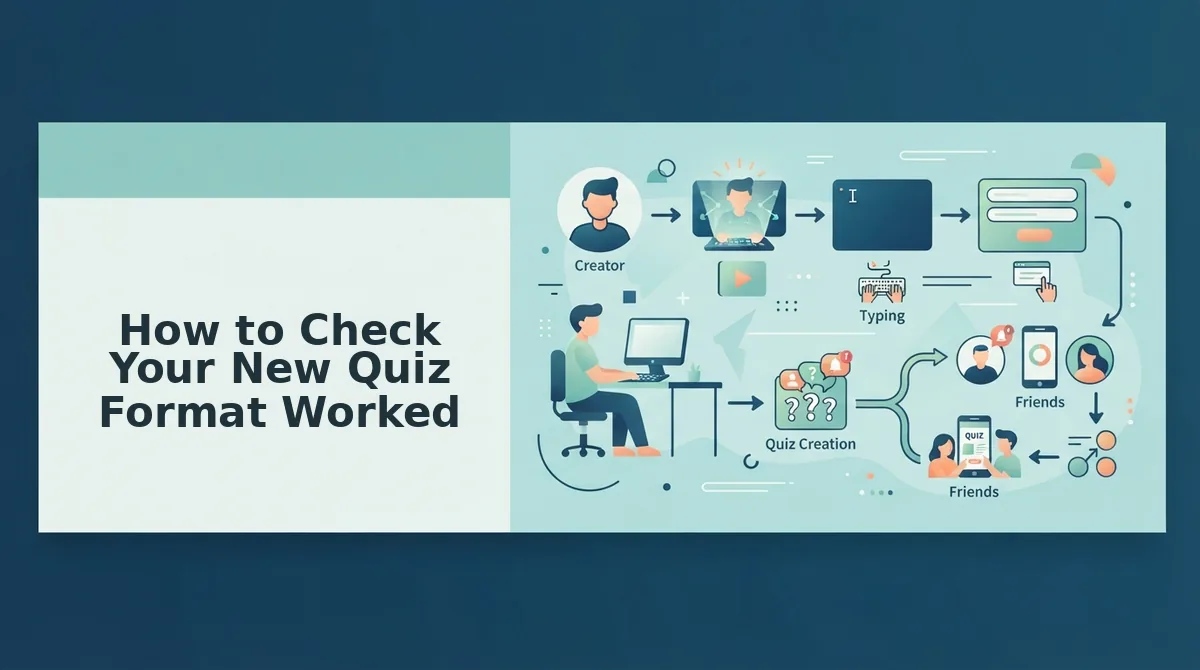
Your format worked if friends reply in the chat, finish the quiz, compare ranks and ask to make their own. Before you start, you need your phone with WhatsApp, iMessage or Snapchat and your quiz link.
- Open your link inside each app on your own phone (2 minutes). Tap it in WhatsApp, iMessage and Snapchat. The first question should load in the in-app browser with no login or popup. If it doesn't, return to the friction step.
- Watch the chat for replies, not just taps (first hour). You should see scores, guesses or teasing. If the chat stays silent, revisit the closeness step.
- Check whether friends finish past question three. Posted final scores confirm it. If results never appear, read why friends quit before question three and fix the question step.
- Look for Friendboard rivalry. Rank screenshots and banter mean it's working. No rivalry? Go back to the sharing step.
- Note requests to make their own quiz. "How do I make one?" is your strongest success signal.
Send the Right Quiz and Wake Up the Chat
Your group chat didn't go quiet because your friends stopped caring; it went quiet because the format didn't fit them. Fix the fit and the replies come back.
Keep four rules in mind:
- Closeness fit: match the format to how well the group knows each other.
- 1:1 for romance: never drop a love calculator into a group.
- About-me format: make the quiz about you, not general trivia.
- Zero friction: no logins, downloads or popups between the link and question one.
Worked example: a chat that had been dead for weeks woke up once someone sent a BFF quiz paired with a Friendboard, because the rankings gave everyone a reason to reply.
Enter your name and send the right quiz. The next message your chat sees could be the one that starts the rivalry.