BFF quiz likes and dislikes answers that spark group chat banter
You post your quiz in the group chat, everyone aces it in silence, and the thread goes quiet before lunch. The problem usually isn't your friends. It's answers like "likes pizza" that nobody could get wrong.
That's the trap with most bff quiz likes and dislikes lists. They hand you safe topics, so the quiz becomes a formality instead of a rivalry. This guide shows you how to pick answers your friends will actually dispute.
You'll get a simple tier filter for sorting answers, a step-by-step method for writing them, and a quick check for after you share. All you need is a phone, your name, and a group chat. You don't need an account, an email, or an app download.
One kind of dislike tends to start more arguments than any favorite. We'll get to it in the steps.
The best BFF quiz likes and dislikes are specific, slightly arguable, and true. Mix easy wins with answers close friends will split on, plus one or two that only your closest friend knows.
What Likes and Dislikes Should You Put in a BFF Quiz?
Put in likes and dislikes that are specific enough to argue about but true enough to defend. Aim for a mix of easy, debatable, and deep-cut answers.
A BFF quiz likes and dislikes section is a set of personal trivia questions that tests whether friends know your real preferences, habits, and pet peeves. Good answers skip surface-level favorites. They're concrete, provable by close friends, and just ambiguous enough to split the group chat.
Categories to Draw From
- Food: how you order or eat something, not just what you like.
- Daily habits: morning routines, phone habits, and how you text.
- Quirks: odd rituals your friends have watched you repeat.
- Pet peeves: small things that irritate you more than they should.
- Guilty pleasures: shows, snacks, or songs you'd rather not admit to.
The 3-Tier Answer Filter
The 3-Tier Answer Filter sorts each answer by how many friends could guess it. A quiz works like a playlist. If every track is a hit, nobody notices, and if every track is obscure, people skip.
| Tier | What it means | Example answer | Expected chat reaction |
|---|---|---|---|
| Gimme | Everyone gets it | Always orders extra fries | "Too easy" |
| Debatable | Close friends split | Secretly prefers texting over calls | "No way, you call me all the time" |
| Deep Cut | Only the closest friend knows | Rewatches the same comfort show every Sunday | "How did she know that?" |
This suggested mix is editorial guidance, not data. Lean mostly on Debatable answers, add a few Gimmes so scores stay friendly, and include one or two Deep Cuts to crown a winner. That spread keeps your Friendboard, the live ranking of who scored highest on your quiz, moving.
How do you choose a likes answer friends can't guess? When you make your BFF quiz, you type your name and move through prompts until you reach a likes question about daily habits, where "likes coffee" feels like the obvious pick. Choose the habit only people who've shared mornings with you would know instead, such as "drinks coffee after it goes cold," so friends have to remember you rather than coast on a lucky guess.
For more ideas, see these quirk answers that keep the quiz from being too easy.
How to Pick and Answer Your Likes and Dislikes Step by Step
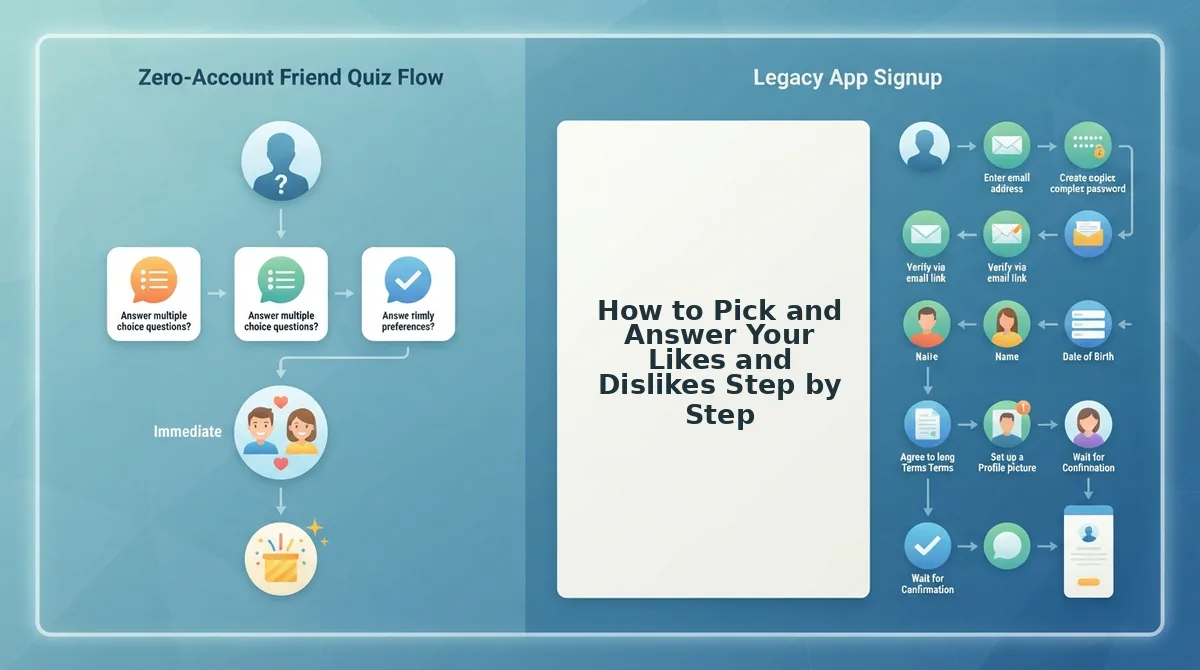
Enter your name, rewrite vague answers into specific ones, add a few arguable dislikes, then balance the tiers before you share. Setup takes under two minutes.
Before you start, have your phone, your name, and the group chat you plan to send it to. You don't need an app, a signup, or an email.
- Type your name on the homepage (10 seconds). Enter the name your friends actually call you, then tap to begin. The first trivia prompt should load right away.
- Draft your likes, then rewrite the vague ones (about 30 seconds). Make a quick first pick for each prompt, then sharpen anything generic.
- "Likes music" becomes "skips every song after 30 seconds"
- "Likes coffee" becomes "lets coffee go cold before drinking it"
- "Likes movies" becomes "falls asleep before every ending"
- Write dispute-bait dislikes (20 seconds). Hyper-specific pet peeves, like "hates when people reply 'k'", tend to draw more pushback than any favorite. This is editorial reasoning, not a statistic. Your friends have probably done the thing you hate, so they'll want to defend themselves. Your dislikes should read like small accusations.
- Cut answers that are too obscure or too personal (15 seconds). Drop anything nobody could know. Skip private details, health information, and anything that embarrasses a friend. The banter should be about you, not at someone else's expense.
- Tag each answer by tier and rebalance (15 seconds). Mark answers as Gimme, Debatable, or Deep Cut. If most are Gimmes, swap two for Debatable picks. You're aiming for a quiz where scores spread out.
- Share the link (10 seconds). Copy your quiz link and drop it into your group chat. Friends should see the quiz open in their mobile browser.
Here's how that looks in practice. You paste the link into a WhatsApp group, and friends tap it and answer in their browser without creating an account. Results then land on your Friendboard.
The same workflow works for a best friend test when you want a one-on-one showdown instead of a group race. You can go from blank page to group chat chaos without an app or signup.
Once your friends start answering, the next question is whether your picks did their job.
How to Tell If Your BFF Quiz Answers Worked
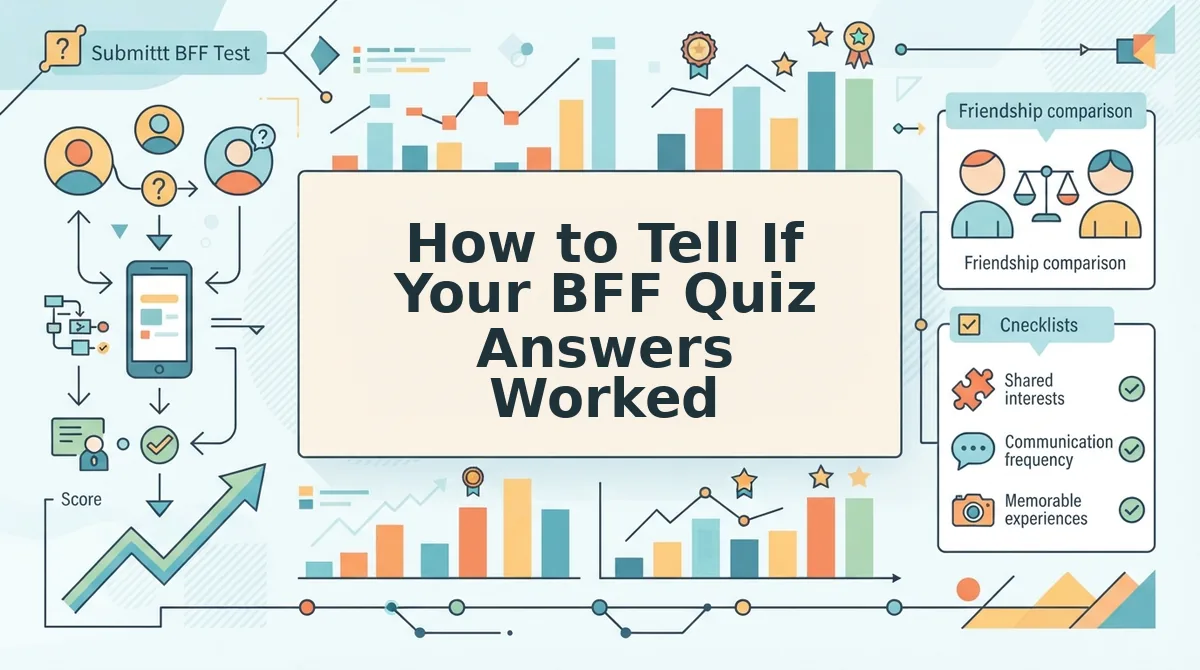
Your BFF quiz answers worked if two things happen after you share the link: scores on the Friendboard spread out instead of clustering, and friends reply in the group chat to brag, argue, or demand a rematch. Identical scores or total silence mean the mix needs adjusting.
Why did everyone get 100% on my BFF quiz?
With mostly easy questions, nobody pulls ahead, so the Friendboard turns into a tie and there's nothing left to argue about. Swap a few Gimmes for specific dislikes and lesser-known habits, but remember that very close groups may still score high whatever the mix.
| Symptom | Likely cause | Fix | Best for |
|---|---|---|---|
| Everyone scores 100% | Too many Gimmes | Replace a few obvious answers with specific dislikes | Creators whose habits are common knowledge |
| Nobody passes | Answers too obscure or private | Swap deep cuts for habits friends have actually seen | Creators who went too niche |
| The chat goes silent | No debatable answers to react to | Add a dislike friends will dispute and post your own reaction | Quiet or newer group chats |
| A friend disputes an answer | A dislike that changed or reads as ambiguous | Point to the Friendboard, then offer a rematch | Long-running rivalries |
Worked example: a friend insists you love pineapple pizza and calls your "dislike" answer fake. Point them to the Friendboard to see where they landed, then set up a friendship dare quiz rematch.
A Friendship Dare link is a shareable, dare-style quiz friends play to settle a rivalry, which turns one argument into round two.
BFF Quiz Likes and Dislikes FAQ
These answers cover the questions people ask most after building their first quiz.
How many likes and dislikes should I include?
Aim for a roughly even split. This is editorial guidance, not a rule: balanced likes and dislikes keep the quiz fair, while leaning slightly toward specific dislikes tends to give the group chat more to argue about.
What are some funny dislikes for a friend quiz?
The funniest dislikes are specific pet peeves, like wet socks, voice notes over a minute long, people clapping when a plane lands, or someone stealing fries off your plate. Concrete, slightly dramatic dislikes spark more replies than broad ones like "rude people."
Do friends need an app or account to play?
No. Friends tap your link and play instantly in their mobile browser, with no app download, account, or email required. That zero-friction setup lets everyone jump in straight from WhatsApp, iMessage, or Instagram.
Is a BFF quiz the same as a friendship test?
They're close cousins. Both check how well friends know you, but a friendship test is often framed for a wider circle, while a BFF quiz targets your closest friends with more personal answers.
Enter Your Name and Drop the Link
The answers that spark the most banter aren't the hardest ones; they're the ones friends feel confident about and still get wrong. That gap between certainty and reality is what fills a group chat.
- Mix easy Gimmes with harder picks, and make your dislikes oddly specific.
- Skip private details that could embarrass you or anyone else.
- Check the Friendboard after sharing and adjust if scores cluster.
Enter your name, answer the prompts, and share the link: make your BFF quiz in under two minutes, then post it in the group chat. The next debate about who really knows you starts with your link.