9 BFF Challenge Quiz Mistakes That Ruin Group Leaderboards
Your group chat just finished a BFF challenge quiz, and the leaderboard looks wrong. Three people tied at 7 out of 10, one friend scored a perfect 10 without trying, and the person who knows you best landed in last place. That score pattern isn't random, it's a symptom of bff challenge quiz mistakes group leaderboards expose every time someone rushes the setup.
You're not imagining the unfairness. Group chat users notice score patterns that feel off but can't diagnose the cause, and most distortions come from setup errors, not cheating. This guide gives you a diagnostic framework to spot the nine mistakes that ruin leaderboards, then shows you how to fix each one in minutes.
You'll learn why rushed question creation produces random results, how ambiguous wording flattens score spreads, and which structural flaw causes runaway winners. One of these mistakes is so subtle it hides inside a feature most creators think is harmless, and it's the reason your closest friend keeps losing. Ready to build a BFF challenge quiz that actually ranks people correctly? Start with the diagnosis below.
What Makes a BFF Quiz Leaderboard Unfair?
An unfair BFF quiz leaderboard is any score ranking that reflects question quality and setup choices more than actual friendship knowledge. Think of it like a footrace where one runner starts 50 meters ahead, the finish order still looks legitimate, but the setup determined the outcome before anyone moved.
Leaderboard distortion is the measurable gap between the ranking a quiz produces and the true knowledge ranking among participants. It occurs when setup decisions, question wording, answer structure, scoring logic, or participant instructions, systematically advantage some players over others.
The Leaderboard Distortion Matrix is a 3×3 diagnostic framework that maps setup errors to their visible symptoms. One axis covers the three error sources: question ambiguity, scoring mechanics, and participant behavior. The other axis tracks the three symptoms: score clustering, runaway winners, and inverted rankings. Every unfair leaderboard lands somewhere on this matrix, and identifying the cell tells you exactly which fix to apply.
For example, score clustering, where most players land within one or two points of each other, usually traces to questions with only one obviously correct answer. Runaway winners typically emerge when a quiz accidentally rewards guessing over knowing. Inverted rankings, where close friends score below acquaintances, often stem from questions about niche details that even the creator wouldn't answer consistently. Once you locate your leaderboard's distortion cell, the repair is mechanical, not mysterious.
How to Fix the 2-Minute Setup Trap
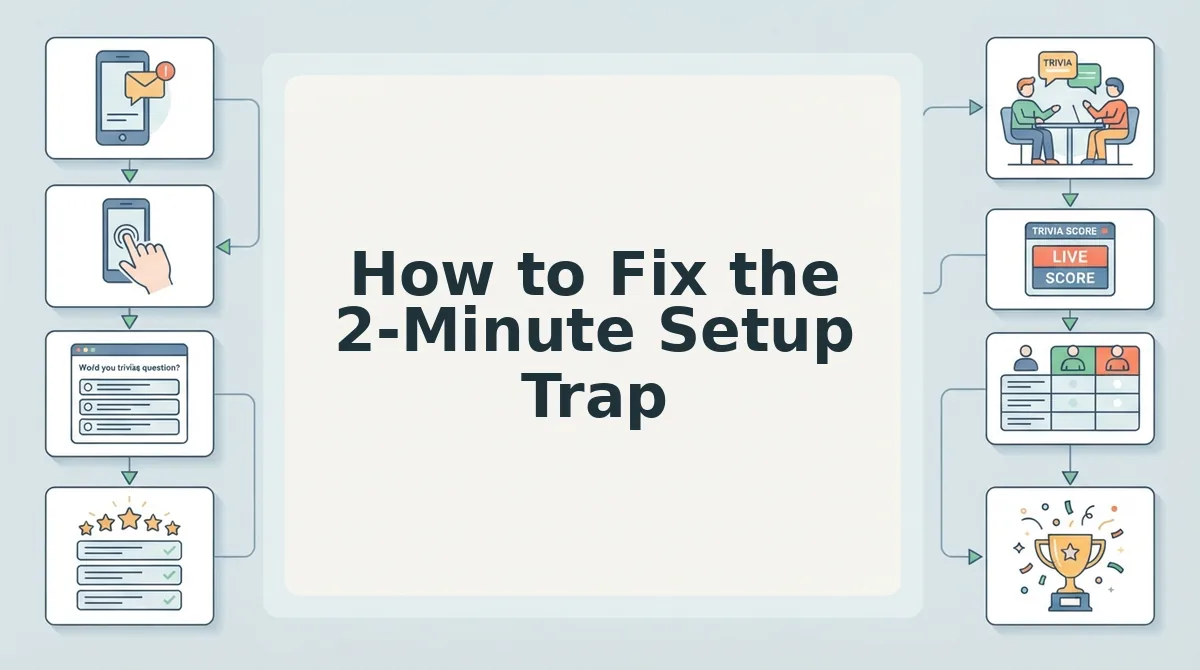
The 2-minute setup trap is the most common cause of leaderboard distortion, and it follows a predictable causal chain: rushed setup creates ambiguous questions, ambiguous questions force guess-based answers, and guess-based answers produce random leaderboards. Here's how to break that chain before your next quiz goes live.
Prerequisites: A phone or laptop with a browser, 5-7 minutes of focused time, and a mental list of 3-4 specific habits or preferences your close friends would actually know.
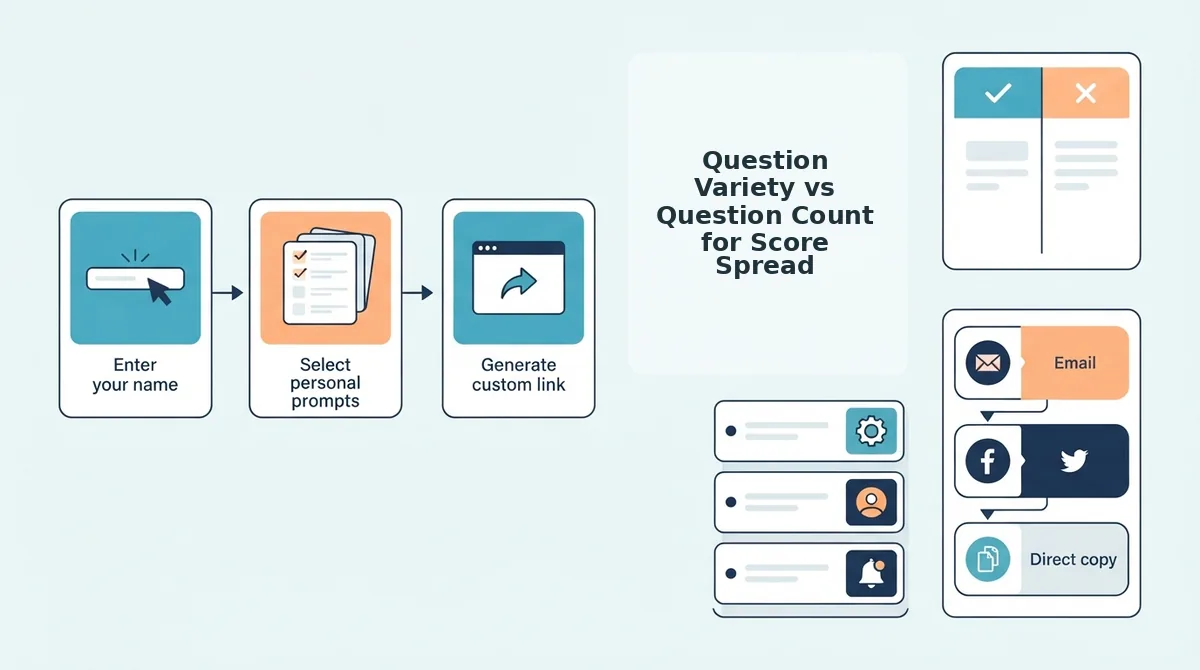
- Open the best friend quiz setup and enter your name. Resist the urge to skip ahead. You should see the first prompt appear immediately, with no account or email required.
- Read each prompt aloud before answering. If a prompt asks about something you don't actually do, like a coffee order when you never drink coffee, select the skip or replace option. You should end up with questions that reflect real, observable habits.
- Choose answers your friends would recognize, not answers you wish were true. For each prompt, ask yourself: "Would my closest friend know this without guessing?" If the answer is no, swap the question. You should feel confident that at least one specific person in your group chat knows every answer cold.
- Review the final question list before generating your link. Look for any two questions that test the same fact twice, duplicates inflate scores for lucky guessers. You should see a varied list covering different areas of your life.
- Share the link with a one-line instruction. Tell your group chat: "Answer honestly, no asking me for hints." You should see engagement within minutes, and the resulting leaderboard should spread scores naturally instead of clustering them.
When rushed setup produces ambiguous questions, the leaderboard stops measuring friendship and starts measuring luck. A friend answering "What's my go-to coffee order?" when the creator never drinks coffee isn't failing a knowledge test, they're failing a question that shouldn't exist. Removing those impossible prompts restores the score spread that makes leaderboards feel earned rather than random.
Fixing the setup trap restores score spread, but spread alone won't save a leaderboard if every question tests the same narrow slice of your life.
Question Variety vs Question Count for Score Spread
Question variety widens score spread more reliably than raw question count. A 10-question quiz with five distinct question types produces more leaderboard separation than a 25-question quiz that repeats the same binary format, because mixed formats reward different memory and observation skills.
Score clustering happens when every question tests the same cognitive path. If all prompts are "What is my favorite X?" multiple-choice items, friends who know surface-level preferences tie at the top while deeper-knowledge friends get no advantage. Variety breaks ties by introducing recall, ranking, and prediction formats that favor different relationship depths.
| Approach | Score Spread Impact | Setup Time | Best For |
|---|---|---|---|
| High count, single format (20+ binary questions) | Low, clustering at top and bottom | Fast, repetitive entry | Large groups where completion rate matters more than ranking precision |
| Low count, high variety (8-12 mixed-format questions) | High, 3-5 distinct score tiers emerge | Moderate, requires format switching | Small close-friend groups who want bragging-rights clarity |
| Balanced (15 questions, 3 formats) | Medium, prevents ties without exhausting respondents | Moderate | Mixed group chats with varying friendship depth |
Question-type-to-score-spread mapping is the insight most quiz guides miss. Recall questions ("What did I order last time we ate out?") separate best friends from acquaintances. Ranking questions ("Order my top three comfort foods") reward friends who track your habits over time. Prediction questions ("What would I pick on a lazy Sunday?") favor friends who understand your decision patterns. Mixing all three prevents any single skill from dominating the friendship test questions.
Runaway winners emerge when one format dominates. A quiz heavy on prediction questions lets the friend who knows your "type" sweep every round, while recall-heavy quizzes favor the friend with the best memory. Variety distributes points across relationship dimensions, so the leaderboard reflects overall closeness rather than one narrow skill.
When to Share Your Quiz Link for a Fair Leaderboard
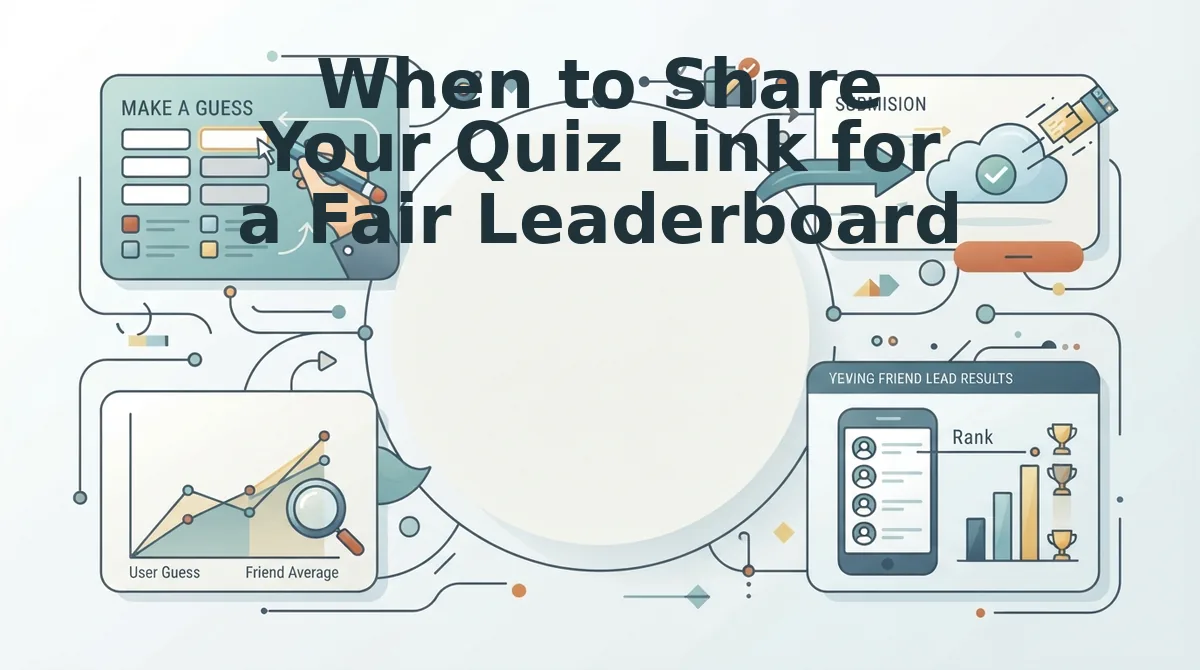
Share your quiz link only after you've completed every setup step and previewed the final questions yourself. Sharing before setup is finished produces zero-score entries and confused friends who can't tell whether the quiz is broken or they missed something.
Quotable fact: A leaderboard is only as fair as the moment you release the link, early shares create permanent score gaps that no amount of re-taking can fix.
Before you share, you need: a finished quiz with all questions answered, a stable internet connection, and the group chat or social thread where you'll post the link.
- Finish every question in the setup flow. Open your quiz link in a private browser tab and complete it as if you were a friend. You should see a final score screen, not a "quiz incomplete" or blank prompt. If you see anything broken, fix it before anyone else touches the link.
- Post the link once, at a time when your group is active. Drop it in the chat when people are already talking, not at 3 a.m. or during work hours. A single clean post with a one-line challenge ("Beat my score") outperforms repeated link spam.
- Give everyone the same start window. Announce the quiz and let the group know answers lock after their first attempt. This prevents early testers from gaining an unfair practice round that latecomers never get.
- Wait until at least three friends have finished before checking the leaderboard. Early scores look dramatic but mean nothing. A leaderboard with two entries tells you who clicked first, not who knows you best.
Think of it like a race: if you fire the starting gun while half the runners are still tying their shoes, the results don't measure speed, they measure who was ready. The next section breaks down the nine specific mistakes that turn a fun group quiz into a rigged-feeling mess.
9 Mistakes That Ruin Group Leaderboards (And How to Fix Them)
Most BFF quiz leaderboards fail because creators rush the setup, hide answer visibility, or share the link before the group is ready. Fix these nine mistakes and your BFF test leaderboard will produce scores friends actually trust.
- Sharing the link before the group chat is warmed up. A cold link dropped into a busy chat gets ignored or half-answered. Send a one-line heads-up first: "Making a quiz about me. Whoever scores highest gets to pick Saturday's takeout spot." Then drop the link 10 minutes later.
- Using only obvious questions everyone already knows. If every question is "What's my favorite color?" the leaderboard flatlines at 100% and nobody cares. Mix in one or two niche quirks, your weird shower playlist, your gas station snack combo, so scores actually spread.
- Making the quiz too long for a phone screen. Mobile attention collapses after roughly 10 questions. A 25-question gauntlet guarantees abandoned answers and skewed scores. Keep it tight: enough questions to separate real friends from acquaintances, short enough to finish in under two minutes.
- Ignoring answer privacy settings. When friends can see each other's answers before submitting, they copy the group consensus instead of answering honestly. Answer privacy is the setting that controls whether responses stay hidden until everyone finishes. Turn it on so the leaderboard reflects genuine knowledge, not groupthink.
- Not running a fairness audit before sharing. A fairness audit is a 9-point pre-share checklist you can complete in under 60 seconds. Check for typos, ambiguous wording, accidental hints in question phrasing, duplicate questions, and answer options that give away the correct response. One broken question poisons the entire leaderboard's credibility.
- Letting one person dominate the group chat with spoilers. The moment someone types "The answer to #4 is sushi," the leaderboard is dead. Include a rule in your share message: "No spoilers in the chat until everyone submits. Screenshot your score instead."
- Forgetting to communicate the rules clearly. Copy this script into your group chat: "Rules: answer solo, no peeking at others' answers, submit once, screenshot your score. Winner gets bragging rights until next month." A rule communication script removes ambiguity and prevents "wait, I didn't know we couldn't retake it" arguments.
- Sharing at a dead hour when half the group is asleep. A leaderboard with three scores feels rigged no matter how fair the quiz is. Share when your group is actually active, lunch break, early evening, or right after a shared event. More participants means more meaningful score spread.
- Never resetting or rematching after the first round. One-and-done quizzes lose their sting. The best leaderboards live on rematches: "New quiz next week. Defend your crown." A recurring cadence turns a one-off gimmick into an ongoing rivalry your group actually looks forward to.
Run the fairness audit, lock the privacy settings, and share with a clear rule script. Still have questions about how leaderboards actually work?
FAQ: BFF Challenge Quiz Leaderboard Questions
Direct answers to the most-searched BFF quiz leaderboard questions, pulled from real user queries on Reddit, YouTube comments, and Google's People Also Ask.
Why does my BFF quiz leaderboard look rigged?
A leaderboard looks rigged when question difficulty is uneven, the quiz link is shared at different times, or one friend gets a practice run. Fix it by using varied question types, sharing the link to everyone simultaneously, and never revealing answers before the group finishes.
How do I stop one friend from dominating every quiz?
Add question variety beyond memory recall, include opinion, prediction, and scenario questions where no single person has an advantage. Randomize question order per player and avoid inside jokes that only two people share, which creates a structural bias toward one friend.
Should I share the quiz link before or after I finish setting it up?
Share the link only after you finish all setup steps. Sharing mid-creation lets early players start before you finalize questions, creating a time advantage. A simultaneous group-chat drop ensures every player starts from the same baseline and sees the identical question set.
What is a good score spread for a BFF quiz leaderboard?
A healthy leaderboard shows a 15-30 point spread between first and last place. If everyone scores within five points, questions are too easy or too generic. If one person wins by 40-plus points, the quiz likely contains biased questions only they can answer.
How many questions should a BFF challenge quiz have for a fair leaderboard?
Eight to twelve questions is the sweet spot. Fewer than eight creates too much variance from lucky guesses, while more than twelve causes mobile drop-off and rushed answers. Pair each question with a distinct category, habit, preference, prediction, scenario, to prevent score clustering.
If your leaderboard consistently produces the same winner, run a fairness audit before your next quiz: check for inside jokes, uneven difficulty, early-link sharing, and answer leaks. A balanced quiz with simultaneous distribution and varied question types produces score spreads that feel earned rather than rigged, keeping group chat banter alive instead of sparking accusations of favoritism.
Run Your Fairness Audit Before You Share
The Leaderboard Distortion Matrix and the 2-Minute Setup Trap share one root cause: rushing to share before checking for bias. A 60-second audit, varied question types, simultaneous link drop, no answer leaks, converts a rigged-feeling leaderboard into a bragging-rights battleground everyone trusts.
Apply the fairness checklist to your next quiz: eight to twelve questions across four categories, randomized order, and one group-chat link drop after setup is complete. If you want a higher-stakes twist, pair your quiz with a friendship dare challenge to raise the stakes for the leaderboard winner.
Create your quiz at friendquiz.org, run the audit, and share the link only when every question is locked. The leaderboard you get back will be one your group actually argues about, for the right reasons.