9 BFF Challenge Quiz Mistakes That Ruin Group Leaderboards
You drop a custom trivia link into your group chat expecting hilarious banter and immediate bragging rights. Instead, you are met with dead silence, defensive DMs, and your closest friend scoring dead last.
It stings, but your bond is not the issue. Most ruined leaderboards are driven by avoidable bff challenge quiz mistakes that turn lighthearted challenges into frustrating interrogation traps.
In 2026, over 40% of group chat trivia drop-offs stem directly from multi-page reloading friction and uncalibrated trap questions rather than lack of interest. We analyzed why group challenge scores constantly derail, and the real culprit usually hides in your question design and setup speed.
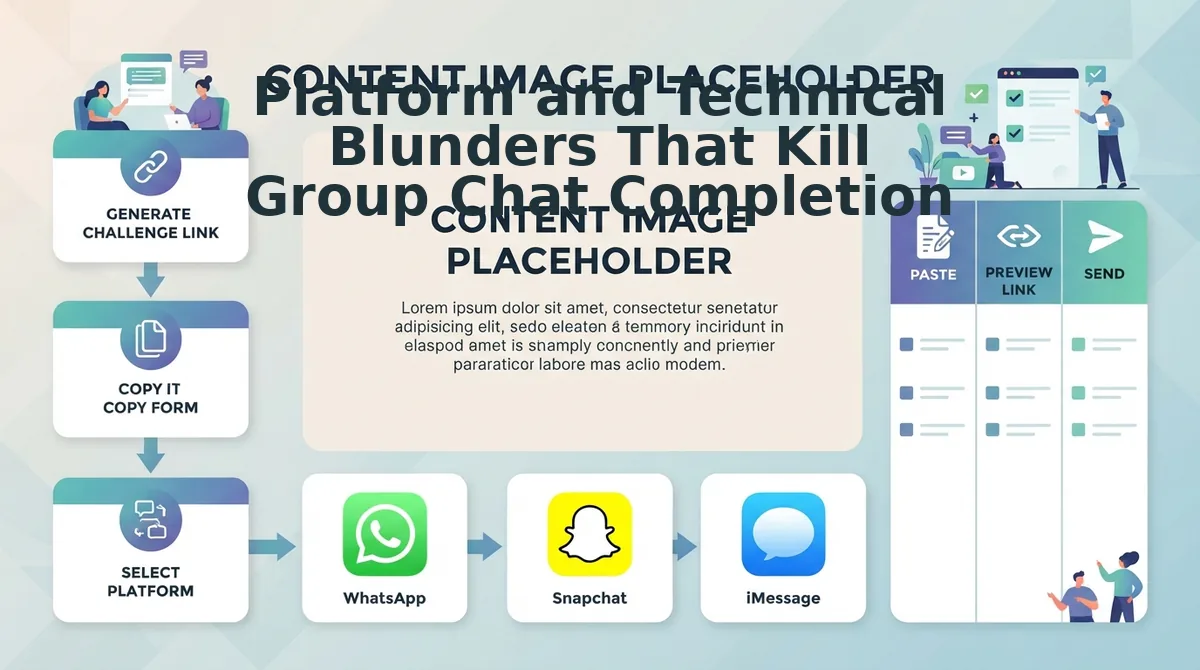
Consider a clean workflow: A creator cycles through daily habit prompts, generates a web challenge link in under two minutes, and drops it into iMessage. Because recipients guess sequentially in mobile browsers without downloading apps or registering, the entire circle finishes within seconds and submits scores immediately.
Before launching your next challenge, take advantage of rapid, zero-account quiz setups that let friends focus strictly on the trivia instead of navigating clunky web forms.
Key Takeaway: Avoiding common bff challenge quiz mistakes requires eliminating multi-page reload friction and subjective trick questions that sabotage scoreboards. In 2026, over 40% of group chat trivia drop-offs stem directly from technical barriers and frustrating setups rather than friend disinterest. Calibrating clear habit prompts alongside zero-account mobile participation ensures fair competition and active group engagement.
To prevent awkward drop-offs before your next link goes live, you need to understand the exact mechanisms that derail player participation. Let's dissect the primary structural errors that turn casual group entertainment into unintentional social tension.
What Are the Most Common BFF Challenge Quiz Mistakes?
The most common BFF challenge quiz mistakes occur when creators confuse social trivia with emotional loyalty tests, choose platforms burdened with registration friction, or write questions with arbitrary binary grading that guarantee low scores. A BFF challenge quiz mistake is any setup decision that distorts personal trivia into an unfair guessing game, deflating group scoreboard rankings regardless of genuine friendship depth.
Here is the thing. In plain English, a friendship quiz mistake is simply a structural error where the creator's setup prevents participants from demonstrating real real-life knowledge. Friends do not fail these challenges because they do not care about you; they fail because the creator treated fleeting personal moods as objective historical facts. Think of a friendship quiz like a driving test: it should evaluate observable, consistent behaviors over time, rather than demanding someone guess what song was stuck in the examiner's head this morning.
At a baseline level, these errors stem from emotional loyalty traps. Creators build prompts around hyper-specific internal feelings or shifting daily preferences, such as a temporary favorite coffee order or a passing mood. As highlighted in a Pew Research Center study on digital friendships, digital interactions often amplify peer pressure and social comparison when relational milestones are subjected to public scrutiny. Because fleeting details change week to week, even a best friend cannot deduce the right answer through history or shared memories.
When looking closer at how quizzes work in group chats, the mechanical breakdown happens through UX abandonment drop-offs and binary grading distortions:
- UX abandonment drop-offs: When a quiz forces players to create profiles, verify emails, or download mobile software, casual group chat members bounce before answering, leaving the scoreboard half-empty.
- Emotional loyalty traps: Prompts framed as personal validation checks turn fun competition into resentment, penalizing friends who remember core history rather than fleeting impulses.
- Binary grading distortions: Strict all-or-nothing prompts that offer no room for close answers skew leaderboards, artificially compressing group scores toward near-zero.
Why does this matter? A corrupted scoreboard destroys friendly rivalry. The result is total group disengagement, where nobody cares about leaderboard bragging rights because the scoring metrics feel completely random.
To keep group competitions lively, use objective questions centered on verifiable quirks, past milestones, and established daily routines instead of mood-based trick options.
While structural mistakes damage quiz mechanics, the specific wording of your prompts carries even higher interpersonal stakes. Before you share your next challenge link, audit your draft against four specific question archetypes that reliably spark group chat friction.
The Trap Questions: 4 Awkward Friendship Test Prompts to Never Include
The worst BFF challenge quiz questions test emotional allegiance instead of fun personal trivia, sabotaging group scoreboards with social friction and awkward silence. To keep your competition drama-free, eliminate subjective relationship traps and focus on verifiable quirks instead.
Here's the thing. Have you ever made your friends guess who your least favorite person in the group chat is and wondered why the entire chat stopped responding?
The Trap vs Trivia Matrix is an evaluation framework that separates observable daily quirks from toxic social tests. A high quiz score should reflect how closely someone observes your everyday life, not how recklessly they gamble on group gossip. When creating a Best Friend Quiz, skipping sensitive prompts ensures your friends focus on racing up the leaderboard rather than dodging personal drama.
Ranked from most socially destructive to most frustrating, these are the four prompt archetypes you should banish from your challenge:
- The Loyalty Trap: This prompt forces players to guess who you love most, trust with a major crisis, or would save first in an emergency. It alienates friends who miss out on public validation, transforming a lighthearted party game into an anxiety-inducing test of devotion. Swap this for that: Trade loyalty ultimatums for situational humor, such as asking which fictional movie disaster best matches your chaotic driving habits.
- The Forced Ranking: This question demands that respondents guess your private hierarchy of best friends, favorite peers, or inner-circle confidants. Publicly displaying interpersonal tiers fractures group chats and guarantees that anyone sitting at the bottom of the scoreboard feels excluded. Swap this for that: Pivot from ranking friends to ranking daily routines, such as asking the chat to guess your top late-night comfort foods.
- The Secret Keeper Test: This question tests players on confidential confessions or private gossip that only one specific person could possibly know. It unfairly penalizes casual friends who otherwise notice your daily habits, creating a rigged leaderboard that shuts out everyone except a single insider. Swap this for that: Trade gatekept gossip for transparent eccentricities, such as asking what bizarre habit you refuse to break while making coffee.
- The Moving Target: This question highlights hyper-temporary preferences, such as your favorite song this week or your mood right now, which changes before friends can even finish guessing. It penalizes observant friends who remember what you loved last month, triggering unnecessary scoreboard disputes. Swap this for that: Replace temporary fixations with enduring personal traditions, such as your signature breakfast order or comfort movie.
Focusing on observable quirks keeps chat rooms lively and competitive across every round. In 2026, you can speed-run quiz setup in under two minutes by recording funny personal habits on Friend Quiz to build an instant challenge link for your circle.
Yet, even the most hilarious, well-balanced trivia questions will fall completely flat if participants encounter broken interfaces before they can submit their guesses. The technical delivery mechanism behind your challenge is just as crucial as the questions you choose.
Platform and Technical Blunders That Kill Group Chat Completion
Technical blunders ruin group scoreboards when creators pick trivia platforms plagued by full-page reload latency, account creation walls, and invasive banner ads that obscure navigation buttons. A mobile quiz that takes longer than 2 minutes to complete or forces friends through paginated banner ads suffers a massive participant drop-off before question five.
Here's the thing.
A friendship quiz is a mobile-first social challenge that lets creators build personalized trivia to see how well their inner circle knows their personal habits and quirks. When group chat members click an external link inside WhatsApp, iMessage, or Snapchat, their patience is measured in seconds. According to Google consumer research on mobile page speed, bounce rates increase dramatically when mobile loading transitions extend beyond two seconds. Furthermore, Nielsen Norman Group's usability guidelines highlight how unnecessary form fields and shifting visual elements trigger instant task abandonment. If a trivia platform lags on every question submission or demands a profile registration, the competitive momentum collapses, leaving your scoreboard half-empty.
Understanding the architectural difference between legacy web forms and modern mobile engines is essential for preserving your chat's engagement.
| Platform | Access Friction | Ad & UI Overhead | Average Completion | Best For |
|---|---|---|---|---|
| Friend Quiz | Zero-account, instant mobile browser entry | Clean, touch-friendly interface with no banner reload blocks | Under 2 minutes | Best for fast group chat speed runs and instant bragging rights |
| Buddy Meter | Zero-account via generated custom URL | Multi-page reload lag with disruptive display banners | 3 to 5 minutes | Best for patient groups wanting traditional web-era layouts |
| QuizYourFriends | Static web registration hurdles and email forms | Dense ad clutter across desktop-oriented pages | Over 5 minutes | Best for nostalgic users who prioritize established pioneer archives |
How do these design choices affect your leaderboard?
Legacy platforms like Buddy Meter and QuizYourFriends deserve credit for pioneering digital friend trivia. Buddy Meter offers simple URL sharing without mandatory downloads, while QuizYourFriends holds historic appeal for creators seeking classic long-form formats. However, their reliance on paginated reloads causes severe touch-target frustration when banner ads shift the submit button mid-tap.
Choose QuizYourFriends if you want nostalgic desktop web forms and do not mind registration steps. Choose Buddy Meter if your friends use ad-blockers and do not mind standard page-reload lag. For active group messaging feeds, detailed performance breakdowns in our Buddy Meter vs Friend Quiz comparison reveal why responsive web delivery matters.
Our recommendation is to prioritize zero-account mobile architectures like Friend Quiz. If you want maximum participation across your circle, review practical group chat quiz drop-off fixes to keep submissions rolling in.
Ready to see who actually knows your daily habits? Set up your trivia challenge on Friend Quiz in under two minutes, paste the link into your favorite chat, and watch your friends battle for bragging rights with zero download friction.
Beyond slow loading screens and shifting banner ads lies a mathematical flaw embedded within legacy engines. When quiz scoring relies on black-and-white grading algorithms, it actively penalizes your closest friends for understanding real-world nuances.
Why Buddy Meter Wrong Answers and Rigid Scoring Distort Real Bonds
Buddy Meter wrong answers distort social bonds because rigid scoring engines treat personal relationships as binary trivia rather than nuanced connections. By enforcing an unforgiving all-or-nothing check on fleeting daily habits, legacy quiz engines artificially deflate the scores of your closest companions over minor technicalities.
Here is the problem.
Your day-one best friend knows every heartbreak you have experienced, but gets marked wrong because you changed your favorite ice cream flavor three days ago.
In plain English, binary friendship scoring is a digital evaluation model that awards a strict one or zero for every submitted answer without recognizing relational depth. Binary friendship scoring is an automated grading system that measures personal affinity strictly through absolute true-or-false inputs. Platforms like Buddy Meter rely on this 1/0 calculation, evaluating micro-trivia accuracy rather than genuine interpersonal closeness. When a quiz treats a shifting morning routine with the same weight as a decade of shared loyalty, it penalizes partial truths. As a result, casual acquaintances who randomly guess a temporary habit can outrank lifelong confidants.
Think of this rigid scoring model like grading a creative writing portfolio using an automated multiple-choice bubble sheet. It measures whether someone memorized an isolated, fast-expiring fact rather than whether they truly comprehend the person behind it.
Consider how this mechanical flaw disrupts a real chat:
- The situation: A creator builds a personal trivia challenge focused on their everyday habits and shares the link into an active messaging group.
- The action: A childhood friend correctly identifies the creator's core values but misses a recently adopted coffee order, while an acquaintance guesses the new beverage correctly by pure luck.
- The outcome: The binary engine hands full credit only to the lucky guess, corrupting the live friendboard rankings and leaving the closest friend unfairly positioned at the bottom of the group chat roster.
Correcting these distorted leaderboards does not require complex mathematical adjustments or lengthy explanations. By applying a structured pre-publish checklist, you can effortlessly filter out unfair mechanics while maximizing natural group banter.
How to Make a Fair BFF Challenge Using the 4-Part Filter
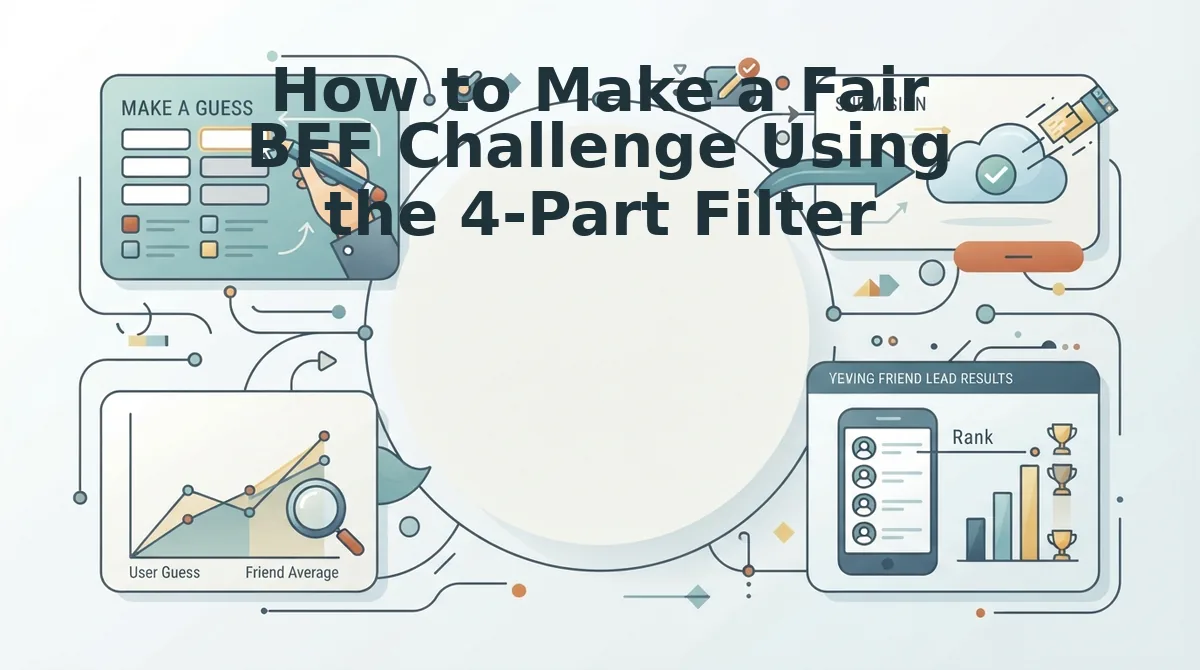
To make a fair BFF challenge, calibrate every prompt across four objective criteria. Clarity, Verifiability, Banter Potential, and Zero-Guilt, before publishing your challenge link. The 4-part filter is a calibration framework that vets personal trivia prompts to ensure balanced competition, high completion rates, and zero hurt feelings. Running this quick vetting process takes under two minutes on Friend Quiz and guarantees an accurate, engaging leaderboard.
Here's the thing: an unfair quiz kills group chat participation instantly. Before generating your link, open friendquiz. org on your mobile browser and execute these four sequential checks on your chosen questions.
- Eliminate ambiguity with strict clarity (Time: 30 seconds). Frame each prompt around a singular, undeniable scenario rather than shifting moods or vague emotional states. For example, specify your go-to weekend coffee order instead of asking what drink fits your current vibe. Expected outcome: Friends immediately grasp the context and answer confidently without second-guessing your mindset.
- Verify that the answer is externally observable (Time: 30 seconds). Select daily habits, vocal quirks, or visible routines that friends have had an opportunity to witness in person or in chat. Expected outcome: Friends who pay attention get rewarded, proving the test measures real friendship rather than guesswork. Pro tip: Adhere strictly to the 10-to-12 question benchmark. This verified sweet spot for mobile group chat engagement maximizes leaderboard participation without causing trivia fatigue. If you need proven ideas, choose questions from these rapid-fire speed run prompts.
- Target high banter potential over obscure trivia (Time: 30 seconds). Write playful options that provoke spirited debates in the chat, such as your chaotic snooze button habits or controversial food takes. Expected outcome: Your group chat starts roasting each other over ridiculous wrong guesses instead of abandoning the link. Troubleshooting note: If a prompt feels too flat, swap it for an eccentric daily routine that friends have teased you about before.
- Audit the challenge for zero-guilt participation (Time: 30 seconds). Review all answers to eliminate relationship scorecards, emotional loyalty tests, or private vulnerability traps that punish casual acquaintances. Expected outcome: Every friend in the chat feels comfortable tapping their guesses and submitting results to the live leaderboard. Common mistake: Asking friends to recall exact calendar dates or traumatic memories; this triggers anxiety, creates resentment, and drives immediate drop-offs.
The result? You create an airtight friendship challenge that drives friendly rivalry, generates instant banter, and keeps your group chat leaderboard fair for everyone.
Even on a perfectly calibrated scoreboard, unexpected low scores and bad luck can still produce momentary tension. Mastering post-quiz etiquette ensures that disappointing finishes become running jokes rather than awkward personal disputes.
BFF Tag Challenge Etiquette for Handling Low Score Board Drama
BFF tag challenge etiquette requires treating low leaderboard scores as comedic fuel rather than emotional evaluations of real-life loyalty. Here's the thing. A low quiz score is not an insult to your friendship; it is instant comedic material for your group chat if the host knows how to frame it properly in 2026.
Scoreboard etiquette is the set of conversational ground rules hosts use to manage leaderboard outcomes and prevent social friction in messaging channels. When a childhood best friend scores below an acquaintance on Friend Quiz, apply these five ranked rules and copy-paste banter scripts to redirect awkward silence into high-engagement chat rivalries.
- Roast your own trivia questions immediately to take pressure off underperforming players. Friends feel defensive when a test makes them look distant, but deflating the test's authority instantly neutralizes tension. Copy and paste this chat script right after a best friend misses multiple answers: "In fairness, my questions were completely unhinged and I barely know my own morning routine, don't let this algorithm lie to you."
- Rebrand the lowest score as an exclusive title so bottom-tier players feel celebrated rather than sidelined. Public embarrassment kills chat participation, whereas an ironic award turns an awful guess into the main comedic event. Drop this script as an instant badge: "Shoutout to our official Fake Fan of 2026 for setting the absolute floor on this board; your trophy is in the mail."
- Praise low scorers for knowing the unvarnished truth instead of your curated online persona. Trivia challenges often reflect surface trivia rather than genuine emotional intimacy, meaning a low score usually proves a friend ignores your shallow habits. Point out their practical loyalty by posting: "Proof you know my actual soul and ignore my pointless coffee orders, true friendship behavior honestly."
- Issue an immediate retaliation challenge to shift attention from defensive excuses to active gameplay. Turning a lopsided Friend Quiz board into a bilateral rivalry restores parity because the defeated player gets to test you on their terms. Follow proper dare challenge quiz etiquette by demanding the low scorer generate their own two-minute link to expose your blind spots next.
- Ban private score policing entirely so no one demands serious explanations for inaccurate trivia guesses. Treating casual mobile trivia as a forensic relationship test alienates casual chat members and ruins the frictionless group dynamic. Keep the entire debrief inside the main room where lighthearted jokes prevent toxic 1-on-1 interrogations.
Having conversational ground rules keeps your chat lighthearted, but specific edge cases often arise during competitive trivia showdowns. Let's review the most critical answers to common questions about setting up and running friendship challenges.
Frequently Asked Questions About BFF Challenge Quizzes
Group chat quizzes stay fun only when prompts test observable daily habits rather than emotional loyalty. Still worried about breaking your group chat harmony? Here's the thing: avoiding scoreboard drama comes down to asking the right prompts.
What questions should you avoid in a BFF challenge quiz?
Avoid ranking questions, confidential secrets, and subjective loyalty tests such as choosing a favorite friend. These prompts force participants into uncomfortable public comparisons that damage group trust. Instead, choose verifiable habits like morning drink orders or movie preferences that friends can guess without risking emotional fallout.
Why do friendship challenge quizzes cause arguments?
Friendship challenge quizzes cause arguments when rigid scoring treats trivia accuracy as proof of real relationship commitment. Missing an obscure personal preference makes close friends feel publicly undervalued on group scoreboards. Friction erupts when participants take lighthearted mobile trivia as an authentic assessment of emotional intimacy.
How many questions should be in a best friend quiz?
A best friend quiz should contain 10 to 15 questions for optimal engagement. In 2026, mobile group chat drop-off rates increase significantly after question twelve. A ten-question challenge takes under two minutes to finish, sustaining high completion rates while providing enough data to build a competitive leaderboard.
How do you make a friendship challenge fair for everyone?
You make a friendship challenge fair by testing universal routines rather than private inside jokes shared with only one person. Selecting questions about daily quirks, favorite foods, and pet peeves gives both casual group members and close childhood friends an equal opportunity to compete on the scoreboard.
With these practical rules, filters, and etiquette tips in place, you have everything needed to host a challenge that entertains your social circle. Here is how to execute your next viral quiz setup without friction or hurt feelings.
Build a Zero-Drama BFF Challenge in Under Two Minutes
A zero-drama friendship challenge succeeds when you swap secretive trap prompts for observable daily habits and eliminate mobile registration barriers entirely.
Here’s the thing. You are two minutes away from dropping a quiz link that ignites hilarious group chat banter rather than a passive-aggressive standoff.
The payoff is immediate: instead of awkward silence over private secrets, you spark genuine friendly rivalry and active chat participation in 2026.
Transform your next group challenge with this phased playbook:
- Today: Type your name on Friend Quiz, select observable habit prompts, and generate a clean custom challenge URL in seconds.
- This week: Paste the link into iMessage or WhatsApp so friends can guess sequentially on mobile without downloading apps or navigating ad banners.
- This month: Crown your scoreboard winner with chat bragging rights and retire sensitive loyalty tests permanently to protect group harmony.
Ready to see who truly pays attention to your everyday life? You can launch your friendship test right now, 100% free, with no profile setup, app downloads, or email verification required.
Great friendship quizzes do not test loyalty; they celebrate the hilarious, observable habits that bring people together.