What Is a Good Score on a Best Friend Quiz Friendboard?
Your link lands in the group chat at 9:14pm. By 9:16 someone has posted a 4/10 with three crying emojis â before you have finished reading the questions yourself. That number stings, but it is not a verdict on your friendship. A best friend quiz is a shareable set of questions about one person's habits that friends answer to test how well they know them, and it arrives with a scoreboard attached: Friendboard ranks everyone who played the same link in real time, so the group chat has a leaderboard before it has a conversation.
You want to know whether 6/10 is bad. By the end of this page you will have a plain-English read on any score, the bands almost nobody publishes, and a fix for the BFF test that keeps landing on 5. Want a number of your own to interpret? Type your name, work through a run of habit prompts, and share the generated link â under two minutes, no account, no download.
One thing to hold onto until later: the maths behind a bad score is far kinder than it looks.
So What Counts as a Good Score on a Best Friend Quiz?
Seven is respectable, five to seven is the normal range, and 4 or below sits close to the guessing floor.
A good score on a best friend quiz is 8 or more out of 10, or 80% and up on a percentage-based version. A best friend test measures how much of your daily life a friend has actually noticed, not how much they care about you. Read any number against the Friendboard â the per-link leaderboard that ranks everyone who played your quiz â because a raw score only means something next to the other friends who answered the same questions. 9â10 means they track your habits closely, 5â7 is ordinary, and 4 or below is roughly what random tapping produces.
| Band | Playful label | What it actually means | Reassurance |
|---|---|---|---|
| 9â10 | Group-chat surveillance | They have clocked your order, your excuse, your tell. | Enjoy the bragging rights. |
| 7â8 | Solid | Strong exposure to your habits, one or two blind spots. | This is a genuinely good result. |
| 5â6 | Normal | Half noticed, half guessed â the typical outcome. | Most friendships live here. |
| 3â4 | At the guessing floor | Barely above random tapping on multiple-choice. | Almost certainly the questions, not the bond. |
| 0â2 | Chronically offline | Below chance, which takes effort or a very obscure quiz. | Rare, and rarely about affection. |
Best for each reader: if you have already played, start at the band table. If you have not, the cleanest baseline is a quiz you built yourself â create one here and get a real number to compare against these rows.
How Much of That Score Was Luck?
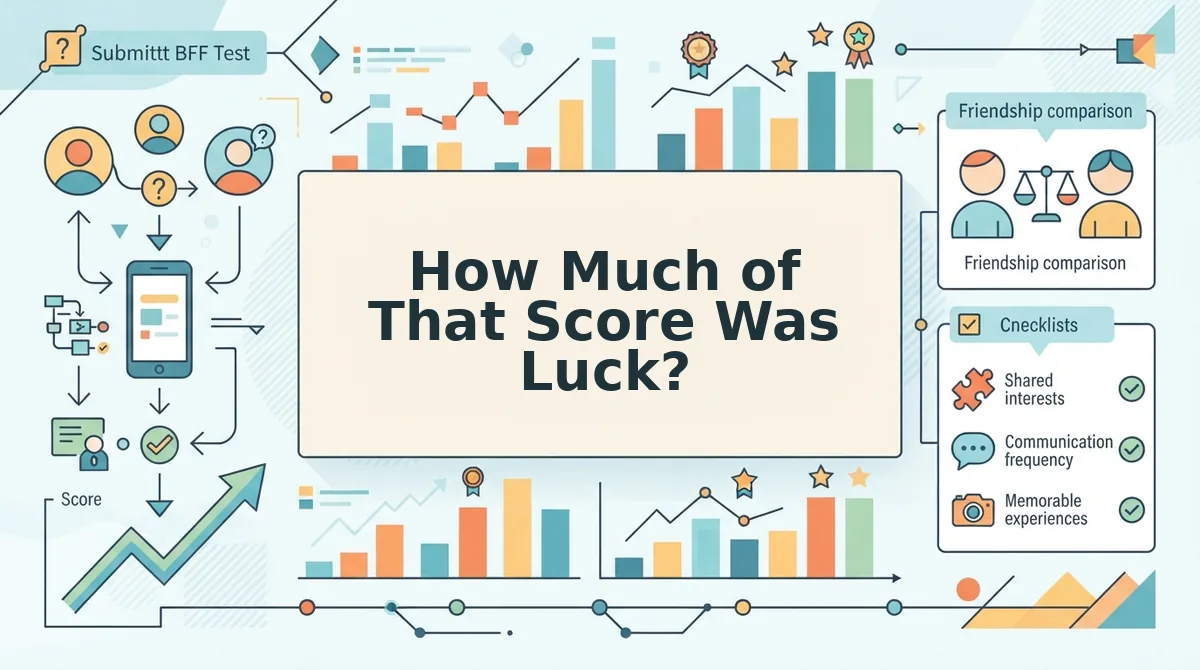
Luck is a fixed tax on every quiz score. With N answer options per question, random tapping averages 1 in N correct â so a chunk of any result is free.
The noise floor is the score you would expect from someone guessing blind. Run the arithmetic on a typical quiz:
- 4 options per question means 25% of the quiz is winnable with zero knowledge.
- 10 questions à 4 options gives a 2.5/10 noise floor before anyone knows a single fact.
- 2 to 3 correct answers on that quiz is statistically indistinguishable from chance.
- 20 questions halves luck's influence compared with 5, which is why length changes how a score should be read.
Recognition versus recall is the split between spotting a familiar detail and retrieving it cold. A quiz score behaves like exposure to your habits, multiplied by attention during those 90 seconds, divided by how obscure the questions were. Think of it as a pub quiz round about your own street: residents who glanced out of the window beat visitors who merely lived nearby for years.
Quiz N' Chill's "How Well Do You Know Your Friend?" habit-guessing format makes the point plainly â it rewards the friend who noticed which drink you always order, not the friend who has known you longest. Attention, not devotion, drives the number.
Which is why a low score says more about the questions than about the friend.
Why a Low Score Says More About the Questions Than the Friend
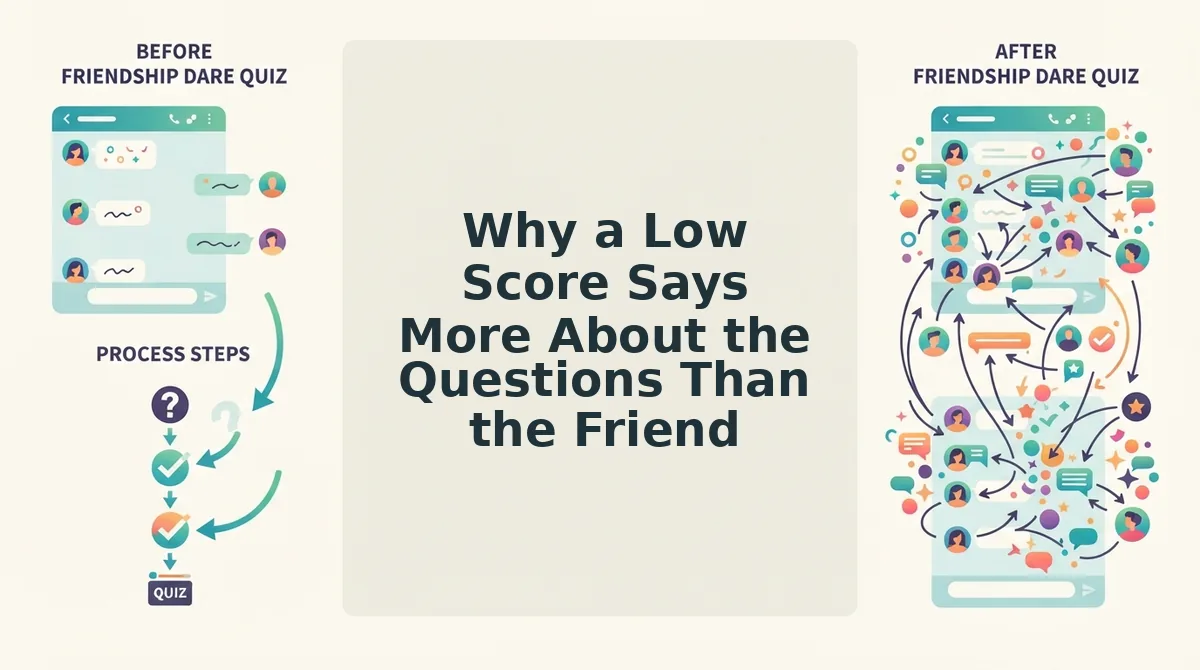
A low score on a best friend quiz usually measures quiz design, not closeness. Four out of ten means four correct taps on the specific facts you chose to test, in the specific way you phrased them, on the specific day they played.
- Insider questions that only make sense inside the friendship. An inside joke compressed into a multiple-choice option loses the shared context that made it funny, so the answer that feels obvious to you reads as a coin flip to them. These items feel like the most personal questions on the quiz and behave like the least answerable, which is why they concentrate at the bottom of the results. Swap them out first when you edit.
- A short attention window on a mobile quiz. A 10-question quiz answered in a group chat is a 90-second task squeezed between notifications, and the last three questions get tapped faster than the first three. Speed-tapping produces wrong answers that look identical to not knowing you, so one distracted minute can cost two or three points with no loss of affection behind it. Tell friends to finish the quiz before replying to the group chat, not mid-conversation.
- Answer options that overlap too heavily to distinguish. When four choices are all something you plausibly do, guessing and forgetting produce the same score, and the quiz stops measuring knowledge. Options should be mutually exclusive enough that a friend who pays attention can rule three of them out. If you cannot explain why three options are wrong, the question is testing luck.
- The "ultimate friendship test" framing pushes a verdict reading. Video formats that bill themselves as the ultimate friendship test train people to read a number as a judgment on the relationship, which is the one interpretation the arithmetic does not support. A score is an exposure reading on a 10-item sample. Treating it as a ruling makes a bad round feel like bad news when it is only a bad sample.
- Obscure facts sit outside anyone's observation window. A question about a habit you have never performed in front of your friend is unanswerable by design, no matter how well they know you. Good quiz questions live in what friends actually witness: your order, your excuse, your phobia, your Sunday. Check each item against "have they seen this happen" before you blame the score.
- The creator fix: swap three inside-joke items for three daily-habit items. Replace three insider questions with three everyday ones â what you order, what you refuse to eat, what time you actually sleep â and resend the same link. The people playing have not changed, so any shift in the score distribution comes from the questions. That is the cleanest test of whether a low result was ever about your friends.
- Retest instead of reinterpreting. A single round is one data point, and a quiz taken while distracted or rushed is a noisy one. Run the same edited quiz with the same group, then read the spread rather than any individual number. Multiple rounds turn a verdict into a trend, which is the only version worth arguing about.
If what you actually wanted was to stress-test the relationship rather than the trivia, the friendship test framing sets different expectations from the start. Building a quiz where a good score is genuinely reachable takes about two minutes: name in, ten questions out, one link for the chat.
What Should You Compare Your Score Against Instead?
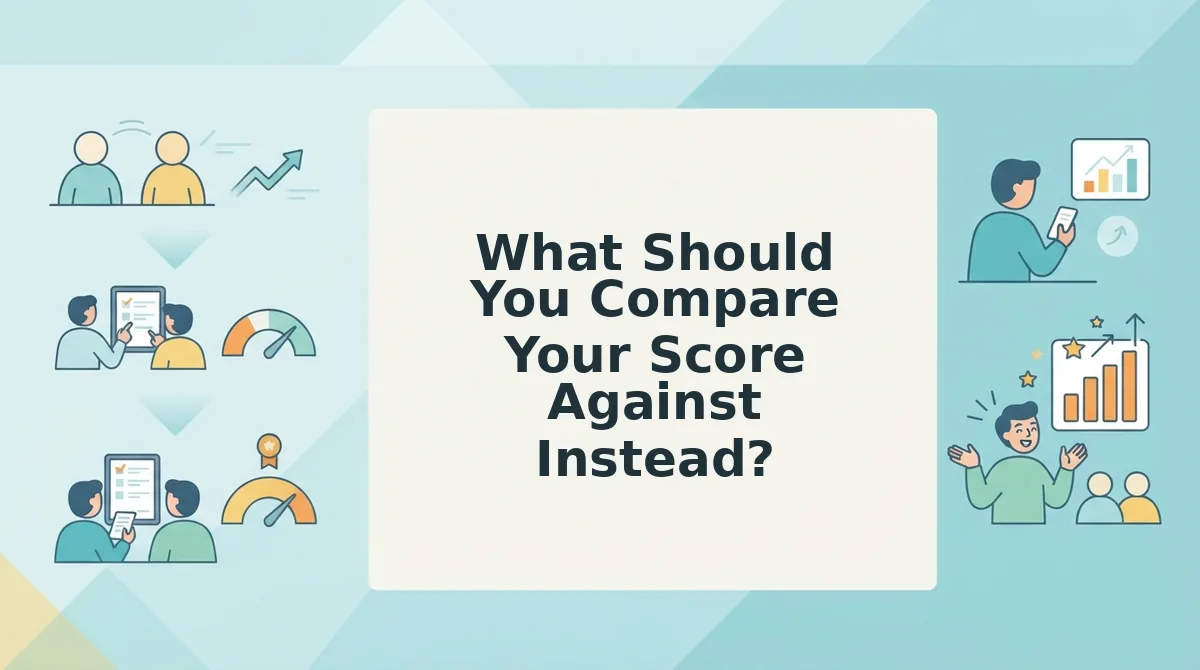
Compare your score to the other players on the same link, not to a percentage from somewhere else. Every quiz is a different exam, so a 7/10 here and a 9/10 on someone else's quiz tell you nothing about the two of you.
The reading is a short routine. Open the Friendboard for that one link, scan your position relative to everyone who played it, and read that placement as the answer to "how well do you know me" â then set aside any number that came from a different set of questions. Position inside one quiz is comparable because everyone answered the same ten items; a raw percentage is not portable, because the difficulty changed with the questions.
That is the finding worth carrying out of the whole exercise: a score is a ranking device, not a diagnostic one, and the group chat leaderboard is the only fair frame it has. If a low number would land badly in your circle, skip the scoring altogether â the friendship dare quiz in a put-a-finger-down format produces no score to defend.
Type your name, tap through ten questions, and drop the link in the group chat tonight â the rank that comes back is the only number that means anything.