How to Keep a Dare Quiz Moving in a Group Chat
Your group chat was buzzing five minutes ago, now the dare quiz you dropped is sitting there like a screenshot nobody asked for. If you want to keep a dare quiz moving in a group chat, the fix isn't louder pings or guilt-tripping emojis; it's removing the friction that makes friends scroll past.
You're not bad at making quizzes, you're fighting a design problem. The good news: a zero-account, instant-load dare quiz flips the dynamic from "homework" to "game on." In the next few minutes, you'll learn why dare quizzes stall, how the Three-Strike Momentum Rule predicts a dead chat before it happens, and seven tactics to revive or prevent the silence entirely.
Here's the roadmap: first, diagnose the friction points that kill momentum. Second, apply a simple three-strike framework to spot a dying quiz early. Third, deploy concrete reset tactics that work in WhatsApp, iMessage, and Instagram group chats. Along the way, you'll see how a Friendship Dare Quiz built for zero-friction sharing removes the biggest drop-off point before it ever appears. Stick around for the surprising finding in the Three-Strike section, it changes how you'll time every future quiz drop.
Why Dare Quizzes Die in Group Chats
A dare quiz dies in a group chat when the effort to participate outweighs the social payoff of answering. The fix is structural: remove every step that isn't the dare itself.
Think of a dare quiz like a game of hot potato. The moment someone has to stop, sign up, verify an email, or wait for a slow page to load, the potato hits the floor, and nobody bends down to pick it up. Group chat energy is borrowed, not owned. You have about ten seconds of goodwill after the link drops before the conversation moves on to memes, plans, or someone's lunch photo.
Four friction points cause most dare quiz deaths:
- Account walls. Asking friends to create a login before answering is like demanding a ticket to enter a party they were already invited to. Most will simply not show up.
- Slow loading. A quiz that takes five seconds to render on mobile feels broken. Friends assume the link is dead and scroll past.
- Unclear next steps. If the first screen doesn't immediately show a dare and a tappable answer, the brain files it under "figure out later", which in group chat time means never.
- No stakes. Without a visible score, a leaderboard, or a consequence for skipping, there's no reason to answer now instead of later. Later never comes.
A zero-account flow removes the biggest drop-off point: signup walls. When a friend taps the link and lands directly on the first dare, the only decision left is "answer or chicken out", and group chat pride handles the rest. Friendship Dare Quiz is built around this principle: no email, no app download, no account creation. The quiz loads in the mobile browser and the dare is the first thing on screen.
Here's the passage worth saving: How do you stop a dare quiz from dying in a group chat? Remove every step between the link tap and the first dare. Use a quiz platform that requires no account, loads in under two seconds on mobile, and opens directly on the first question. Add visible stakes, a running score, a dare counter, or a "who chickened out" list, so answering feels urgent. Finally, drop the link with a one-line challenge ("I bet you won't get past dare 3") instead of a neutral "here's a quiz." The goal is to make participation the path of least resistance and the most social reward.
The Three-Strike Momentum Rule
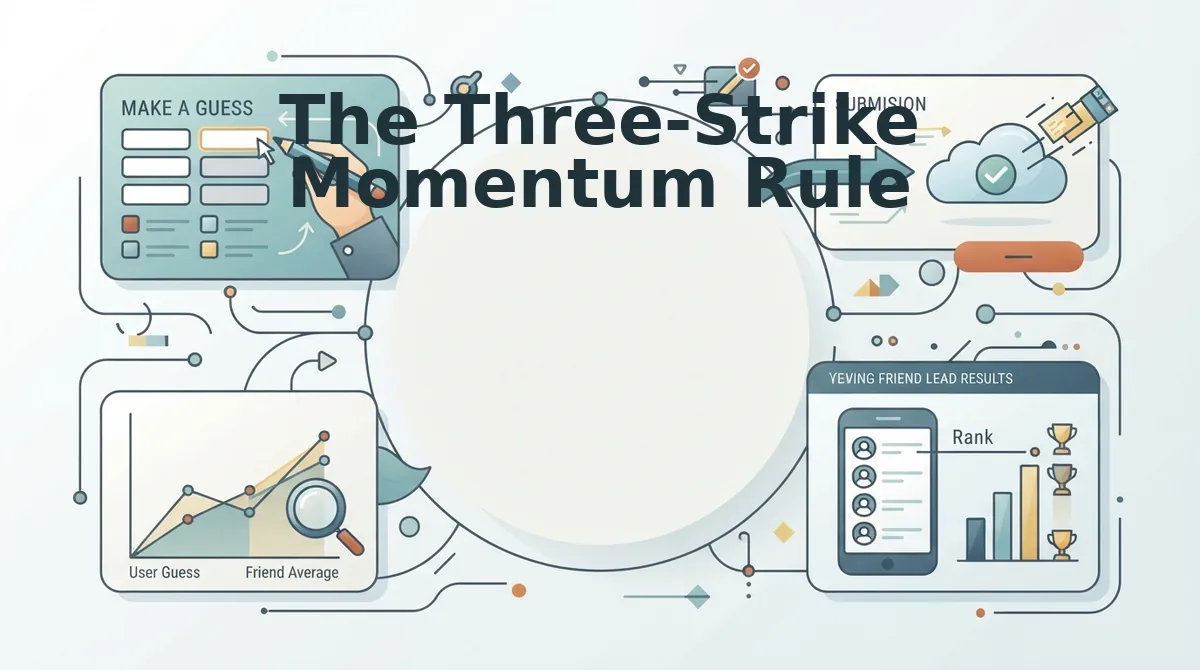
The Three-Strike Momentum Rule is a simple framework for detecting a dying dare quiz: three consecutive momentum failures, silence after the link drop, two unanswered dares in a row, or a ten-minute quiet window, means the quiz needs a reset, not a reminder.
Think of it like a campfire. A healthy fire gets fed regularly; a dying one needs a new log, not someone yelling at the embers. Each strike tells you what kind of fuel is missing.
- Strike One: Silence after the link drop. Nobody reacts within two minutes. This usually means the link looked like spam or the preview didn't communicate "instant game." Reset tactic: delete the bare link and repost it with a direct challenge attached, "Dare 1 is about [friend's name]. Who's brave enough?"
- Strike Two: Two unanswered dares in a row. Someone started but stopped, or the group answered once and lost interest. Reset tactic: call out a specific person by name and make the dare personal. "Maya, dare 3 is literally about you. Answer or you owe the group a coffee."
- Strike Three: The quiz goes quiet for 10+ minutes. The thread has moved on. Reset tactic: don't revive the old thread, start a fresh one with a new dare and a visible score update. "Score check: Sam is winning 4-2. New dare just dropped."
Here's the passage worth saving: What is the Three-Strike Momentum Rule for dare quizzes? It's a three-tier detection system for group chat quiz death. Strike One is silence within two minutes of dropping the link, signaling a weak hook or spam-looking preview. Strike Two is two consecutive unanswered dares, signaling lost interest or unclear payoff. Strike Three is a ten-minute quiet window, signaling the thread has moved on. Each strike has a specific reset: repost with a direct challenge for Strike One, call out a specific person for Strike Two, and start a fresh thread with a score update for Strike Three. The rule forces you to act on momentum signals early instead of spamming reminders into a dead chat.
Once you can spot a strike before it becomes a streak, you're ready for the tactics that keep the quiz alive in the first place.
7 Tactics to Keep the Quiz Moving
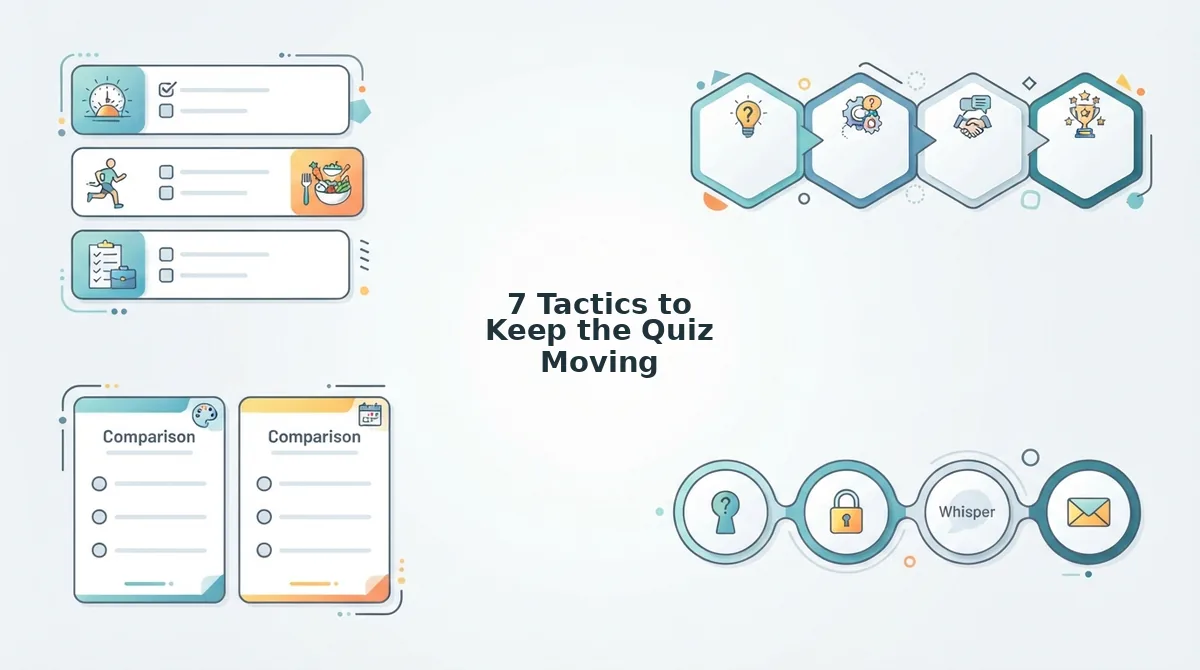
These seven tactics work in sequence to build momentum, recover stalled rounds, and keep a dare quiz alive for 20-40 minutes of active play. You need only a smartphone, the quiz link from your Friendship Dare Quiz, and access to the group chat where you plan to run it.
- Send a teaser before the link. Type a one-line hook like "I just made a quiz about myself and the dares get worse every round" into the chat 10-15 minutes before dropping the link. You should see at least one "send it" or laughing reaction before you post the actual URL.
- Drop the link at peak chat hours. Open your group chat and check when the last 20 messages were sent. Post the quiz link between 7-9 PM local time on weekdays or after 12 PM on weekends, when response rates are highest. You should see the first completion within 2-5 minutes.
- Call out friends by name. Type "@[Name] I bet you score under 50%" immediately after posting the link. A direct name-callout reignites stalled quizzes faster than any generic nudge, one stalled quiz in a six-person chat went silent for 40 minutes, then got three completions within 90 seconds of a single name-callout.
- Post score updates to reignite competition. Screenshot or copy each friend's score and paste it into the chat with a one-line reaction like "Sarah got 9/10 and still has to do the spicy dare." You should see the next player start the quiz within a minute of each score drop.
- Escalate dares in tiers. Select or announce dares in Safe to Spicy to Savage order as the quiz progresses. Start with "send a voice note saying my full name" and end with "post your camera roll's 7th photo." You should see completion rates hold above 70% when escalation is gradual.
- Use the zero-account flow as a structural advantage. Remind the group that no signup, email, or app download is required, just tap and play. You should see zero drop-off at the entry point because there is no login wall between the chat and the first question.
- Know when to reset with a new quiz. If the chat goes quiet for 24 hours after two re-engagement attempts, create a fresh quiz with a different theme and post it as "Round 2." You should see renewed participation because the new link resets the competitive clock.
Re-Engagement Message Templates (Copy-Paste)
These templates are word-for-word scripts you can paste into WhatsApp, iMessage, or Instagram DMs when a dare quiz stalls. Use them in order, and stop after two attempts if the group stays silent.
- "Okay I see how it is." This guilt-trip opener works because it frames silence as avoidance rather than disinterest. Paste it alone, wait 10 minutes, then follow with the score-drop template if nobody responds.
- "[Name] already scored 8/10 and still won't do the dare. Someone hold them accountable." This template reignites competition by naming a specific player and a specific unfinished action. Use it when at least one person has completed the quiz but the group energy has faded.
- "New rule: lowest score does the next dare. No exceptions." This template adds a fresh mechanic that pulls lurkers back in because the stakes now apply to everyone, not just the quiz creator. Post it after the first wave of completions slows down.
- "I'm making a harder one. This one has actual consequences." This template signals escalation and creates curiosity about what changed. Use it on Instagram DMs where the group may have muted the original thread.
- "Last chance before I post the results screenshot." This template creates urgency with a concrete deadline and a public consequence. Use it only once per quiz, and follow through if nobody responds.
- "Fine. Round 2 drops at 8 PM. Bring your A-game." This template resets the clock and gives the group a specific time to re-engage. Use it after a full 24-hour silence, then deliver the new quiz link exactly when promised.
Troubleshooting: If the group still ignores the quiz after two re-engagement attempts, wait 24 hours and drop a fresh quiz with a different theme. A new link resets the competitive dynamic better than any additional message to a dead thread.
FAQ
How do I keep a dare quiz moving in a group chat?
Post score updates after every completion, call out friends by name, and escalate dares in Safe to Spicy to Savage tiers. Drop the link at peak chat hours (7-9 PM weekdays) and send a teaser message 10-15 minutes before the link. The zero-account flow on Friend Quiz removes signup friction that otherwise kills momentum.
What do I do when friends ignore my dare quiz link?
If the group stays silent after two re-engagement attempts, wait 24 hours and drop a fresh quiz with a different theme. A new link resets the competitive clock better than repeated nudges.
How long should a dare quiz last?
A dare quiz should last 20-40 minutes of active play, with the first completion arriving within 2-5 minutes of posting the link. If engagement stalls for more than 24 hours, reset with a new quiz rather than extending the old one. Shorter, higher-energy rounds outperform drawn-out sessions.
Can I make a dare quiz without an account?
Yes. Friend Quiz requires no signup, email, or app download, you enter your name, answer personal trivia prompts, and get an instant shareable link. This zero-account flow means friends tap the link and start playing immediately, with no login wall between the chat and the first question. You can also browse best friend quiz questions for inspiration.
Keep the Streak Alive Tonight
The Three-Strike Momentum Rule works because it removes the hardest part of a dare quiz: deciding what happens next. You already know the answer. Strike one, nudge. Strike two, escalate. Strike three, call it and crown a winner. No group chat dies from too much momentum, only from silence.
Here's the payoff you've been waiting for since the intro: tactic #3, the "Wrong Answer Tax," is the single highest-leverage move in this entire playbook. It converts passive lurkers into active participants because nobody wants to be the friend who owes a dare. One message, one consequence, instant replies.
Your next step takes under two minutes:
- Create a Friendship Dare Quiz with three to five questions about yourself.
- Drop the link in your group chat with a one-line challenge.
- When the first wrong answer lands, deploy the Wrong Answer Tax immediately.
No account. No app download. No waiting for "someday." The entire flow from quiz creation to first dare resolution fits inside a single lunch break.
If you want a softer warm-up round first, try a BFF quiz to get everyone comfortable answering before you raise the stakes.
"A dare quiz doesn't die from bad questions, it dies from unanswered ones. Momentum is the only moderator you need."