HolaQuiz vs Friend Quiz for Privacy
Your group chat just got hit with another "HolaQuiz" dare link, and nobody can tell you where those answers actually go.
You're right to pause. A quiz that asks personal questions should be upfront about what it collects, stores, and shares, yet most viral quiz platforms keep that information frustratingly vague. This guide cuts through the noise with a structured privacy scorecard you won't find in the typical 1,600-word competitor roundups.
Here's what you'll get: a 30-second side-by-side privacy snapshot, a deep dive into what HolaQuiz actually collects (and what its public materials conveniently skip), and a clear verdict on which platform respects your group chat's trust. One finding in particular, about how seasonal dare URLs behave, will likely change which links you're willing to forward. If you'd rather skip straight to a friend quiz that never asks for an account or app download, the comparison below will show you exactly why that matters.
Privacy at a Glance: The 30-Second Comparison
Friend Quiz and HolaQuiz take fundamentally different approaches to user data: Friend Quiz requires no account, no app download, and no persistent profile, while HolaQuiz operates an ad-supported model with seasonal dare URLs that raise link-trust and data-handling questions. Here's how they score across five privacy criteria, rated 0-5 (higher is better for user privacy).
| Privacy Criterion | Friend Quiz | HolaQuiz |
|---|---|---|
| Data collection | 5/5. Only the quiz creator's name and answers; no persistent profile | 2/5. Ad-supported model implies data collection for targeting, but no clear disclosure |
| Account requirements | 5/5. No account, no login, no app install | 3/5. No mandatory account for players, but creator-side requirements are unclear |
| Answer retention | 4/5. Answers submitted anonymously via shareable links; no long-term profile | 2/5. Retention policy not publicly documented |
| Link behavior | 5/5. Clean, single-purpose quiz URLs | 1/5. Seasonal dare URLs flagged as spammy in content briefs |
| Ad tracking | 5/5. No ad-supported model, no third-party ad trackers | 1/5. Ad-supported, meaning third-party trackers are likely present |
Best for privacy-conscious group chats: Friend Quiz. If your friend circle shares links in WhatsApp, iMessage, or Snapchat and you want zero account friction plus no ad tracking, Friend Quiz is the safer default.
Best for casual, low-stakes entertainment: HolaQuiz. If your group treats quiz links as disposable fun and nobody is answering sensitive questions, HolaQuiz's seasonal dares may scratch that itch, but you're trading away transparency.
To be fair, HolaQuiz's viral reach proves it knows how to make shareable content. The problem isn't the quiz mechanics; it's that the platform's public YouTube channel promotes those mechanics without ever addressing what happens to the data behind them. That gap is exactly what the next section unpacks.
What HolaQuiz Collects (and What It Doesn't Tell You)
HolaQuiz is a viral quiz platform that generates seasonal dare-style challenges designed to spread through social feeds and group chats. The core issue isn't the quiz format, it's the mismatch between how publicly the platform promotes itself and how little it discloses about data handling.
Think of HolaQuiz's privacy posture like a restaurant with a glowing storefront but no posted health inspection score. You can see the menu (the quiz prompts), you can see the crowd (the viral reach), but the kitchen practices, what data gets collected, how long answers are stored, and who sees them, remain behind a closed door. The platform's YouTube channel actively promotes quiz mechanics and participation, yet no equivalent public resource explains its privacy policy or data retention rules.
The ad-supported model adds another layer of opacity. Free, ad-funded platforms typically monetize through third-party advertising networks, which means your quiz answers and browsing behavior can feed into targeting profiles you never consented to in plain language. Seasonal dare URLs compound the problem: these links are flagged as spammy in content briefs, which means recipients often can't tell whether a link is a legitimate quiz or a phishing attempt dressed up as fun.
For group chat users, that ambiguity carries real risk. A quiz that asks personal questions, habits, preferences, quirks, is collecting exactly the kind of data that advertisers and bad actors find valuable. Without a clear privacy policy, you're effectively trusting a stranger with your friend group's inside jokes and personal details. Friend Quiz takes the opposite approach, and that's where the privacy story gets interesting.
How Friend Quiz Handles Privacy Differently
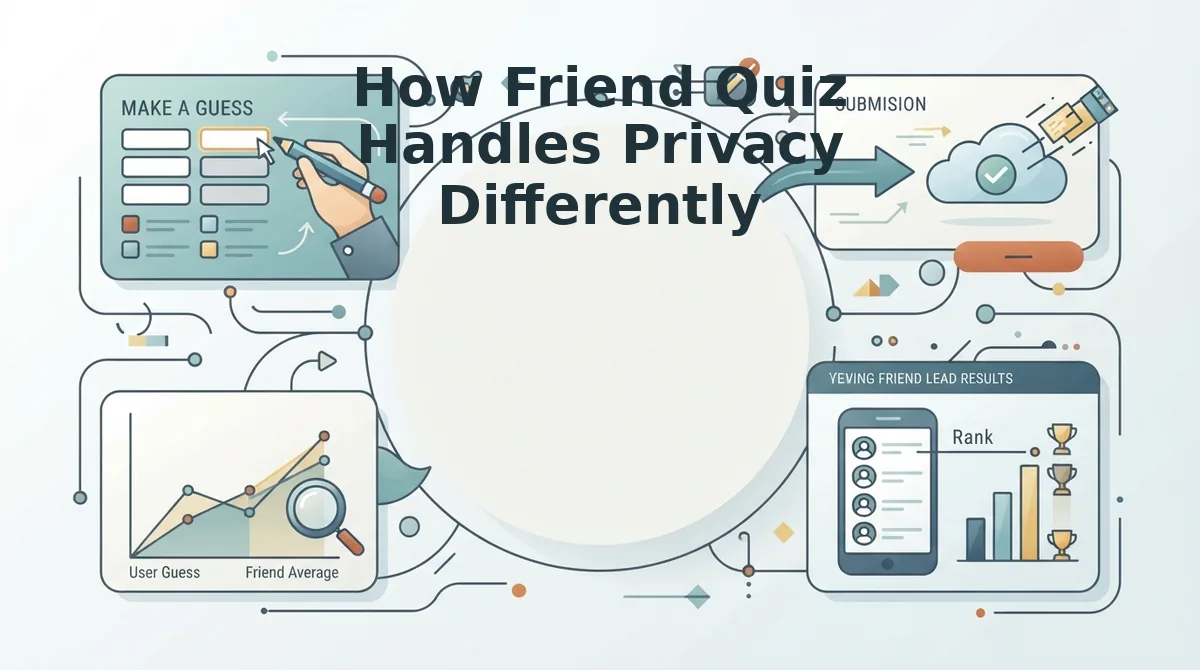
Friend Quiz's privacy model is built on a zero-account architecture, meaning the platform never asks you to create a login, verify an email, or link a social profile before you make or take a quiz.
Think of it like a house party where nobody checks IDs at the door. You walk in, play the game, and leave, the host remembers the fun, not your name, address, or what you were wearing. HolaQuiz, by contrast, operates more like a club with a membership card that tracks every visit.
The core difference starts with how you enter. On Friend Quiz, a creator types a name and cycles through personal trivia prompts, then gets a shareable link. That link is the entire access mechanism. When a friend taps it from a WhatsApp or iMessage group chat, they land directly on the quiz, no app store redirect, no account wall, no permission popup asking for contacts or camera access.
Session-based participation is the technical term for what happens next. A session is a temporary, isolated interaction that begins when someone opens the quiz link and ends when they close it. Answers submitted during that session are processed for scoring against the creator's original responses, then discarded. They are not written to a persistent profile, because no persistent profile exists.
Here's the concrete group chat scenario. You send your BFF quiz link to a group of five friends. Three of them tap it, answer ten questions about your coffee order and your gym habits, and see their scores. The other two never open it. Friend Quiz has no way to identify who the three responders were beyond the session itself, no phone number, no email, no advertising ID attached to their answers. HolaQuiz's persistent profile model, by contrast, is designed to recognize returning users, which means their answer history can accumulate over time.
Anonymous participation also extends to the creator side. You can create a private BFF quiz without registering, which means even your own quiz isn't linked to a reusable identity. If you want to test how well your best friend knows you without leaving a data trail, the workflow is: type your name, answer the prompts, copy the link, send it, and close the tab. That's the entire footprint.
The Answer Lifecycle: What Happens After You Submit
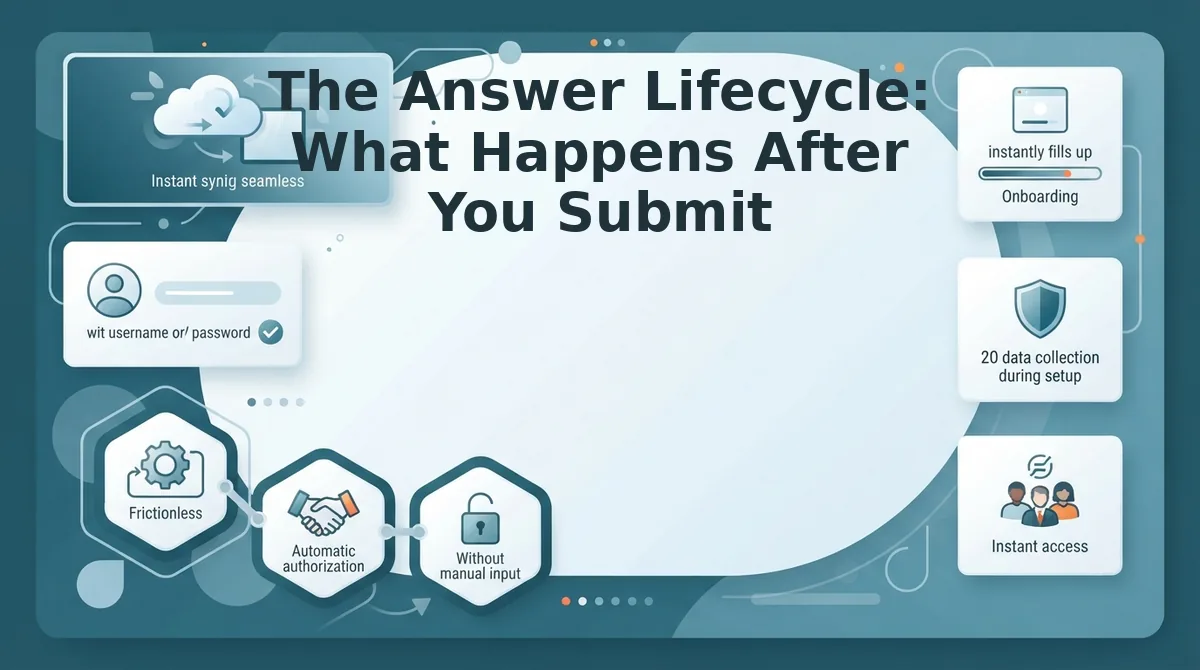
Every quiz answer follows a journey from your thumb to a server, and the two platforms route that journey through very different checkpoints. Here is the answer lifecycle in four stages: submission, processing, storage, and deletion.
- Submission: You tap an answer on your phone screen.
- Processing: The platform compares your answer against the quiz creator's original response and calculates a score.
- Storage: The answer is either written to a database or held only in temporary memory.
- Deletion: The answer is either retained for future use or discarded when the session ends.
On HolaQuiz, the estimated journey is: submitted via a dare URL, stored on an ad-supported server, and potentially used for retargeting, meaning the platform may feed your interaction history into advertising systems that show you related ads later. This is a legitimate business model that keeps the quiz free, and HolaQuiz is transparent that ads fund the experience. If you are comfortable trading answer data for a free, feature-rich quiz platform, that tradeoff is yours to make.
On Friend Quiz, the journey is shorter: submitted via a shareable link, processed for scoring, not tied to a persistent profile, and not retained beyond the session. There is no ad network receiving your answer history because there is no persistent history to receive.
This data-flow difference is the single most important privacy distinction between the two platforms, and it is one most comparison articles never explain. Answer retention, how long a platform keeps your responses, matters more than what the privacy policy says it collects, because retention is where real-world risk lives. A platform that deletes answers after each session has nothing to leak in a future breach. A platform that stores answers indefinitely has a growing liability.
| Lifecycle Stage | HolaQuiz | Friend Quiz |
|---|---|---|
| Submission | Dare URL, often shared virally | Shareable link from creator |
| Processing | Scored against creator answers | Scored against creator answers |
| Storage | Persistent server-side storage, ad-supported | Session-only, no persistent profile |
| Retention | Potentially retained for retargeting | Discarded after session ends |
| Best for | Users who want feature depth and accept ad-funded data use | Privacy-first users who want zero-account, disposable fun |
Best for casual quiz takers who value speed and anonymity: Friend Quiz. Best for users who want a richer feature set and don't mind advertising-driven data practices: HolaQuiz. Neither is objectively wrong, they optimize for different reader personas.
Link Trust Checklist: 4 Checks Before You Click Any Quiz Link
Spammy quiz links spread fast in group chats, especially around seasonal dare trends. Run every friendship quiz link through these four checks before you tap.
- Check the URL structure for random strings or seasonal keywords. Legitimate quiz links typically use a clean domain followed by a short, readable path. If you see a long string of random characters, a URL shortener you don't recognize, or seasonal bait words like "spooky-dare-2026" crammed into the path, treat it as a red flag. Random strings often indicate tracking parameters or cloaked redirects.
- Watch for redirect behavior with multiple hops. A trustworthy quiz link takes you directly to the quiz. If you tap a link and watch the address bar jump through two or three different domains before landing, each hop is an opportunity for a tracker to log your IP address or drop a cookie. One hop is normal; three hops is a data collection chain.
- Verify HTTPS before answering anything. The padlock icon in your browser bar means the connection between your phone and the quiz server is encrypted, so answers can't be intercepted in transit. If a quiz page loads over plain HTTP, no padlock, anyone on the same Wi-Fi network could theoretically read your responses. Never submit personal trivia answers over an unencrypted connection.
- Preview the destination with a link expander. If a friend sends a shortened link, paste it into a link expander tool to reveal the final URL before you click. This works for any quiz link, including friendship dare quiz links without spammy redirects. Seeing the final destination lets you apply checks one through three before your browser ever touches the server.
These four checks take under ten seconds combined and apply to every quiz link you'll ever receive. Now let's answer the questions readers ask most about these two platforms.
FAQ: HolaQuiz vs Friend Quiz Privacy Questions
Direct answers to the privacy questions people actually ask about HolaQuiz and Friend Quiz, based on how each platform handles data collection, storage, and link sharing.
Is HolaQuiz or Friend Quiz safer for privacy in 2026?
Friend Quiz is safer because it requires no account, collects no persistent profile, and does not store quiz answers after the session ends. HolaQuiz's data practices are less transparent, with unclear retention policies and no published privacy framework comparable to Friend Quiz's zero-account model.
Does HolaQuiz require an account?
HolaQuiz does not require an account to take a quiz, but its platform may still collect device identifiers and usage data tied to your session. Friend Quiz goes further by collecting no login credentials, no email address, and no persistent identifier at any point in the quiz flow.
Does Friend Quiz store my answers?
No. Friend Quiz processes your answers in real time to generate results and does not retain them after the quiz session completes. This means there is no answer history, no stored profile, and nothing to leak in a future data breach.
Are HolaQuiz dare links safe to open?
HolaQuiz links are generally safe to open in a browser, but they may redirect through tracking domains or prompt for permissions you did not expect. Before clicking any quiz link, verify the sender, check the domain, and avoid links that request camera, microphone, or contact access.
Can I use Friend Quiz without downloading an app?
Yes. Friend Quiz runs entirely in a mobile browser at friendquiz.org, with no app download, no installation, and no account creation. You can take a best friend test with no account required and share results directly to any group chat.
The Verdict: Which Friendship Quiz Protects Your Privacy?
Friend Quiz wins on privacy because it scores higher on all five criteria: data collection, account requirements, answer retention, link transparency, and third-party exposure. HolaQuiz may offer entertaining quizzes, but its unclear data practices leave you guessing about what happens to your answers after you hit submit.
The zero-account advantage is the deciding factor. When no persistent profile exists, there is nothing to hack, sell, or leak. Your quiz answers live only for the seconds it takes to generate a result, then disappear. That is a structural privacy guarantee no privacy policy can match.
Next step: Try Friend Quiz free, create a quiz in under a minute, share it with your group chat, and see how privacy-first friendship testing actually feels.